Pouch temperature ratings are that specification. We went through the five chamber pouch listings in our verified consumables set and counted how many state a cooking temperature: one. UltraSource rates its standard pouch to 195°F and names a separate boilable line at 239°F / 115°C. The other four listings state a thickness, or in one case not even that, and say nothing at all about heat. VacMaster rates its Temp Plus pouches “Safe for cooking up to 194° F / 90° C” on its own site, but the 8 x 12 in Temp Plus left this set on 2026-10-22 because its Amazon listing no longer shows that pouch. Buyers are being asked to cook in a bag whose maker has published no cooking limit.
The two published ceilings belong only to the exact named pouch lines. They do not transfer to a generic or sibling chamber pouch, and they do not establish how long either film may remain at a stated temperature. A temperature rating does not prove duration suitability. No maker in our set publishes a time-at-temperature figure, so a forty-eight-hour exposure remains unverified even when the planned bath is below the named product's ceiling.
The number the bag box does not print
Below is every chamber pouch listing we verified against live Amazon data, with stated wall thickness and stated cooking temperature kept separate. Neither field establishes long-cook duration. Where a seller publishes nothing, the cell reads Not published and stays that way. We do not infer a temperature rating from a film description, and we do not carry a rating across from a sibling listing by the same brand — UltraSource is in this table twice with a temperature on one entry and silence on the other, which is exactly why that inference fails.
Verified thickness across the whole set runs from 3 to 3.5 mil, a narrow band. That narrowness is worth noticing, because thickness is the number the category argues about and it turns out to barely vary. The specification that does vary, and vary enormously, is whether anyone tells you the film's heat limit. One Avid Armor listing publishes neither figure.
Scroll horizontally to see every column.
| Pouch listing | Verified size | Stated thickness | Stated cooking temperature | What that rating bounds |
|---|---|---|---|---|
| UltraSource, 250-count gallon | 10 x 13 in | 3 mil | 195°F on the standard line | Named standard line's temperature ceiling only; duration unverified |
| MAGIC SEAL smooth | 8 x 12 in | 3.5 mil | Not published | Thickest film here, no stated heat limit |
| LEM MaxVac Pro | 10 x 13 in | 3.15 mil | Not published | Between the 3 and 3.5 mil films, heat limit unknown |
| UltraSource, 1000-count quart | 8 x 12 in | 3 mil | Not published | Same brand as the rated entry, no rating on this listing |
| Avid Armor, 250-count pint | 6 x 10 in | Not stated by the seller | Not published | Neither specification exists on the page |
UltraSource names a boilable pouch at 239°F / 115°C in the same copy that rates its standard pouch to 195°F. That is a separate film class you have to order deliberately. Buying the standard pouch and hoping it behaves like the boilable one is the mistake this whole page exists to prevent.
Forty-eight hours is a different test from two
We cannot tell you where that threshold sits. No pouch maker in our verified set publishes a duration rating, no machine maker in this comparison publishes a seal-strength figure, and we have bench-tested nothing. Any number we printed for hours-to-failure would be invention.
Seal construction is the first. A dual-wire bar lays two parallel welds instead of one, which is redundancy rather than strength, and the CV12 Pro, VP230, VP215 and USV32 each publish one. Seal time control is the second, and pouch class is the third: VacMaster gives Mylar a thickness for all of its chamber sealers, and no document we read names retort film for any machine here.
- VacMaster's Help Center says its chamber vacuum sealers "typically" seal Mylar bags "up to 7-9 mil", depending on the material, and offers to test a sample bag; the statement names no model, so it covers the VP215 and VP230 alike. No VacMaster document we read mentions retort pouches.
- The Wevac CV12 Pro and Avid Armor USV32 both publish dual-wire seal bars; the USV32's is 11.5 inches, the Wevac's a full 12 inches and detachable.
- The Avid Armor USV20 accepts smooth pouches only up to 11 by 10 inches, which rules out the gallon pouches most long cuts need.
- Of the four machines here, the VacMaster VP215's June 2024 user guide publishes a session limit: it caps vacuum on-time at 70 seconds, requires 10 seconds off between cycles, and says to stop and let the machine cool after 45 minutes. Wevac's CV12 Pro manual recommends waiting 20 seconds between consecutive seals.
You do not need any of these to cook sous vide
A chamber machine changes three workflow elements. It uses smooth pouches rather than textured channel bags, keeps liquid marinades inside a chamber while the pouch and chamber evacuate together, and applies one repeatable packaging process across a batch. This page makes no static pouch-price or performance claim.
Specifications compared
Scroll horizontally to see every column.
| Model | Seal bar | Chamber | Pump | Weight | Analysis |
|---|---|---|---|---|---|
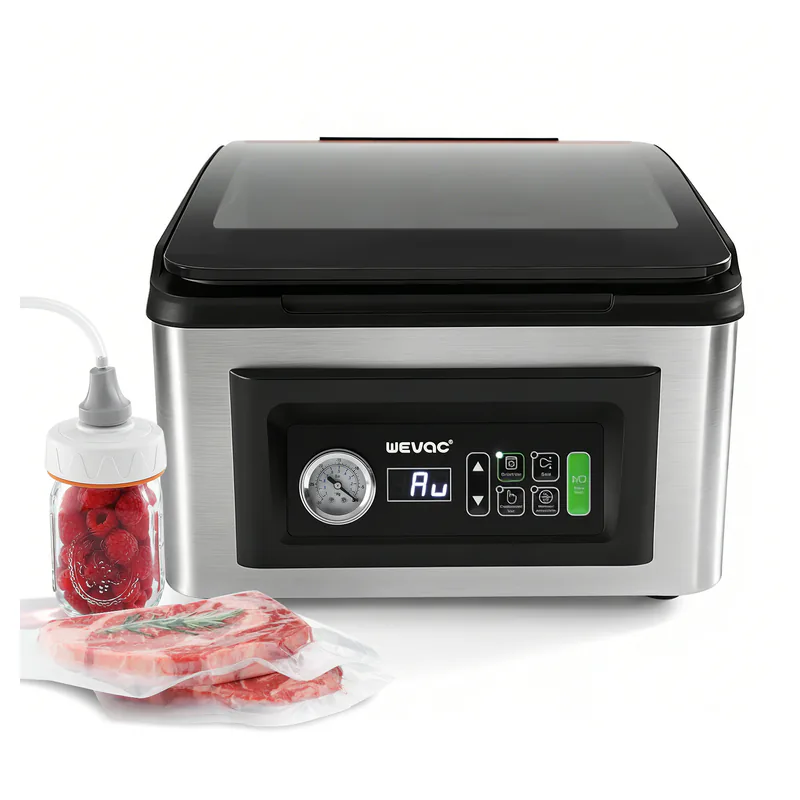 Wevac CV12 Pro | Conflicting published values: 12.2" W x 13.0" D x 3.9" H / 12.4" W x 12.8" L x 3.8" H — Conflicting published record — Wevac product page · Wevac archived page | 85 L/min (5,187 in³/min) pump flow rate; architecture not published — Verified published record — Wevac product page · Wevac manual | |||
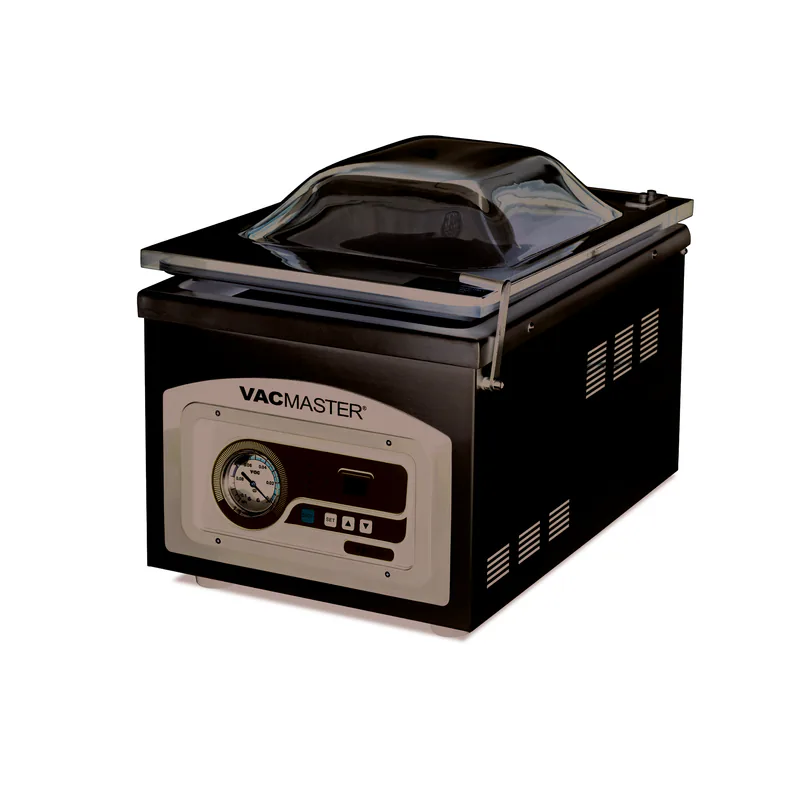 VacMaster VP230 | Conflicting published values: 89 Pounds / 82 lbs — Conflicting published record — VacMaster product page · VacMaster spec sheet | ||||
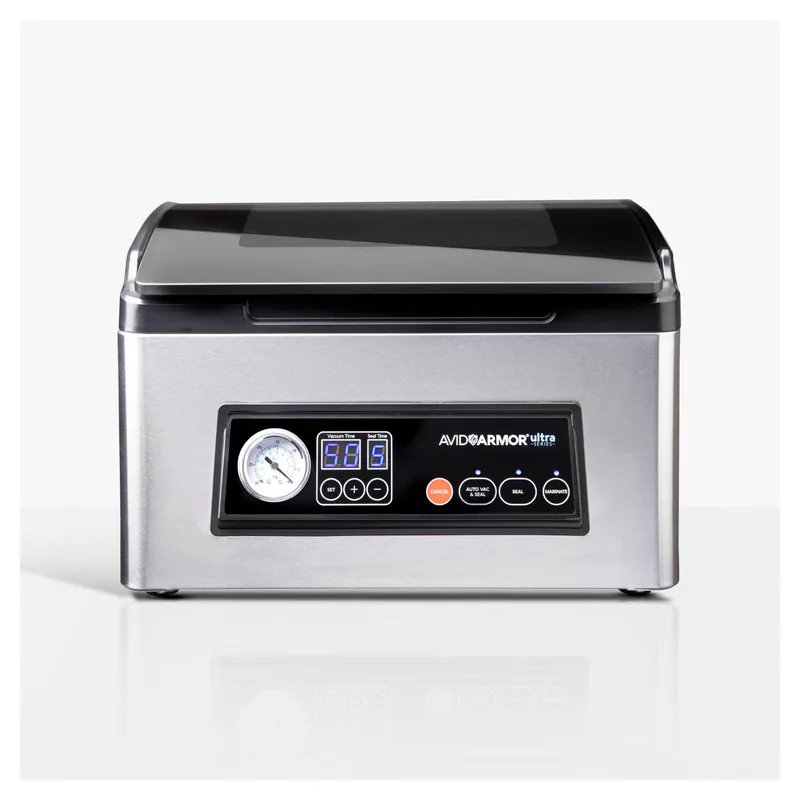 Avid Armor USV32 | |||||
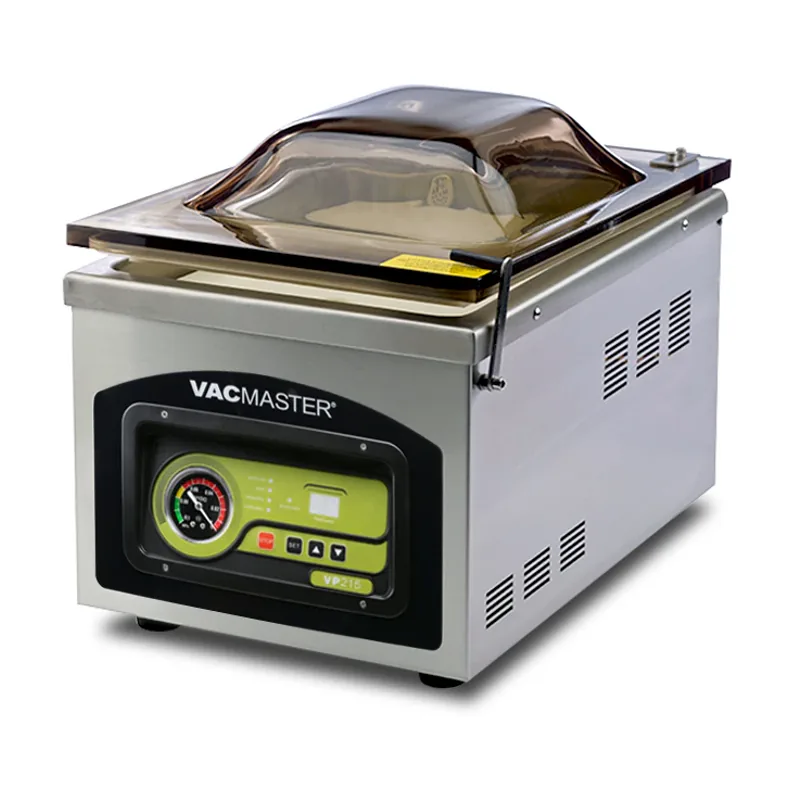 VacMaster VP215 | Conflicting published values: 10 Inch removable seal bar with double seal wire / 10.25 in — Conflicting published record — VacMaster product page · VacMaster manual | Conflicting published values: 1/5 HP (.2 HP) rotary oil pump / 1/4 HP rotary oil pump — Conflicting published record — VacMaster manual · VacMaster support note |
Cells reading “Not stated” mean the manufacturer does not publish that figure. We have not substituted an estimate.
Model analyses
Why it fits
- Seal bar:
- Pump: 85 L/min (5,187 in³/min) pump flow rate; architecture not published — Verified published record — Wevac product page · Wevac manual
- Power:
Unanswered or conflicting specifications
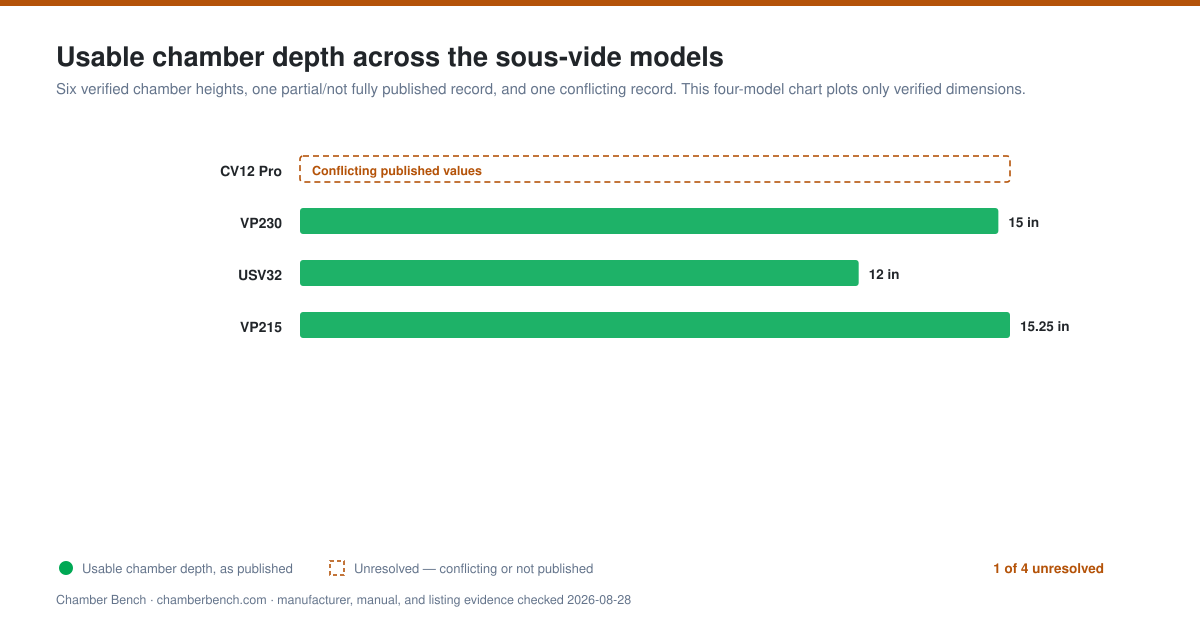
- Chamber: Conflicting published values: 12.2" W x 13.0" D x 3.9" H / 12.4" W x 12.8" L x 3.8" H — Conflicting published record — Wevac product page · Wevac archived page
- Weight:
Published specifications
- Seal bar:
- Chamber: Conflicting published values: 12.2" W x 13.0" D x 3.9" H / 12.4" W x 12.8" L x 3.8" H — Conflicting published record — Wevac product page · Wevac archived page
- Pump: 85 L/min (5,187 in³/min) pump flow rate; architecture not published — Verified published record — Wevac product page · Wevac manual
- Power:
- Weight:
Why it fits
- Seal bar:
- Chamber:
- Pump:
- Power:
Unanswered or conflicting specifications
- Weight: Conflicting published values: 89 Pounds / 82 lbs — Conflicting published record — VacMaster product page · VacMaster spec sheet
Published specifications
- Seal bar:
- Chamber:
- Pump:
- Power:
- Weight: Conflicting published values: 89 Pounds / 82 lbs — Conflicting published record — VacMaster product page · VacMaster spec sheet
View chamber sizing diagram
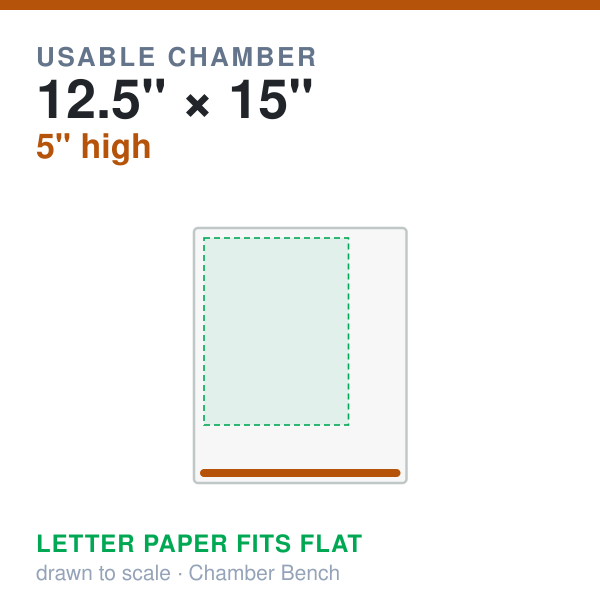
Data quality note: VacMaster's product page gives both 89 lb and 82 lb, and its spec sheet 89 lb. We retain both and select neither.
Why it fits
- Seal bar:
- Chamber:
- Pump:
- Power: 380 W at 120 V, 60 Hz — Verified published record — Avid Armor support note · Avid Armor archived page
- Weight:
Unanswered or conflicting specifications
- No core field is currently partial, conflicting, or unpublished.
Published specifications
- Seal bar:
- Chamber:
- Pump:
- Power: 380 W at 120 V, 60 Hz — Verified published record — Avid Armor support note · Avid Armor archived page
- Weight:
View chamber sizing diagram
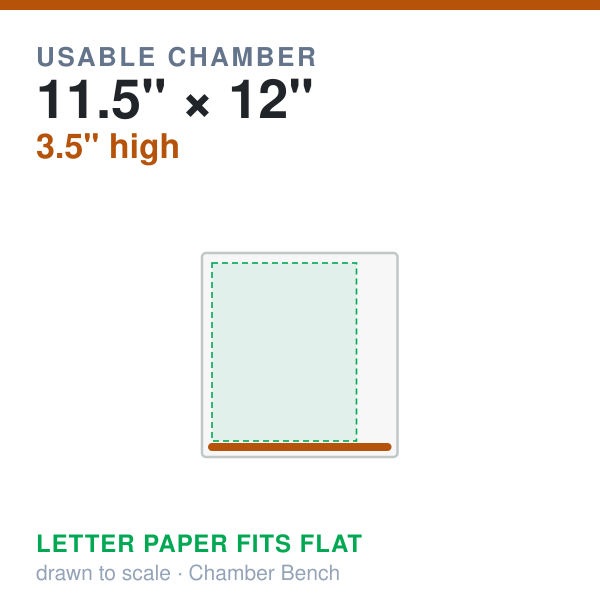
Data quality note: These figures identify the stainless-chamber USV32. Avid Armor also sells a newer molded-chamber USV32 with different dimensions and weight. Check the chamber material before ordering.
Why it fits
- Chamber:
- Weight:
Unanswered or conflicting specifications
- Seal bar: Conflicting published values: 10 Inch removable seal bar with double seal wire / 10.25 in — Conflicting published record — VacMaster product page · VacMaster manual
- Pump: Conflicting published values: 1/5 HP (.2 HP) rotary oil pump / 1/4 HP rotary oil pump — Conflicting published record — VacMaster manual · VacMaster support note
- Power: Conflicting published values: 110V, 60Hz, 4 Amps / Single Phase 110 V, 20 Amp — Conflicting published record — VacMaster product page · VacMaster manual
Published specifications
- Seal bar: Conflicting published values: 10 Inch removable seal bar with double seal wire / 10.25 in — Conflicting published record — VacMaster product page · VacMaster manual
- Chamber:
- Pump: Conflicting published values: 1/5 HP (.2 HP) rotary oil pump / 1/4 HP rotary oil pump — Conflicting published record — VacMaster manual · VacMaster support note
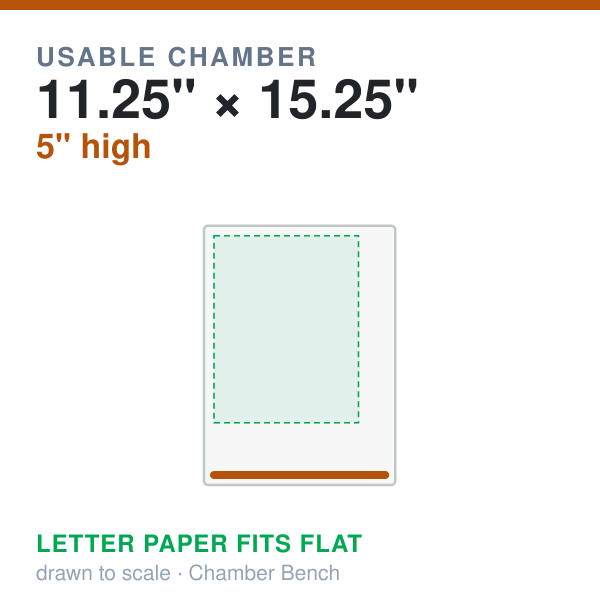
- Power: Conflicting published values: 110V, 60Hz, 4 Amps / Single Phase 110 V, 20 Amp — Conflicting published record — VacMaster product page · VacMaster manual
- Weight:
View chamber sizing diagram
Sealing for a cook is not sealing for a freezer
Cook-chill is where most home workflows get loose. A pouch that comes out of the bath and sits on a counter is not preserved by being sealed, and the seal is not a substitute for getting it cold. Vacuum packaging slows quality loss; it does not sterilise, and USDA guidance is explicit that vacuum-packed perishable food still requires refrigeration or freezing. Treat the sealed pouch exactly as you would treat the same food unsealed, before the cook and after it.
Fit summary
The VacMaster VP230 publishes a 12.5 by 15 by 5 inch chamber and a 12.25-inch bar.
These analyses compare published manufacturer figures and, for pouches, their listing records. Chamber Bench has not run these machines or cooked in these pouches. One pouch listing publishes a temperature rating; four do not, and no listing in the verified set publishes a time-at-temperature figure.
Open the Wevac CV12 Pro analysis · Return to the specifications
Frequently asked questions
What temperature are chamber vacuum sealer bags rated to?
Mostly unpublished. Of the five chamber pouch listings we verified, only UltraSource rates its standard line, to 195°F, naming a separate boilable line at 239°F / 115°C; the other four publish no cooking temperature. On its own site VacMaster rates its Temp Plus pouches safe for cooking up to 194°F / 90°C. Those limits apply only to the named products. A temperature rating does not prove duration suitability, so confirm the intended time and process with the pouch supplier.
Will a standard chamber pouch survive a 48-hour cook?
No maker publishes a duration rating, so nobody can tell you honestly. A stated 194°F rating describes a threshold, not an exposure of two days at that threshold. We have not run the test and we will not print a number we did not measure.
How thick should a sous vide chamber pouch be?
Thickness varies less than the category suggests. Every one of the five pouch listings we verified that states a figure falls between 3 and 3.5 mil, with one at 3.15. That band is narrow enough that thickness is rarely the deciding specification. The stated temperature rating, the size and the seal-bar fit decide far more.
Which machines here can seal retort or Mylar pouches?
VacMaster answers the Mylar half for every chamber sealer it makes, the VP215 and VP230 included: its Help Center says they "typically" seal Mylar bags "up to 7-9 mil", that this "depends on the thickness of the mylar material", and offers to test a sample bag. No VacMaster document we read mentions retort pouches, and Chamber Bench has sealed neither film on any machine.
Can I freeze the pouch after it comes out of the bath?
Yes, and the sequence matters more than the seal does. Drop the pouch into iced water straight out of the bath so it passes quickly through the temperature band where a cooked, low-oxygen package is at its most vulnerable, then freeze it. The pouch being sealed is not what makes that safe and does not let you skip it: USDA guidance is explicit that vacuum-packed perishable food still needs refrigeration or freezing.
What size pouch should I buy for sous vide portions?
Match the pouch to your portion and then check it against the seal bar, not the other way round. Single steaks and fish portions fit a 6 by 10 inch pint pouch, most household work settles on 8 by 12 inches, and racks or roasts need 10 by 13.
What this page covers, and what it does not
This page compares records from the eight chamber vacuum sealers we analyse in depth, each still listed on Amazon when we re-checked on 2026-10-22, and cites pouch specifications only from the pouches in our catalogue. The Anova chamber machine is outside that source set.
How published evidence is evaluated
Chamber Bench compares each maker’s own pages, manuals and support documents for the eight machines in this comparison. The current analysis covers usable chamber geometry, seal-bar length, pump type, serviceability, and other published ownership constraints.
Where a manufacturer publishes nothing, we say so rather than filling the gap:
- We record which specifications a manufacturer declines to publish.
- We flag contradictions inside a listing rather than quietly picking one figure.
- We keep partial records distinct from complete published dimensions.
- We do not reproduce retailer ratings or prices as editorial fact.
What we have not done: we have not physically run these machines. No cycle times, seal-strength figures, or noise measurements on this site come from our own bench, and none are presented as if they do. Our test protocol documents the measurements required before any model can carry a tested performance conclusion.