Two architectures remove air from food packaging, and the gap between them is not a feature list. An external sealer, which is the FoodSaver class and everything built to copy it, clamps the open mouth of a bag and runs a pump on that opening. A chamber machine puts the whole bag inside a rigid box and pumps the air out of the box instead. Every practical difference anyone will quote at you downstream is a consequence of that single change of arrangement, and almost nobody explains it before listing the features it causes.
Bag design is where the mechanism becomes visible. An external sealer needs air to travel the length of a clamped bag to reach the pump, which is why its bags are embossed with channels or textured on one face. A chamber machine never conducts air along the bag at all, so its pouches are plain and smooth, and plain smooth film costs less to make than channelled film.
Equalising pressure, not pulling on a bag
An external sealer seals three sides of a bag, clamps the fourth across a gasket, and evacuates through that opening. For the entire cycle there is roughly one atmosphere pressing on the outside of the bag and progressively less inside it, so the bag wall is driven inward and anything loose in the bag is dragged toward the pump. Liquid is loose. Brine is loose. Rendered fat is loose. The failure mode is not exotic; it is the machine doing exactly what it was built to do.
A chamber machine inverts the arrangement. The pouch lies inside a rigid box with its open end flat across the seal bar, the lid closes, and the pump evacuates the box rather than the pouch. Pressure falls on both faces of the pouch wall together, so the differential across it stays near zero and nothing is drawn anywhere. The seal bar closes the pouch while the chamber is still evacuated. Air returns to the chamber afterwards, and the pouch collapses onto its contents in one even movement from every direction at once.
Once that sequence is clear, the rest of the category stops being a mystery. Liquid stays put because nothing is being pulled through the mouth, so the liquid failure mode becomes boiling rather than spillage, which is managed by chilling the contents before the cycle rather than by buying a better machine. Soft contents are compressed at the end of the cycle instead of throughout it. And the pouch is relieved of the job of conducting air along its own length, which decides what a chamber pouch is made of and what it costs.
An external sealer takes the air out of the bag. A chamber machine takes the air out from around the bag. Everything else on this page is downstream of that.
Why the two bag types are not interchangeable in both directions
Textured bags work in a chamber machine and are a waste of money there, because you are paying for embossed channels the machine has no use for. The reverse does not hold. The bag is not defective and the machine is not broken. They were designed against different physics.
The UltraSource 1000-count case opens its bullets with NOT FOR FOOD SAVER in capitals. Avid Armor's pint-size 6 by 10 inch pouches lead with chamber and heat sealers only. MAGIC SEAL puts Smooth and Non-Textured in the product title itself. LEM's gallon pouches describe smooth, clear sides in the seller's own copy.
- Embossed or textured bag: channels give air a path along a clamped bag. Required by an external sealer, redundant in a chamber.
- Smooth chamber pouch: no channels, plain film, lower cost per pouch. Correct in a chamber, unreliable in an external sealer.
- Thickness is stated in mil. Across the seven pouch listings we verified it ranges from 3 mil to 3.5 mil, and one listing states no thickness at all.
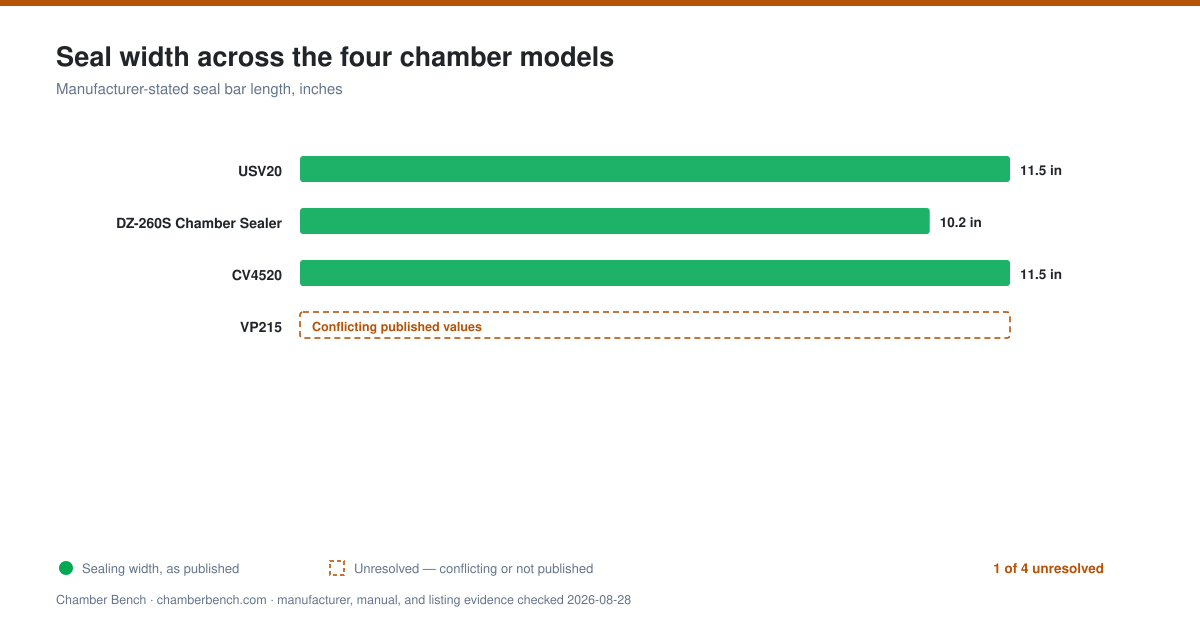
- A 10-inch-wide pouch needs a seal bar wider than 10 inches.
The box problem: an external sealer has no ceiling
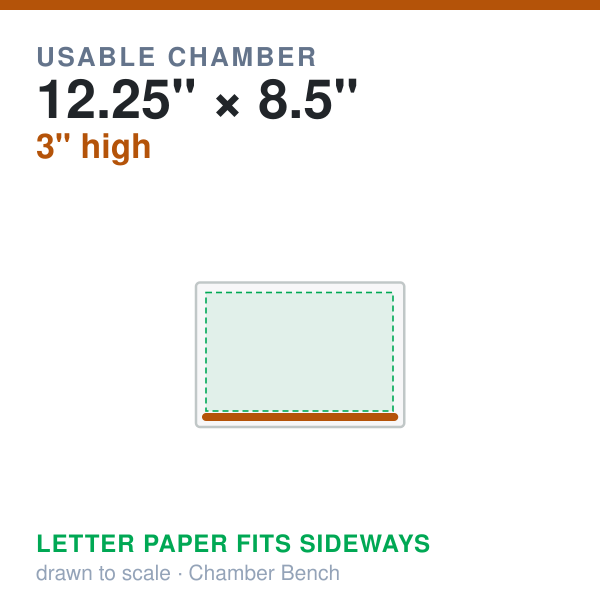
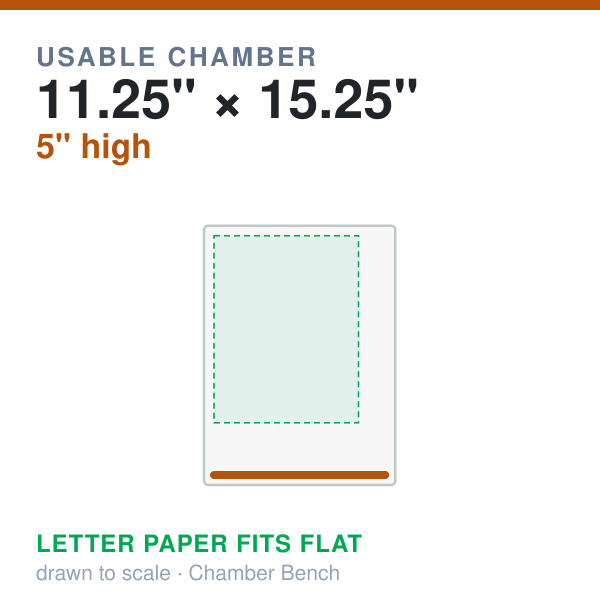
An external sealer imposes one constraint on package size, and it is the width of the bag stock. Height does not exist as a limit, because the package is never enclosed by the machine. A chamber machine adds a hard three-dimensional envelope: the package must fit inside the box, lid closed, with the pouch mouth lying flat on the bar. Chamber height is the dimension buyers forget, and it is the one that rules out bone-in cuts and tall jars regardless of how wide the seal bar is.
This comparison turns on package height, a specification an external sealer does not need because it does not enclose the package. Three of the four analyzed chamber models state a usable envelope. Gasbye CV4520 chamber: 5.28 qt (5 L); 9.7 in interior width; full usable envelope not published.
Scroll horizontally to see every column.
| Machine | Package height ceiling | Floor the package must lie on (W x D) | Widest pouch mouth the bar will close | The same limit on an external sealer |
|---|---|---|---|---|
| Avid Armor USV20 | 3" — the tightest here | 12.25" x 8.5" | 11.5" bar; maker caps pouches at 11" x 10" | No height limit exists; only bag stock width |
| VEVOR DZ-260S | 3.5" | 13" x 10.6" | 10.2" per title; the listing disputes its own figure | No height limit exists; only bag stock width |
| Gasbye CV4520 | Not published | Not published (5.3 qt; 9.7" width only) | 11.5" replaceable bar and wires | No height limit exists; only bag stock width |
Specifications compared
Scroll horizontally to see every column.
| Model | Seal bar | Chamber | Pump | Weight | Analysis |
|---|---|---|---|---|---|
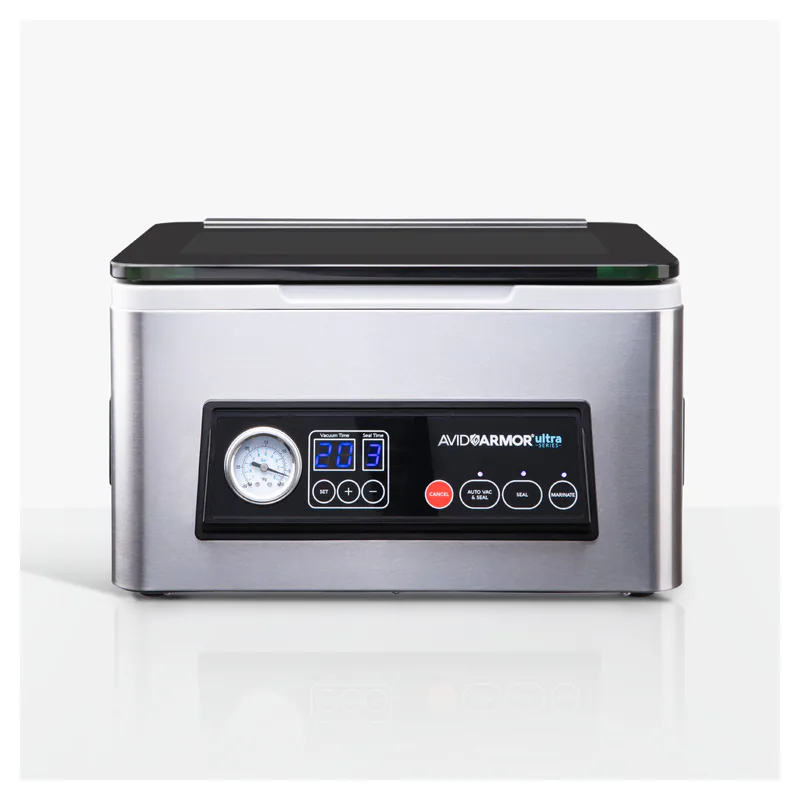 Avid Armor USV20 Avid Armor USV20 | Conflicting published values: 17.3 pounds / 17.55 lb — Conflicting published record — Amazon listing · Avid Armor product page | Open analysis | |||
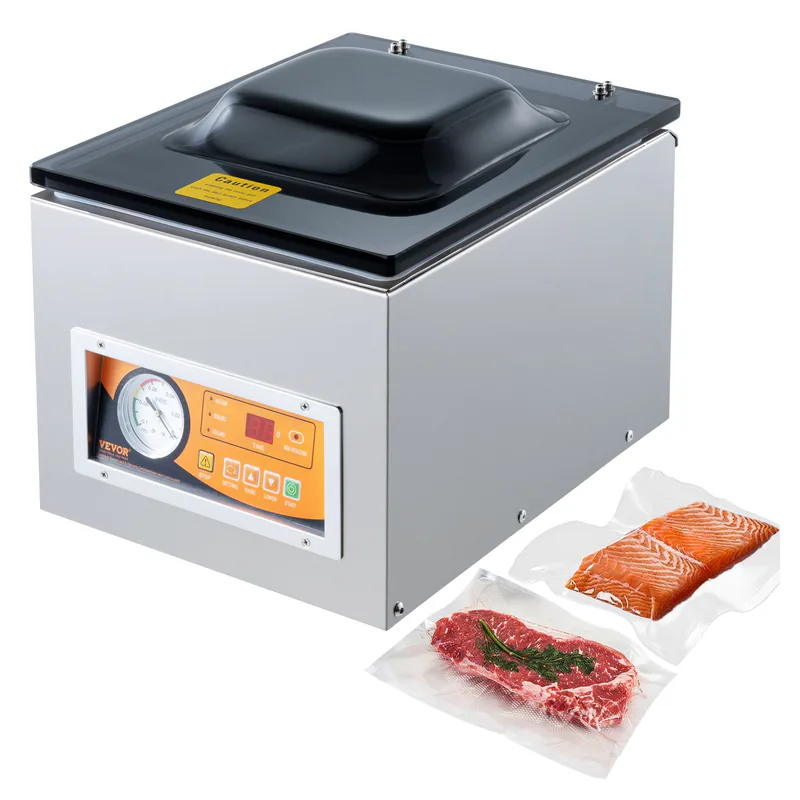 VEVOR DZ-260S Chamber Sealer VEVOR DZ-260S Chamber Sealer | Conflicting published values: 120W vacuum pump / 180W vacuum pump — Conflicting published record — VEVOR product page | Open analysis | |||
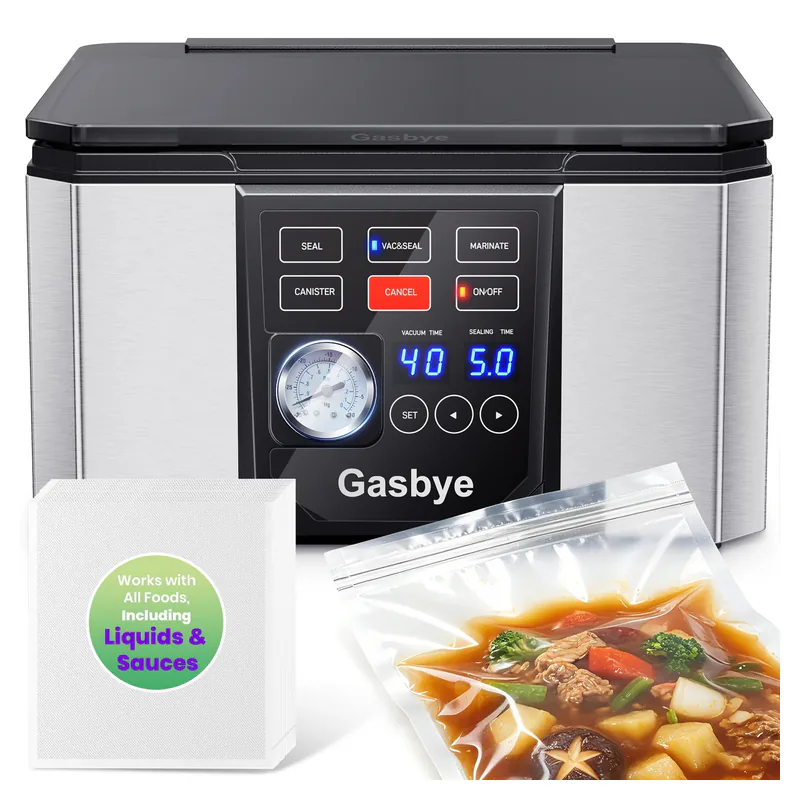 Gasbye CV4520 Gasbye CV4520 | Open analysis | ||||
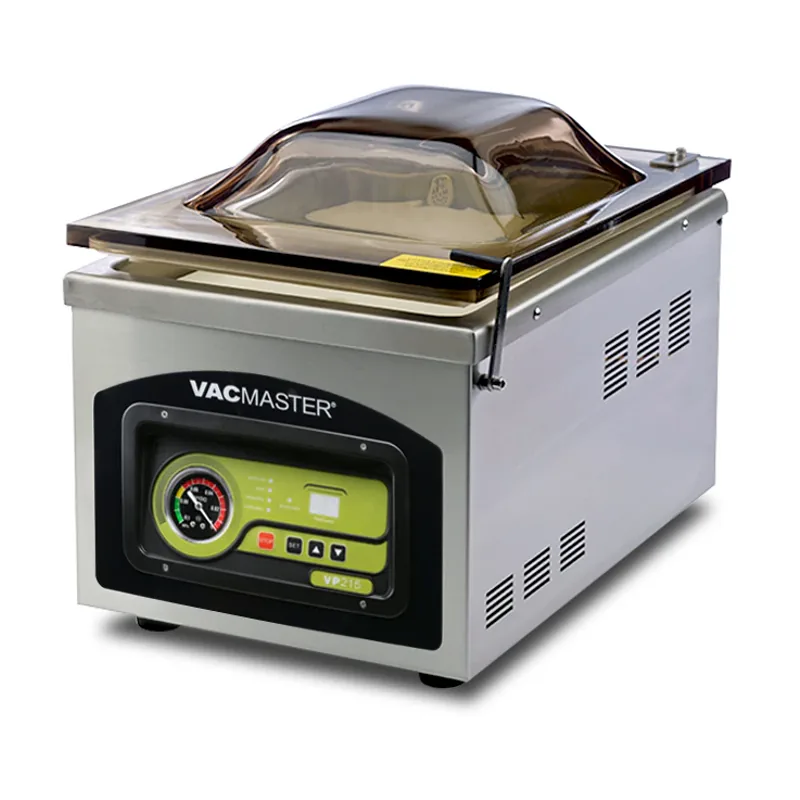 VacMaster VP215 VacMaster VP215 | Conflicting published values: 10 Inch removable seal bar with double seal wire / 10.25 in — Conflicting published record — VacMaster product page · VacMaster manual | Conflicting published values: 1/5 HP (.2 HP) rotary oil pump / 1/4 HP rotary oil pump — Conflicting published record — VacMaster manual · VacMaster support note | Open analysis |
Cells reading “Not stated” mean the manufacturer does not publish that figure. We have not substituted an estimate.
Model analyses
Why it fits
- Seal bar:
- Chamber:
- Pump:
Unanswered or conflicting specifications
- Power: Conflicting published values: 300 watts at 110 volts / Vacuum Power: 300 Watts; Voltage: 120v - 60hz — Conflicting published record — Amazon listing
- Weight: Conflicting published values: 17.3 pounds / 17.55 lb — Conflicting published record — Amazon listing · Avid Armor product page
Published specifications
- Seal bar:
- Chamber:
- Pump:
- Power: Conflicting published values: 300 watts at 110 volts / Vacuum Power: 300 Watts; Voltage: 120v - 60hz — Conflicting published record — Amazon listing
- Weight: Conflicting published values: 17.3 pounds / 17.55 lb — Conflicting published record — Amazon listing · Avid Armor product page
View chamber sizing diagram
Why it fits
- Seal bar:
- Chamber:
- Weight:
Unanswered or conflicting specifications
- Pump: Conflicting published values: 120W vacuum pump / 180W vacuum pump — Conflicting published record — VEVOR product page
- Power: Conflicting published values: Maximum Power 950W (+5%/-10%); Seal Power 260W; 120W vacuum pump; AC 120V, 60Hz / 180W vacuum pump — Conflicting published record — VEVOR product page
Published specifications
- Seal bar:
- Chamber:
- Pump: Conflicting published values: 120W vacuum pump / 180W vacuum pump — Conflicting published record — VEVOR product page
- Power: Conflicting published values: Maximum Power 950W (+5%/-10%); Seal Power 260W; 120W vacuum pump; AC 120V, 60Hz / 180W vacuum pump — Conflicting published record — VEVOR product page
- Weight:
View chamber sizing diagram
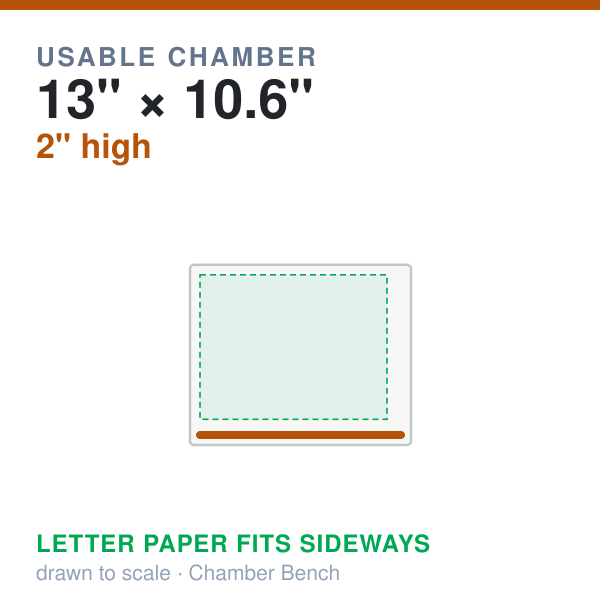
Data quality note: The retained VEVOR product page contains internally inconsistent values. Treat its published figures as unconfirmed.
Why it fits
- Seal bar:
- Power:
Unanswered or conflicting specifications
- Chamber: Partial specification: 5.28 qt (5 L); 9.7 in interior width; full usable envelope not published — Partial published record — Gasbye product page
- Pump:
- Weight:
Published specifications
- Seal bar:
- Chamber: Partial specification: 5.28 qt (5 L); 9.7 in interior width; full usable envelope not published — Partial published record — Gasbye product page
- Pump:
- Power:
- Weight:
Why it fits
- Chamber:
- Weight:
Unanswered or conflicting specifications
- Seal bar: Conflicting published values: 10 Inch removable seal bar with double seal wire / 10.25 in — Conflicting published record — VacMaster product page · VacMaster manual
- Pump: Conflicting published values: 1/5 HP (.2 HP) rotary oil pump / 1/4 HP rotary oil pump — Conflicting published record — VacMaster manual · VacMaster support note
- Power: Conflicting published values: 110 watts at 110 volts / 110V, 60Hz, 4 Amps / Single Phase 110 V, 20 Amp — Conflicting published record — Amazon listing · VacMaster product page · VacMaster manual
Published specifications
- Seal bar: Conflicting published values: 10 Inch removable seal bar with double seal wire / 10.25 in — Conflicting published record — VacMaster product page · VacMaster manual
- Chamber:
- Pump: Conflicting published values: 1/5 HP (.2 HP) rotary oil pump / 1/4 HP rotary oil pump — Conflicting published record — VacMaster manual · VacMaster support note
- Power: Conflicting published values: 110 watts at 110 volts / 110V, 60Hz, 4 Amps / Single Phase 110 V, 20 Amp — Conflicting published record — Amazon listing · VacMaster product page · VacMaster manual
- Weight:
View chamber sizing diagram
The running-cost argument, and why we will not put a number on it
Chamber machines use smooth pouches, while external sealers require channelled bags that keep an evacuation path open at the clamped mouth. Any cost comparison depends on current offers, pouch size, and actual usage, so this page makes no payback claim.
We publish no payback figure because we would have to hardcode two prices to calculate one, and prices on this category move constantly. Our cost-per-seal calculator takes your own current pouch prices and your own real sealing volume instead, which is the only version of this arithmetic that is not out of date the week it is written.
Fit summary
The Avid Armor USV20 publishes a usable chamber envelope, 11.5-inch seal bar, user-replaceable heating bar, and 3-inch chamber height. Those fields make its package-fit boundary checkable before ordering; tall or bone-in portions may exceed the stated clearance.
This analysis uses published manufacturer and live listing data. Chamber Bench has compared documentation, not machines, and has bench-tested none of them. An external sealer remains the relevant mechanism when the intended packages are dry and fit its bag path.
Open the Avid Armor USV20 analysis · Return to the specifications
Frequently asked questions
Can I use FoodSaver bags in a chamber vacuum sealer?
Yes, but embossed channels exist so an external sealer can draw air along a clamped bag. A chamber machine does not draw air through the bag, so plain smooth chamber pouches are the intended consumable. This page does not publish a static price comparison.
Does a chamber machine pull a deeper vacuum than an external sealer?
Manufacturers here mostly do not publish comparable vacuum figures, so we will not stage that race. The difference that matters is not final vacuum depth but where the pressure difference sits during the cycle: across the bag wall on an external sealer, and near zero across it on a chamber machine. That is what decides whether liquid moves, and it is true regardless of the number on either pump.
Why does a chamber machine cost so much more?
It has to contain a vacuum rather than pull one through a hose.
How long does a chamber cycle take compared with an external sealer?
We have verified no cycle time for any external sealer, so we publish no side-by-side figure rather than inventing one.
Does vacuum sealing let me store food at room temperature?
No. Both mechanisms produce a package with most air removed, and neither sterilises food. USDA guidance says vacuum-packed perishable meat still requires refrigeration or freezing. The mechanism differences concern package handling, not preservation.
What this page covers, and what it does not
This comparison covers the eight chamber vacuum sealers we verified against live Amazon listing data on 2026-08-26, four of which are picked out here. The Anova chamber sealer is not among them because we could not verify its listing, and no FoodSaver model is in our catalog either — the external side of this page is described as an architecture, never as a specific product.
How published evidence is evaluated
Chamber Bench compares manufacturer and listing evidence for the eight machines in this comparison. The current analysis covers usable chamber geometry, seal-bar length, pump type, serviceability, and other published ownership constraints.
Where a manufacturer publishes nothing, we say so rather than filling the gap:
- We record which specifications a manufacturer declines to publish.
- We flag contradictions inside a listing rather than quietly picking one figure.
- We keep partial records distinct from complete published dimensions.
- We do not reproduce retailer ratings or prices as editorial fact.
What we have not done: we have not physically run these machines. No cycle times, seal-strength figures, or noise measurements on this site come from our own bench, and none are presented as if they do. Our test protocol documents the measurements required before any model can carry a tested performance conclusion.