Meat is a fit problem before it is a machine problem. A packer brisket, a rolled pork belly and a tray of portioned steaks are three unrelated geometries, and a chamber that swallows one of them can be physically unable to close over another. No feature list rescues a package that will not lie flat.
Two published numbers settle it, and only two. The package has to fit inside the chamber, and the mouth of the bag has to fit across the seal bar. Buyers read the second number and assume it covers the first, which is backwards: the bar is printed in the product title because it is flattering, while the chamber footprint is the figure that actually eliminates machines.
So this page works in the order butchery works. Cut first, then the pouch that cut needs, then the machines whose published figures accept that pouch. Where a manufacturer publishes no chamber dimension, the cell stays empty rather than carrying a number we reverse-engineered from the case. We compared published specifications and manufacturer statements; we have not run any of these machines on a brisket.
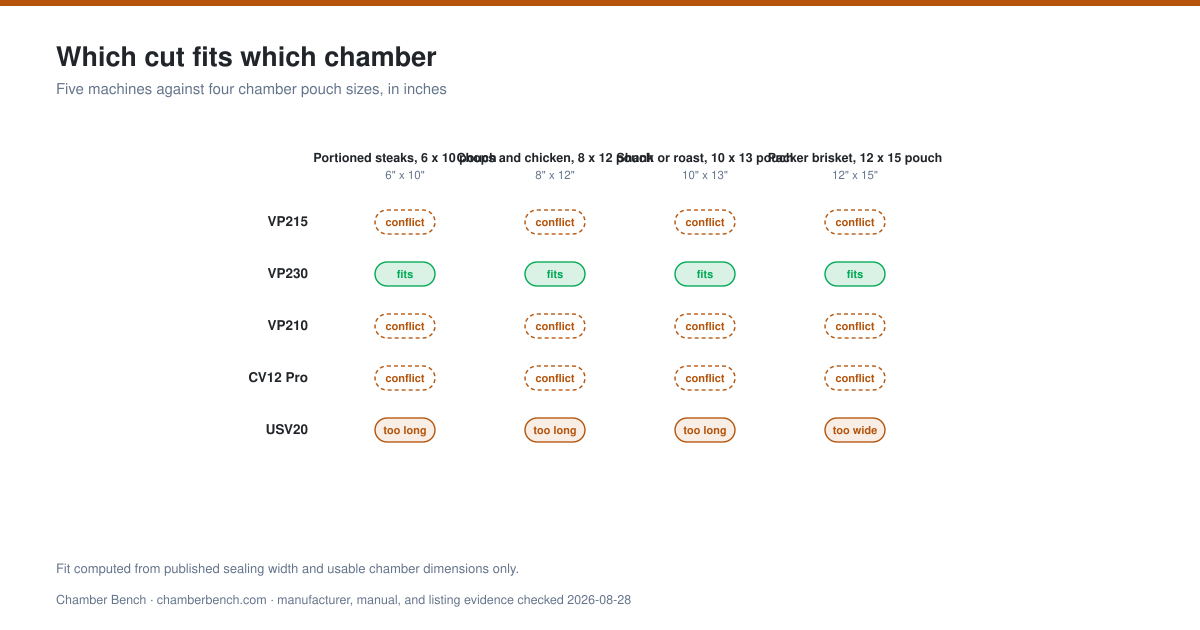
The bag mouth is a second gate, and it is narrower than the bar
A seal bar has to close along the full width of the pouch mouth with material to spare on both sides. That is why a 10-inch bar cannot seal a 10-inch-wide pouch, and it is why the two manufacturers here who publish both figures publish them as a pair rather than as one.
Avid Armor states an 11.5-inch bar on the USV20 and smooth pouches to 11 by 10 inches, which is half an inch.
The Wevac CV12 Pro carries a 12-inch bar and publishes no maximum pouch size at all. We do not estimate one from the bar. What we can say is that a 12-inch pouch on a 12-inch bar has no margin under either maker rule above, so treat 12 by 15 inch bags as unconfirmed on that machine until Wevac states otherwise.
Bar width sets the widest pouch you can seal. Chamber depth sets the longest pouch that lies flat.
What each cut actually asks for in pouch inches
The machine never sees the cut. It sees the loaded pouch, so the useful translation is cut to pouch size, and then pouch size to machine. Four sizes cover almost all domestic butchery, and every one of them is a size we verified either on a chamber pouch listing or in a manufacturer maximum-bag statement.
- 6 by 10 inches, the pint pouch: single steaks, chicken breasts, portioned fish, chops for two. Wasting a quart bag on a pint job wastes film on every seal.
- 8 by 12 inches, the quart pouch: pork chops in pairs, chicken quarters, ground meat in a pound block, most everyday freezer portions.
- 10 by 13 inches, the gallon pouch: bone-in shanks, a brisket flat, a pork shoulder, a turkey breast. VacMaster states this exact size as the ceiling for the VP215 and VP210.
- 12 by 15 inches: a whole packer brisket, a rolled belly, a full rack. VacMaster states this size for the VP230 and nothing else in this comparison is stated to reach it.
Seal bar against chamber footprint, all eight machines
Read the table by picking your pouch size and then finding the first machine whose chamber depth exceeds the pouch length and whose bar exceeds the pouch width. Two rows are mostly empty, and that emptiness is the finding rather than a gap in our work.
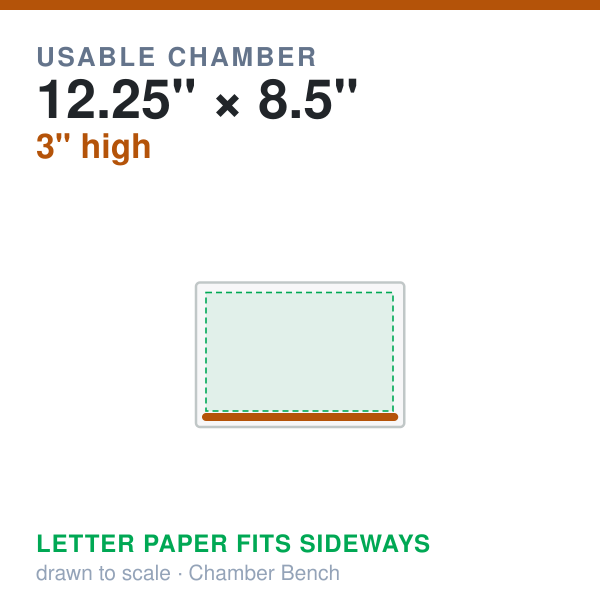
The Avid Armor USV20 publishes a contradiction worth knowing before you order film. Its chamber is stated as 12.25 inches wide by 8.5 inches deep, and its maximum smooth pouch is stated as 11 by 10 inches. Ten inches of pouch does not lie flat in 8.5 inches of chamber. We report both figures as Avid Armor publishes them and do not reconcile them; on either reading, a 12-inch quart pouch exceeds the stated maximum and the pint pouch is this machine's working size.
Scroll horizontally to see every column.
| Machine | Seal bar | Usable chamber W x D x H (in) | Maker-stated max bag | Longest pouch that lies flat |
|---|---|---|---|---|
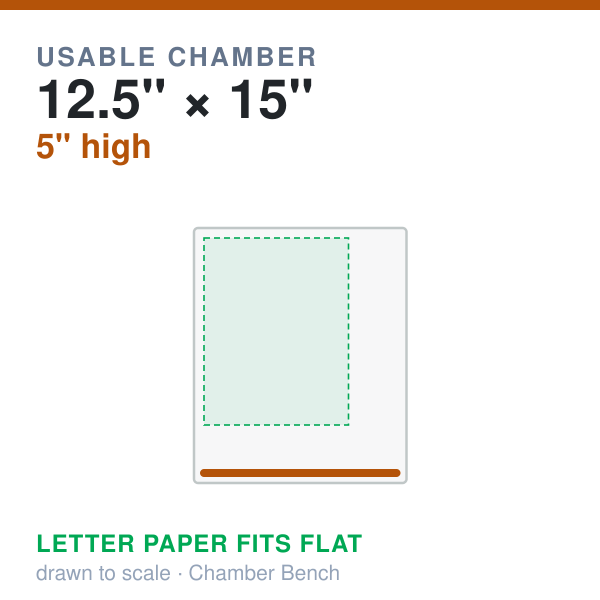
| VacMaster VP230 | 12.25 in | 12.5 x 15 x 5 | 12 x 15 in | 15 in |
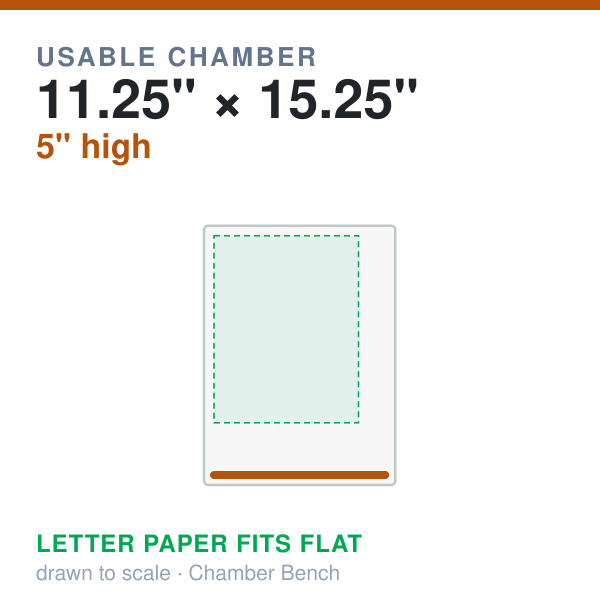
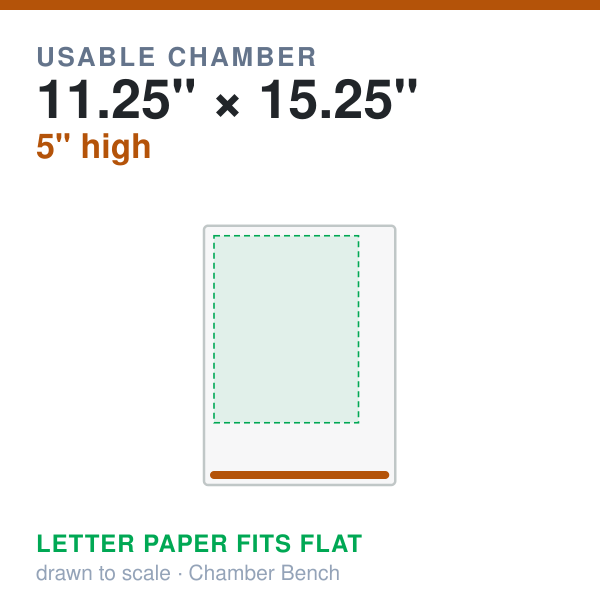
| VacMaster VP215 | 11.25 x 15.25 x 5 | 10 x 13 in | 15.25 in | |
| VacMaster VP210 | 11.25 x 15.25 x 5 | 10 x 13 in | 15.25 in | |
| Wevac CV12 Pro | 12 in | Conflicting: 12.2 x 13.0 x 3.9 and 12.4 x 12.8 x 3.8 both published | Not published | Not computed while the chamber record conflicts |
| Avid Armor USV32 | 11.5 in | 11.5 x 12 x 3.5 | Not published | 12 in |
| Gasbye CV4520 | 11.5 in | Not published (9.7 width only) | Not published | Not published |
| VEVOR DZ-260S | 10.2 in | 13 x 10.6 x 2 | Not published | 10.6 in |
| Avid Armor USV20 | 11.5 in | 12.25 x 8.5 x 3 | 11 x 10 in | 8.5 in chamber vs 10 in stated bag |
The packer brisket is a one-machine problem
A whole packer goes into the bag as one piece with the point sitting proud of the flat, which is why it is the cut that breaks chamber machines. Folding it back on itself to fit a shorter chamber puts a crease under the seal, and a crease under the seal is where a freezer failure starts.
Only one machine in this comparison is stated by its maker to take the size that avoids the fold. The VacMaster VP230 publishes bags to 12 by 15 inches behind a 12.25-inch bar and a chamber measuring 12.5 by 15 by 5 inches.
Chamber height is the gate nobody checks until it stops the lid. We cannot tell you how thick your brisket packs, so measure the loaded pouch at its deepest point and compare it against those published numbers before you commit.
Specifications compared
Scroll horizontally to see every column.
| Model | Seal bar | Chamber | Pump | Weight | Analysis |
|---|---|---|---|---|---|
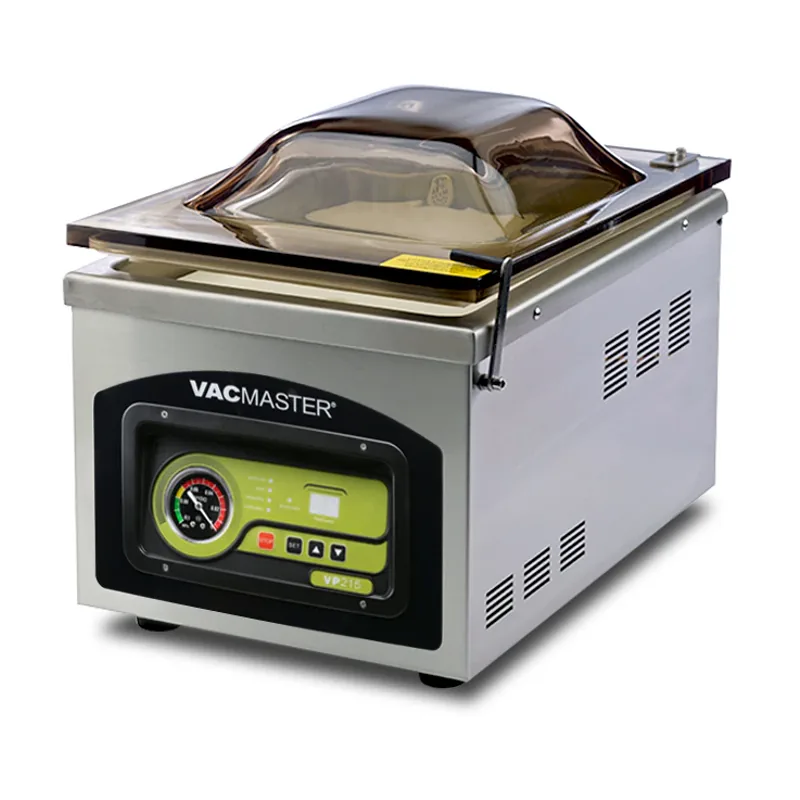 VacMaster VP215 VacMaster VP215 | Conflicting published values: 10 Inch removable seal bar with double seal wire / 10.25 in — Conflicting published record — VacMaster product page · VacMaster manual | Conflicting published values: 1/5 HP (.2 HP) rotary oil pump / 1/4 HP rotary oil pump — Conflicting published record — VacMaster manual · VacMaster support note | Open analysis | ||
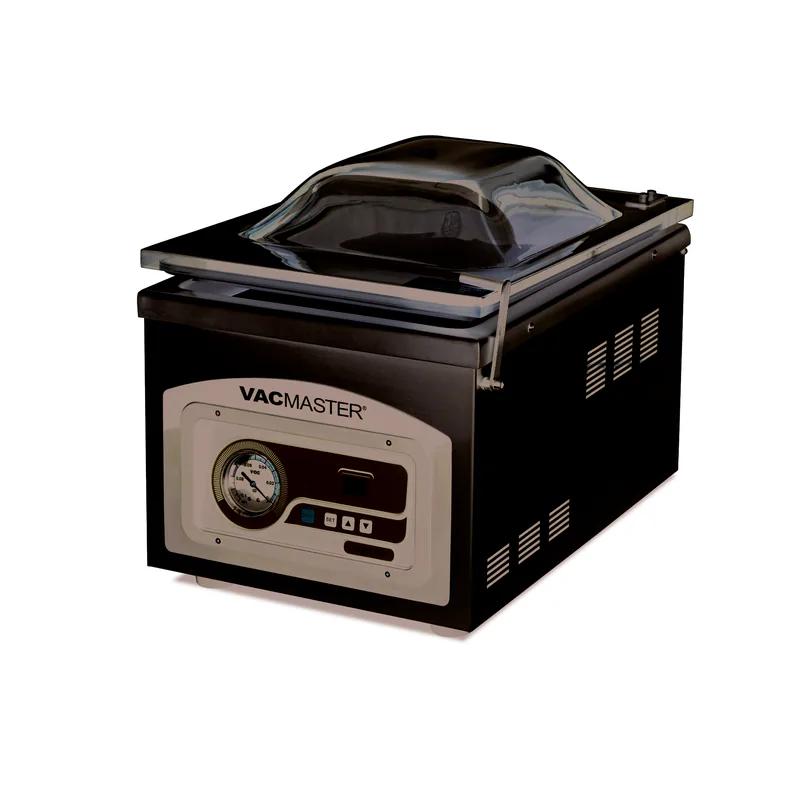 VacMaster VP230 VacMaster VP230 | 1/2 HP rotary oil pump — Verified published record — VacMaster product page · VacMaster support note | Conflicting published values: 89 Pounds / 82 lbs / 96.8 lbs — Conflicting published record — VacMaster product page · VacMaster support note · Amazon listing | Open analysis | ||
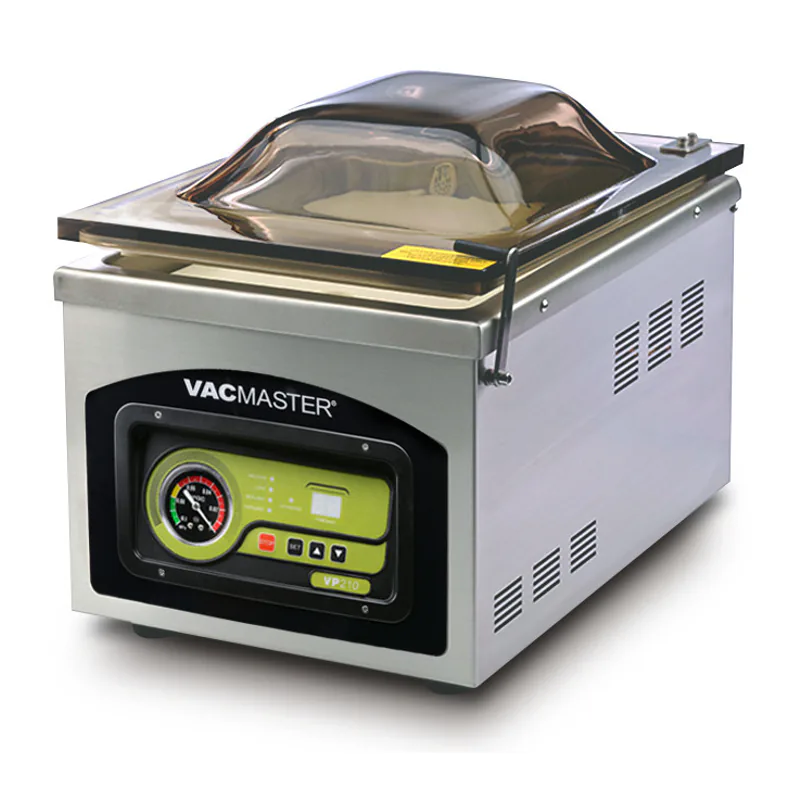 VacMaster VP210 VacMaster VP210 | Conflicting published values: 10 Inch removable seal bar with double seal wire / 10.25 in — Conflicting published record — VacMaster product page · VacMaster manual | 1/4 HP dry, maintenance-free pump — Verified published record — VacMaster product page · VacMaster manual | Open analysis | ||
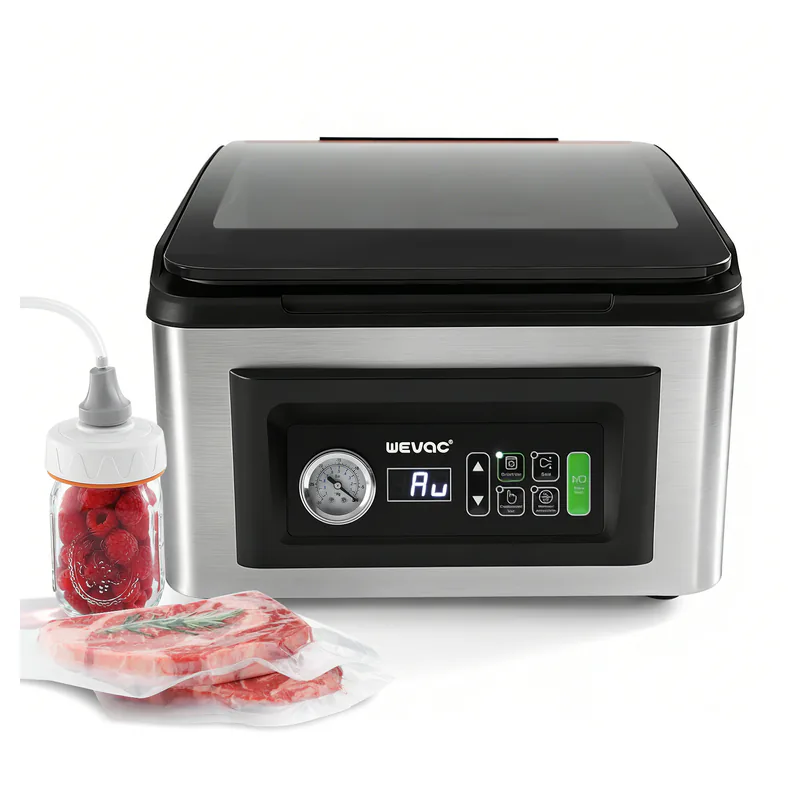 Wevac CV12 Pro Wevac CV12 Pro | 12 in — Verified published record — Wevac Technology Co., Limited product page · Wevac Technology Co., Limited manual | Conflicting published values: 12.2" W x 13.0" D x 3.9" H / 12.4" W x 12.8" L x 3.8" H — Conflicting published record — Wevac Technology Co., Limited product page | Not stated — Verified published record — Wevac Technology Co., Limited product page · Wevac Technology Co., Limited manual | Open analysis | |
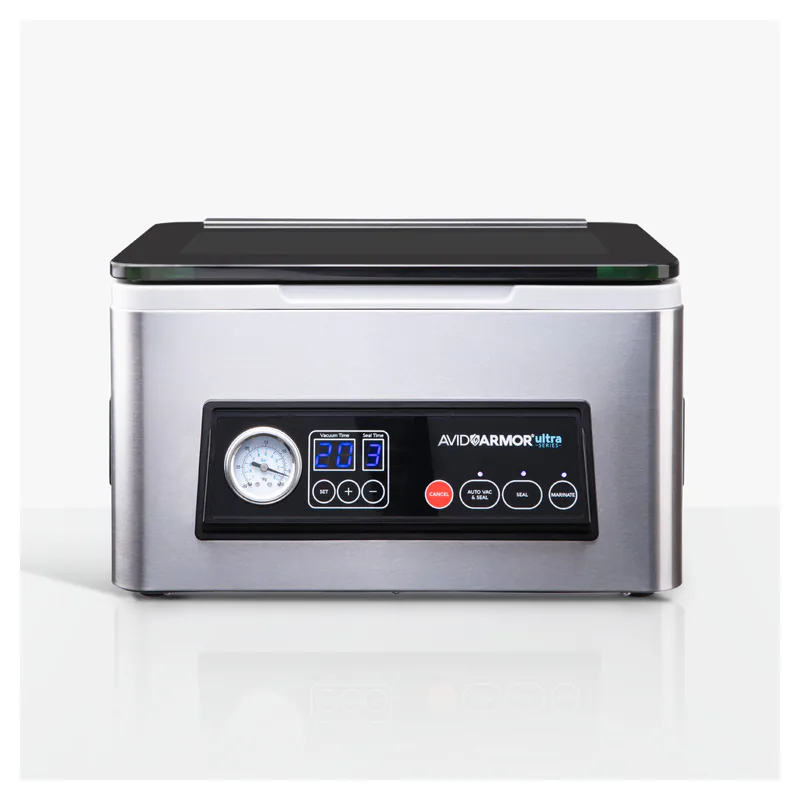 Avid Armor USV20 Avid Armor USV20 | Conflicting published values: 17.3 pounds / 17.55 lb — Conflicting published record — Amazon listing · Avid Armor product page | Open analysis |
Cells reading “Not stated” mean the manufacturer does not publish that figure. We have not substituted an estimate.
Model analyses
Why it fits
- Chamber:
- Weight:
Unanswered or conflicting specifications
- Seal bar: Conflicting published values: 10 Inch removable seal bar with double seal wire / 10.25 in — Conflicting published record — VacMaster product page · VacMaster manual
- Pump: Conflicting published values: 1/5 HP (.2 HP) rotary oil pump / 1/4 HP rotary oil pump — Conflicting published record — VacMaster manual · VacMaster support note
- Power: Conflicting published values: 110 watts at 110 volts / 110V, 60Hz, 4 Amps / Single Phase 110 V, 20 Amp — Conflicting published record — Amazon listing · VacMaster product page · VacMaster manual
Published specifications
- Seal bar: Conflicting published values: 10 Inch removable seal bar with double seal wire / 10.25 in — Conflicting published record — VacMaster product page · VacMaster manual
- Chamber:
- Pump: Conflicting published values: 1/5 HP (.2 HP) rotary oil pump / 1/4 HP rotary oil pump — Conflicting published record — VacMaster manual · VacMaster support note
- Power: Conflicting published values: 110 watts at 110 volts / 110V, 60Hz, 4 Amps / Single Phase 110 V, 20 Amp — Conflicting published record — Amazon listing · VacMaster product page · VacMaster manual
- Weight:
View chamber sizing diagram
Why it fits
- Seal bar:
- Chamber:
- Pump: 1/2 HP rotary oil pump — Verified published record — VacMaster product page · VacMaster support note
- Power: 370 W; 110 V, 60 Hz, 4 A — Verified published record — Amazon listing · VacMaster product page · VacMaster support note
Unanswered or conflicting specifications
- Weight: Conflicting published values: 89 Pounds / 82 lbs / 96.8 lbs — Conflicting published record — VacMaster product page · VacMaster support note · Amazon listing
Published specifications
- Seal bar:
- Chamber:
- Pump: 1/2 HP rotary oil pump — Verified published record — VacMaster product page · VacMaster support note
- Power: 370 W; 110 V, 60 Hz, 4 A — Verified published record — Amazon listing · VacMaster product page · VacMaster support note
- Weight: Conflicting published values: 89 Pounds / 82 lbs / 96.8 lbs — Conflicting published record — VacMaster product page · VacMaster support note · Amazon listing
View chamber sizing diagram
Data quality note: Current official and listing sources publish 82 lb, 89 lb, and 96.8 lb. We retain all three and select none.
Why it fits
- Chamber:
- Pump: 1/4 HP dry, maintenance-free pump — Verified published record — VacMaster product page · VacMaster manual
- Weight:
Unanswered or conflicting specifications
- Seal bar: Conflicting published values: 10 Inch removable seal bar with double seal wire / 10.25 in — Conflicting published record — VacMaster product page · VacMaster manual
- Power: Conflicting published values: 110 watts at 110 volts / 110V, 60Hz, 4.2 Amps / Single phase 110 V, 20 AMP — Conflicting published record — Amazon listing · VacMaster product page · VacMaster manual
Published specifications
- Seal bar: Conflicting published values: 10 Inch removable seal bar with double seal wire / 10.25 in — Conflicting published record — VacMaster product page · VacMaster manual
- Chamber:
- Pump: 1/4 HP dry, maintenance-free pump — Verified published record — VacMaster product page · VacMaster manual
- Power: Conflicting published values: 110 watts at 110 volts / 110V, 60Hz, 4.2 Amps / Single phase 110 V, 20 AMP — Conflicting published record — Amazon listing · VacMaster product page · VacMaster manual
- Weight:
View chamber sizing diagram
Why it fits
- Seal bar: 12 in — Verified published record — Wevac Technology Co., Limited product page · Wevac Technology Co., Limited manual
- Pump: 85 L/min (5,187 in³/min) pump flow rate; architecture not published — Verified published record — Wevac Technology Co., Limited product page · Wevac Technology Co., Limited manual
- Power:
- Weight:
Unanswered or conflicting specifications
- Chamber: Conflicting published values: 12.2" W x 13.0" D x 3.9" H / 12.4" W x 12.8" L x 3.8" H — Conflicting published record — Wevac Technology Co., Limited product page
Published specifications
- Seal bar: 12 in — Verified published record — Wevac Technology Co., Limited product page · Wevac Technology Co., Limited manual
- Chamber: Conflicting published values: 12.2" W x 13.0" D x 3.9" H / 12.4" W x 12.8" L x 3.8" H — Conflicting published record — Wevac Technology Co., Limited product page
- Pump: 85 L/min (5,187 in³/min) pump flow rate; architecture not published — Verified published record — Wevac Technology Co., Limited product page · Wevac Technology Co., Limited manual
- Power:
- Weight:
Why it fits
- Seal bar:
- Chamber:
- Pump:
Unanswered or conflicting specifications
- Power: Conflicting published values: 300 watts at 110 volts / Vacuum Power: 300 Watts; Voltage: 120v - 60hz — Conflicting published record — Amazon listing
- Weight: Conflicting published values: 17.3 pounds / 17.55 lb — Conflicting published record — Amazon listing · Avid Armor product page
Published specifications
- Seal bar:
- Chamber:
- Pump:
- Power: Conflicting published values: 300 watts at 110 volts / Vacuum Power: 300 Watts; Voltage: 120v - 60hz — Conflicting published record — Amazon listing
- Weight: Conflicting published values: 17.3 pounds / 17.55 lb — Conflicting published record — Amazon listing · Avid Armor product page
View chamber sizing diagram
Order film to the chamber, not to the machine name
The sequence that avoids waste is to bag your largest recurring cut in whatever pouch you already have, measure the finished package at its widest, longest and deepest points, then compare those three numbers against the published chamber figures rather than the exterior case.
Two sizes cover most butchery households: the pint for portions and the gallon for large cuts, with the quart in between if your work is uniform.
- Compare against usable chamber figures. Body dimensions on a listing are not chamber dimensions.
Fit summary
The VacMaster VP215 publishes a 10-by-13-inch bag limit and 15.25-inch chamber depth, which between them cover shanks, flats, shoulders and turkey breasts. The VP215 pump is rotary oil, but its horsepower is unsettled: .2 HP in the June 2024 user guide, 1/4 HP on VacMaster's support site. An 84 lb machine and an oil schedule are constraints under either rating.
The VacMaster VP230 publishes the only 12.25-inch bar and 12-by-15-inch bag record in this comparison.
These are published manufacturer and listing records, not bench observations.
Open the VacMaster VP215 analysis · Return to the specifications
Frequently asked questions
What size chamber vacuum sealer do I need for a brisket?
For a whole packer sealed unfolded, you need a bag around 12 by 15 inches, which means a chamber at least 15 inches deep and a seal bar wider than 12 inches. The VacMaster VP230 is the only one of the eight we analyse that states both. For a brisket flat alone, a 10 by 13 inch bag on a VP215 or VP210 is enough.
Is the Avid Armor USV20 big enough for meat?
For portions, yes. Avid Armor states smooth pouches up to 11 by 10 inches, which makes the 6 by 10 inch pint pouch its comfortable size and covers steaks, chops, chicken breasts and fish. A standard 8 by 12 inch quart pouch exceeds that stated 10-inch length, and its three-inch chamber height is the shallowest on this page, so large or bone-in cuts are outside it.
Do I need an oil pump to portion a whole animal?
No, because the cut is stopped by the chamber rather than by the pump. The VacMaster VP210 publishes the same 11.25 by 15.25 by 5 inch chamber and the same 10 by 13 inch bag ceiling as the oil-pump VP215, behind a maintenance-free dry pump, so on the published records pump architecture moves the service calendar and not the fit. Where the pump does carry a published limit is session length, and VacMaster states it in the June 2024 VP215 user guide: "This appliance is designed for a maximum vacuum ON time of 70 seconds and a minimum OFF time of 10 seconds between cycles. Stop the appliance and allow it to cool to ambient temperature if the appliance has been in use for 45 minutes." That is VacMaster's own instruction for a long portioning session, quoted rather than tested; Chamber Bench has run no batch of its own. The Wevac CV12 Pro cannot be placed on either side of the question, because its published record gives a pump flow rate of 85 L/min and never states whether that pump is oil or dry.
What this page covers, and what it does not
This page covers only the eight chamber machines we verified against live Amazon listing data on 2026-08-26, matched cut by cut against their published chamber and seal bar figures. The Anova chamber sealer is not here because we could not verify its listing, which is a boundary on our evidence rather than a judgement on the machine.
How published evidence is evaluated
Chamber Bench compares manufacturer and listing evidence for the eight machines in this comparison. The current analysis covers usable chamber geometry, seal-bar length, pump type, serviceability, and other published ownership constraints.
Where a manufacturer publishes nothing, we say so rather than filling the gap:
- We record which specifications a manufacturer declines to publish.
- We flag contradictions inside a listing rather than quietly picking one figure.
- We keep partial records distinct from complete published dimensions.
- We do not reproduce retailer ratings or prices as editorial fact.
What we have not done: we have not physically run these machines. No cycle times, seal-strength figures, or noise measurements on this site come from our own bench, and none are presented as if they do. Our test protocol documents the measurements required before any model can carry a tested performance conclusion.