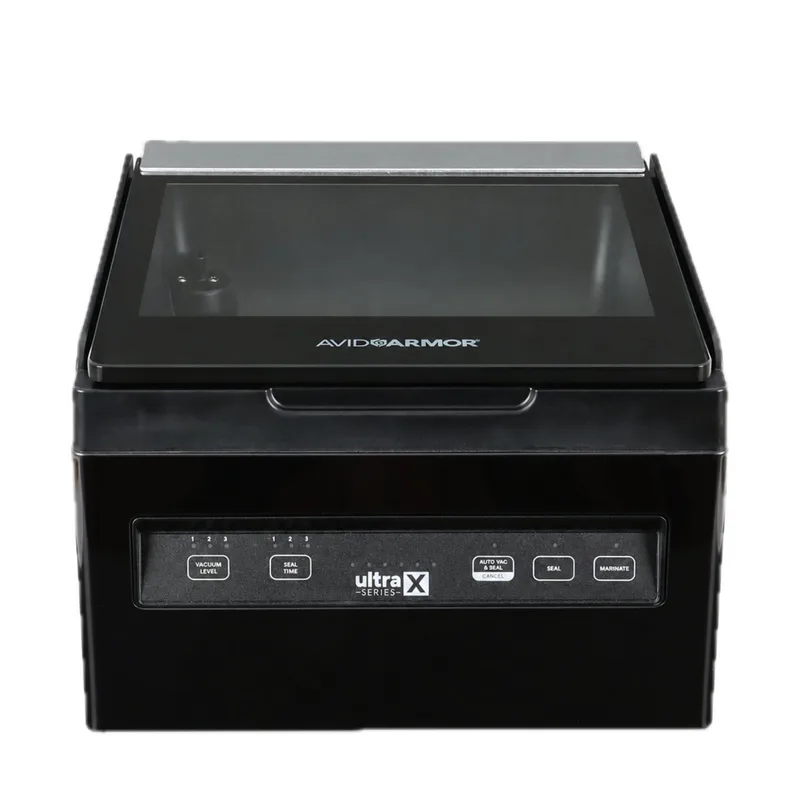
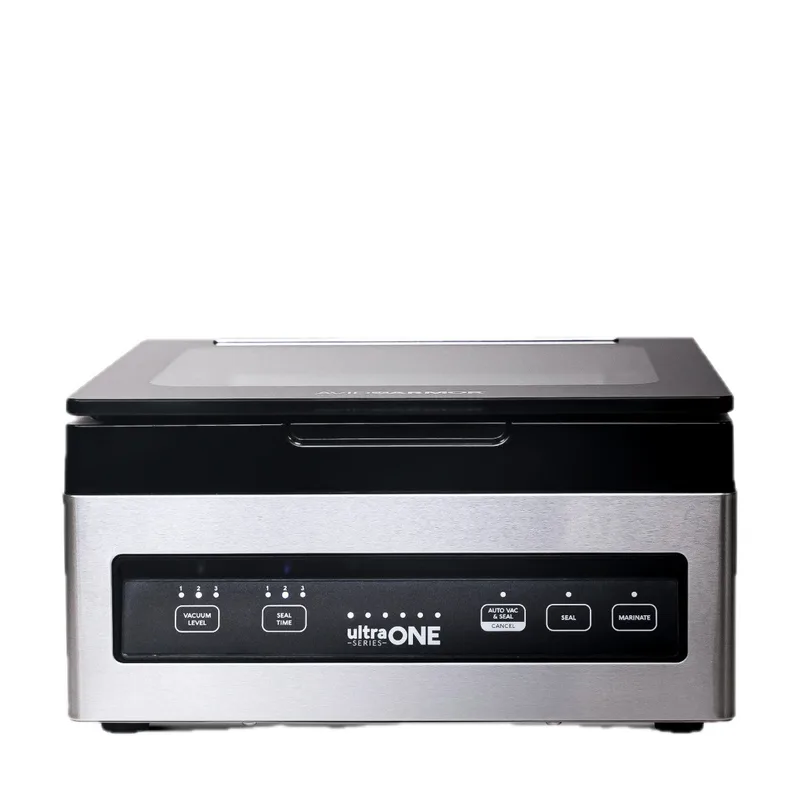
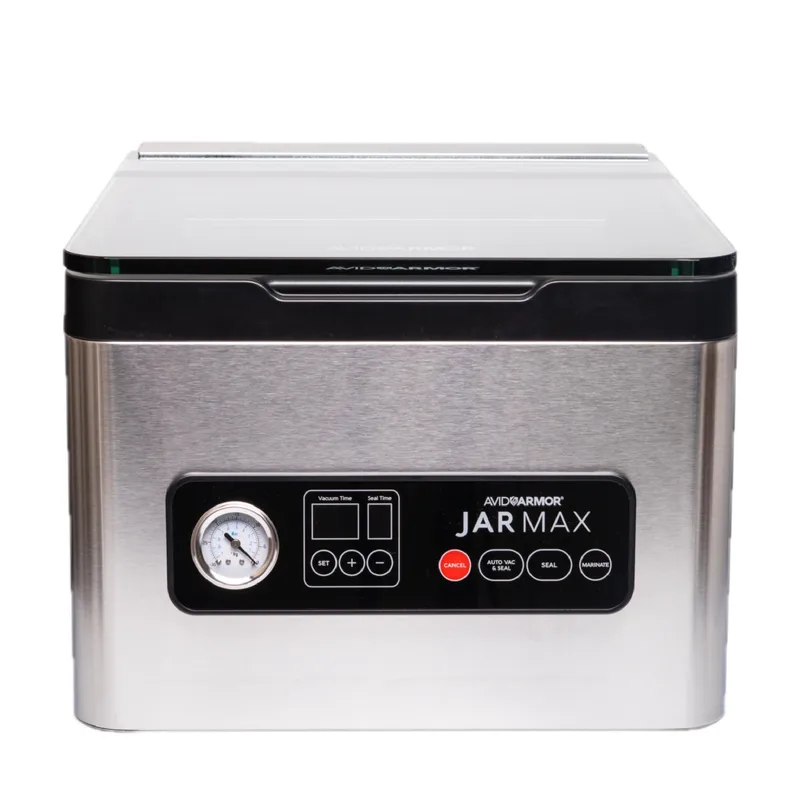
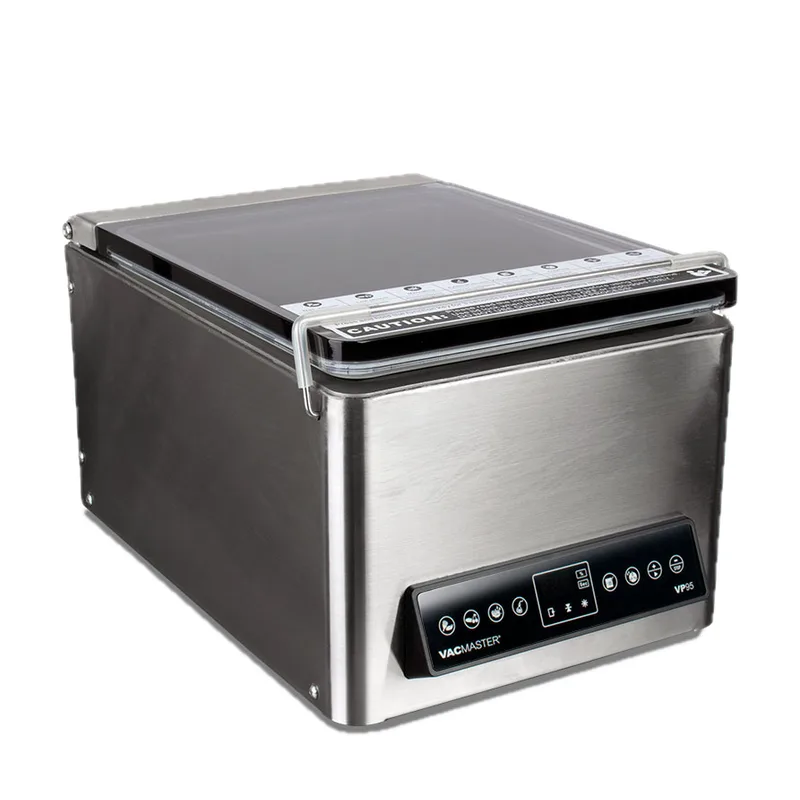
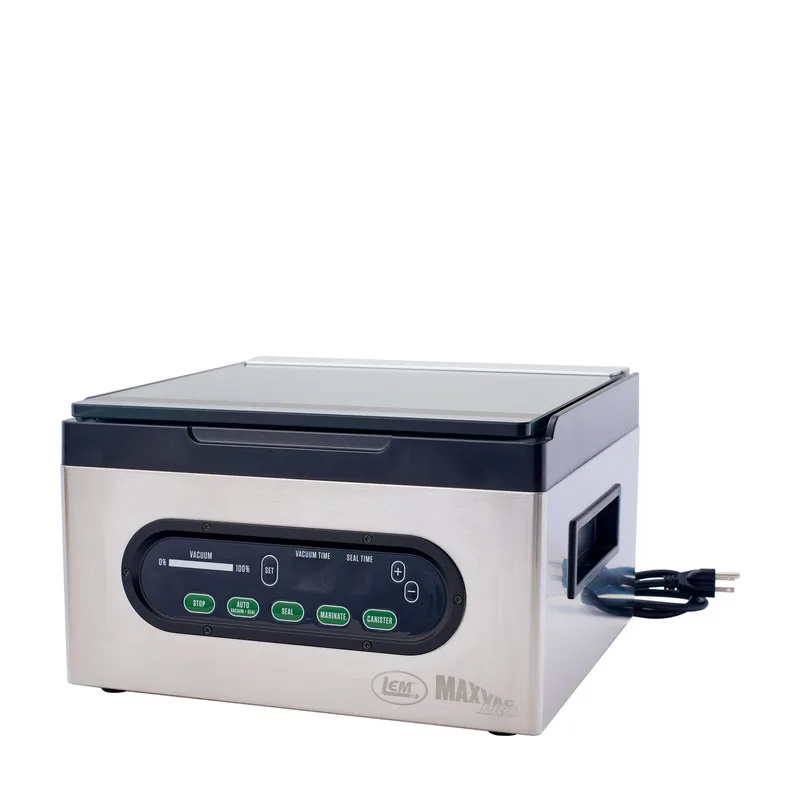
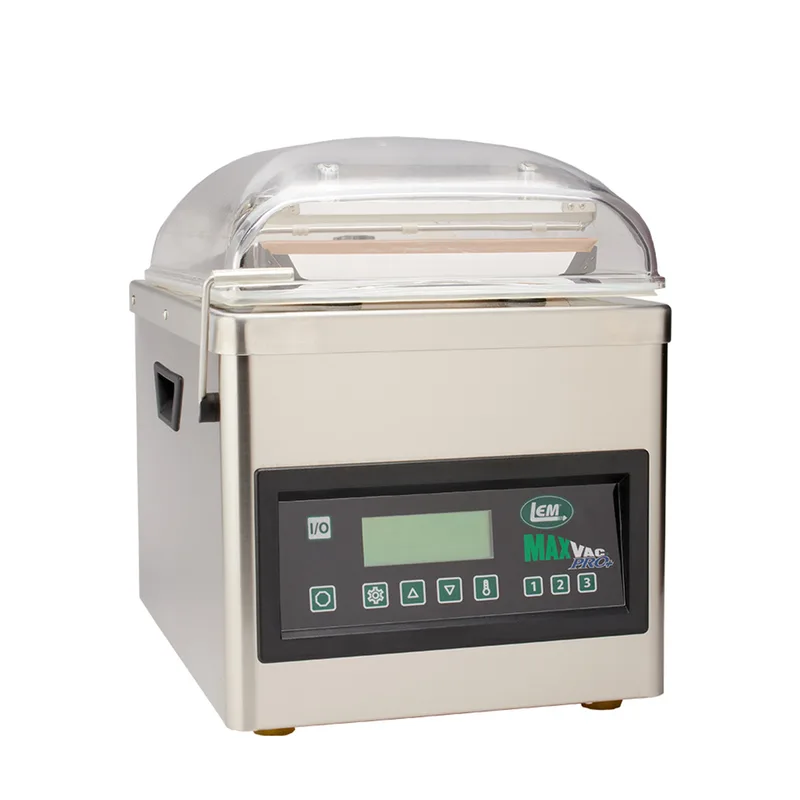
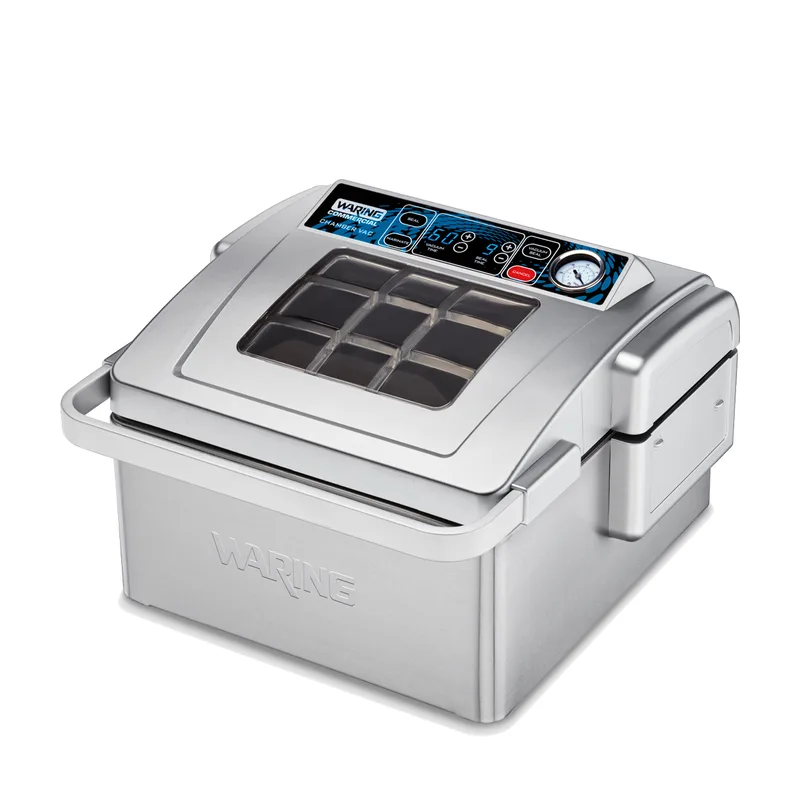
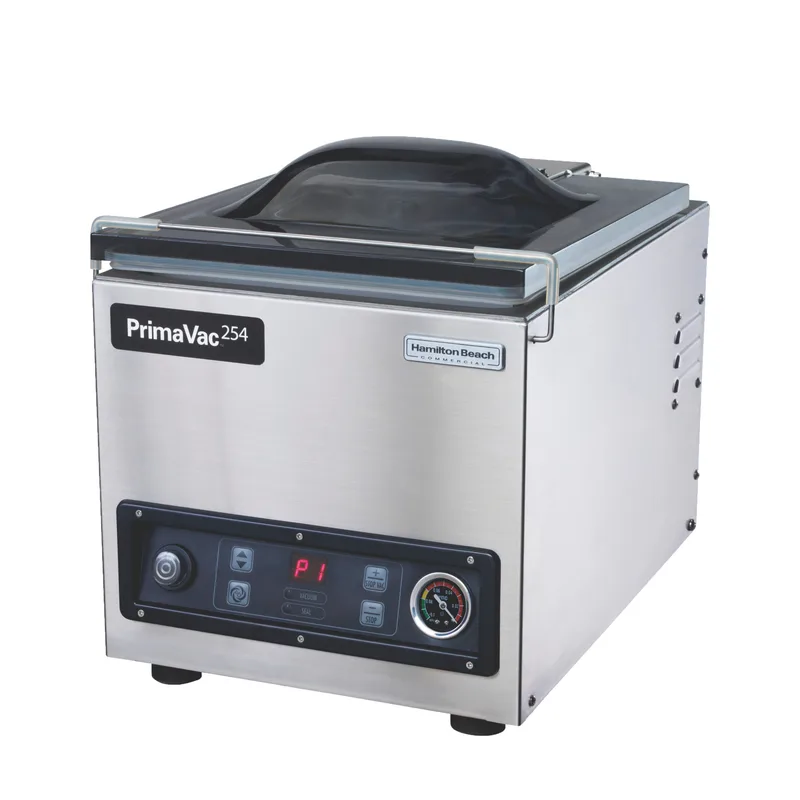
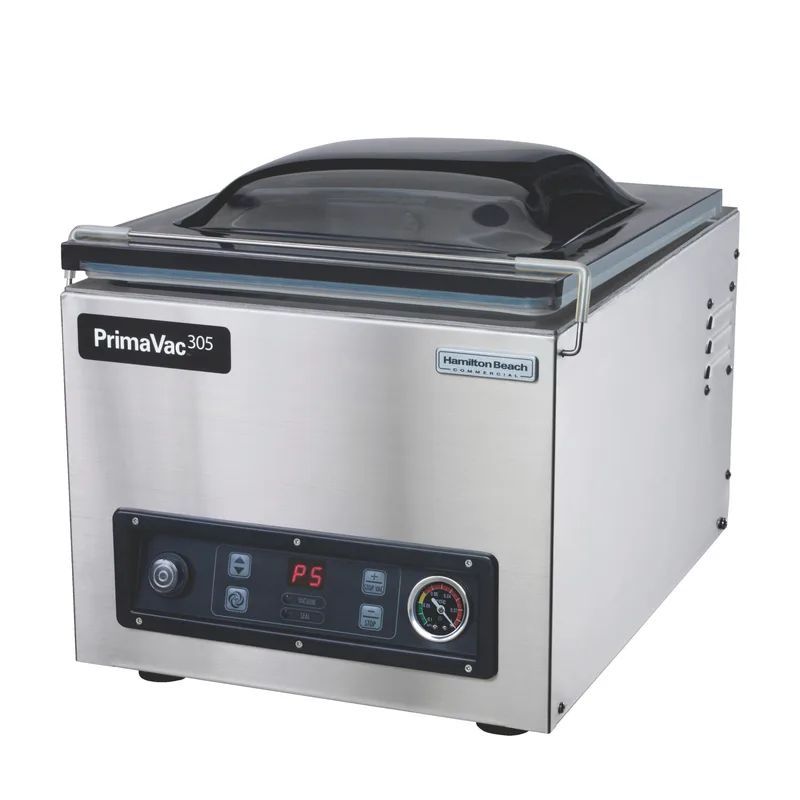
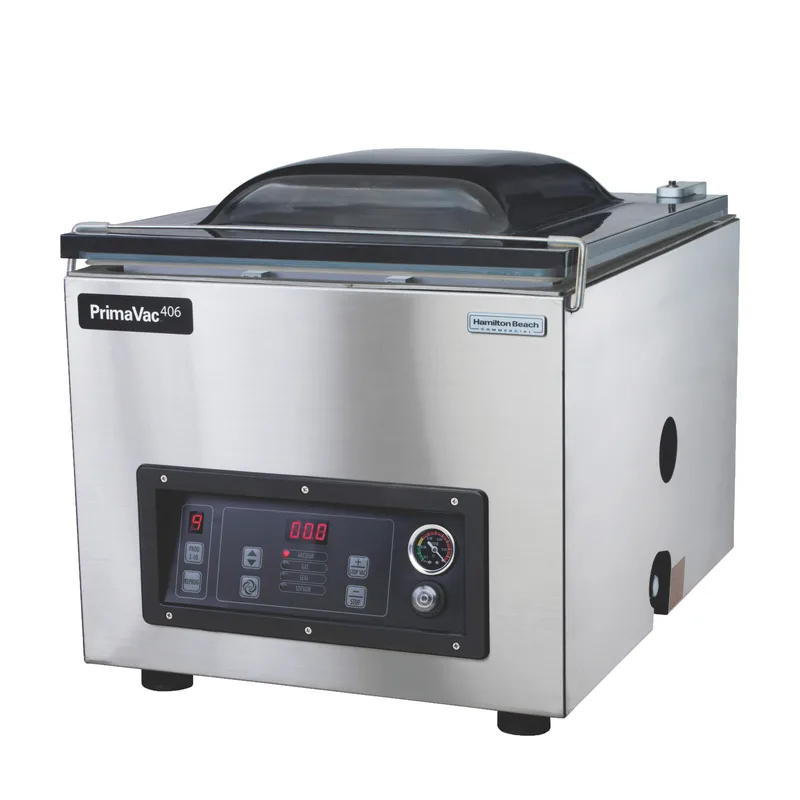
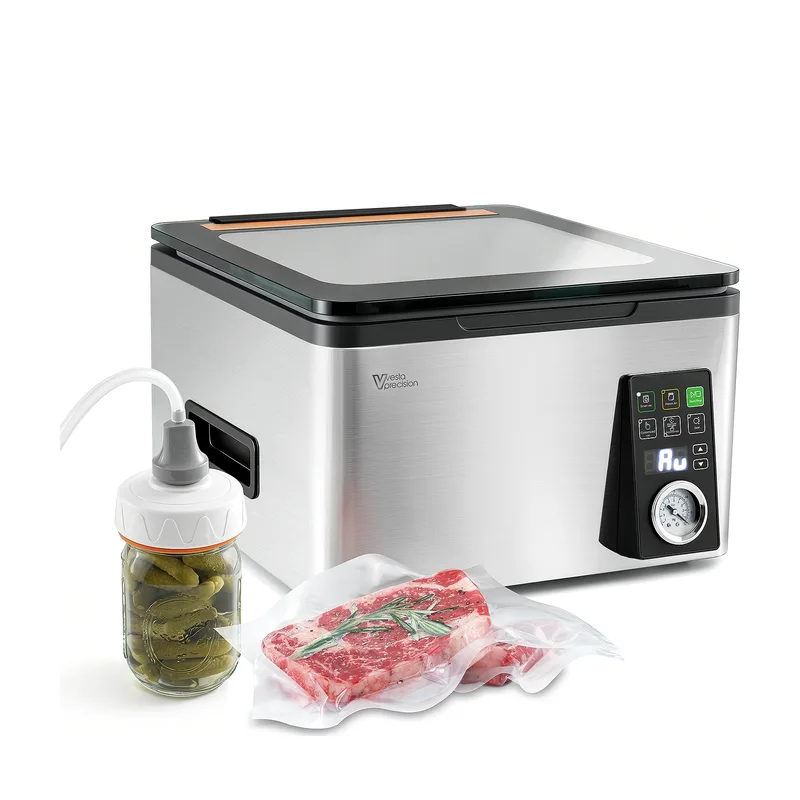
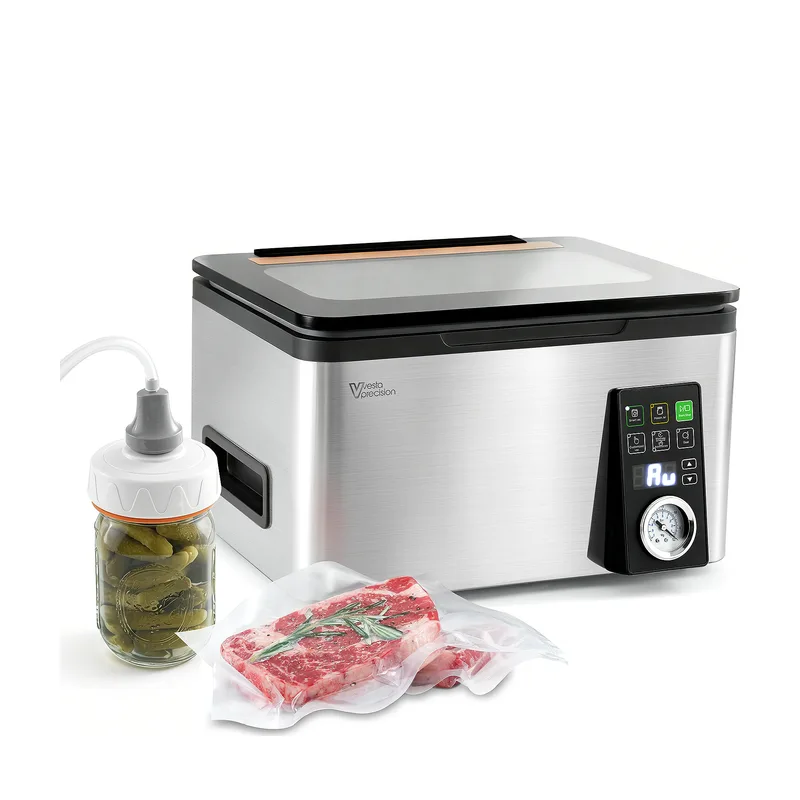
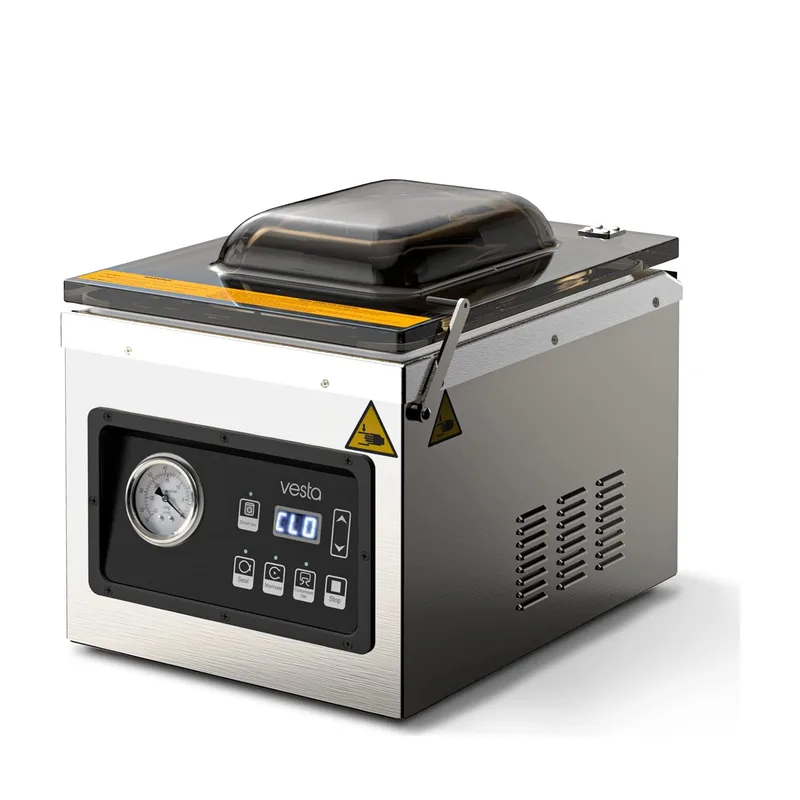
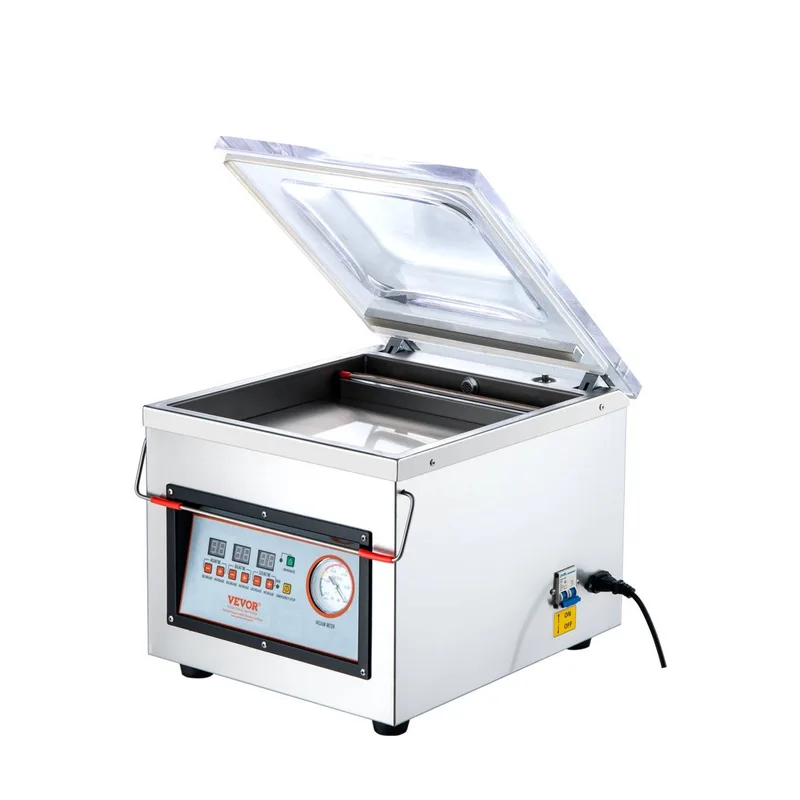
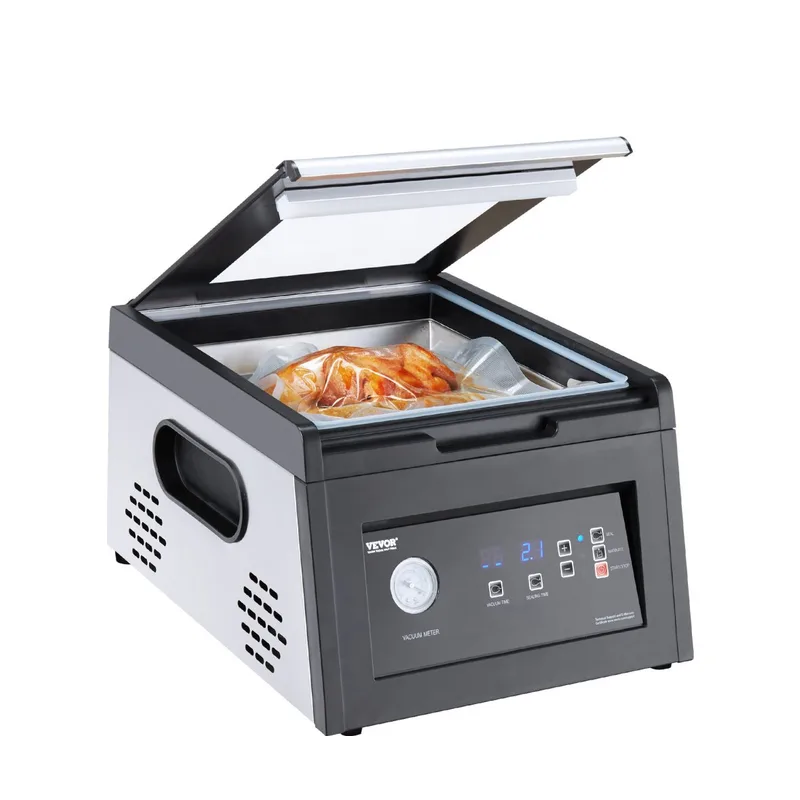
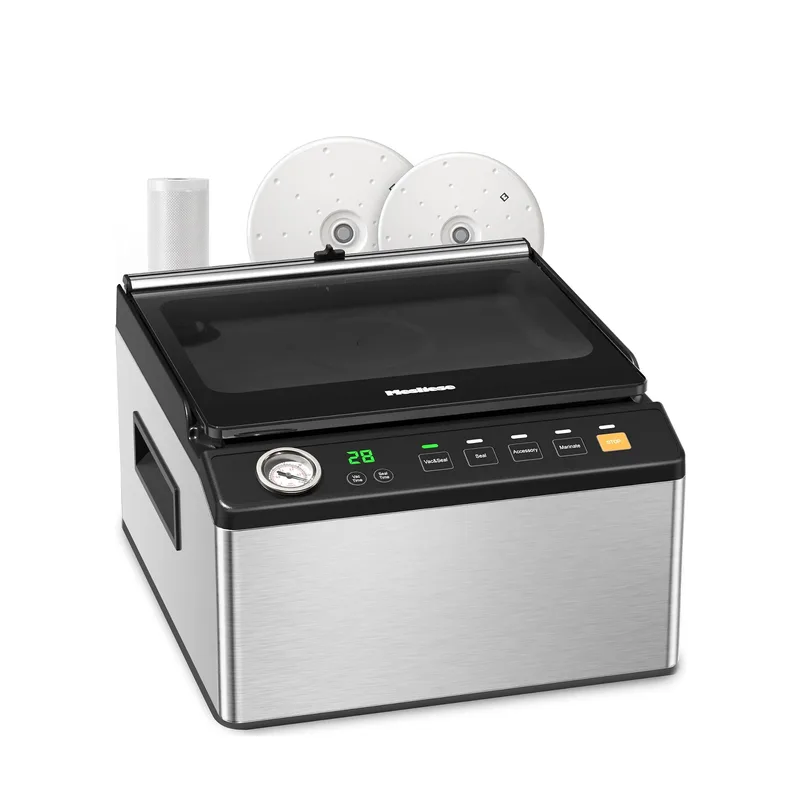
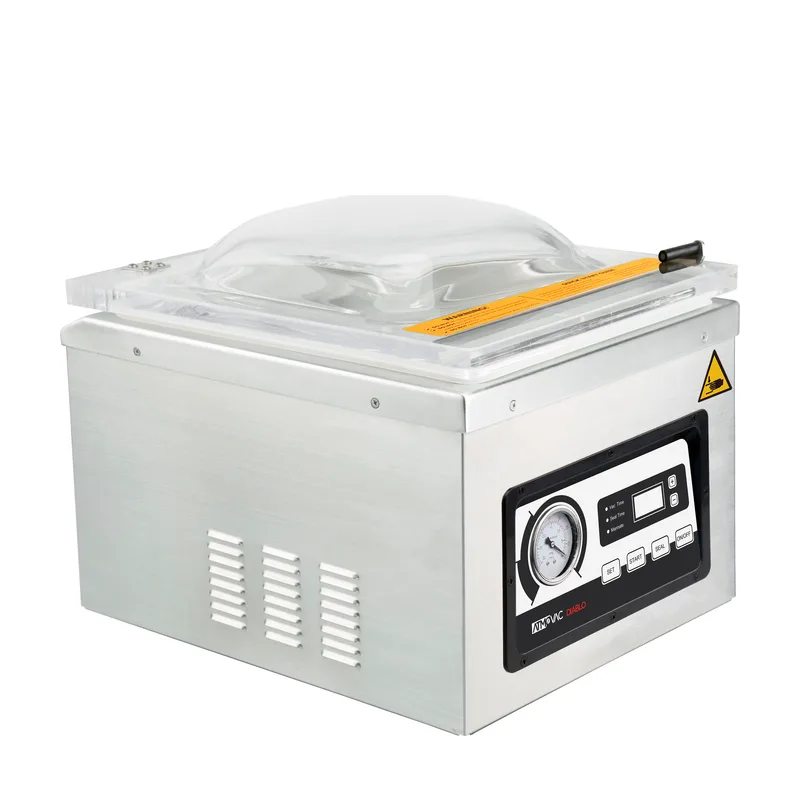
Is a chamber machine right for your kitchen?
A chamber sealer evacuates air around the entire pouch before the seal bar closes. That equal-pressure cycle makes liquids and smooth chamber pouches practical in ways that external suction machines often cannot match. The trade is physical: the food and pouch normally need to fit inside a fixed chamber.
That means the first buying question is not which logo is best. It is whether your recurring portions, countertop, electrical setup, batch size, and appetite for maintenance fit the machine class.
What rules a chamber vacuum sealer out of a kitchen?
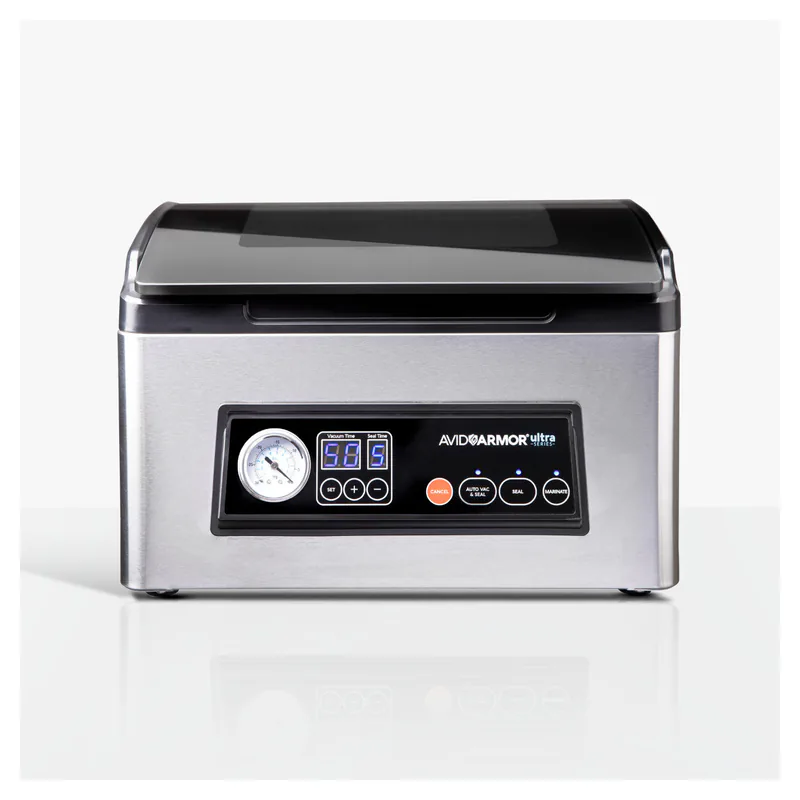
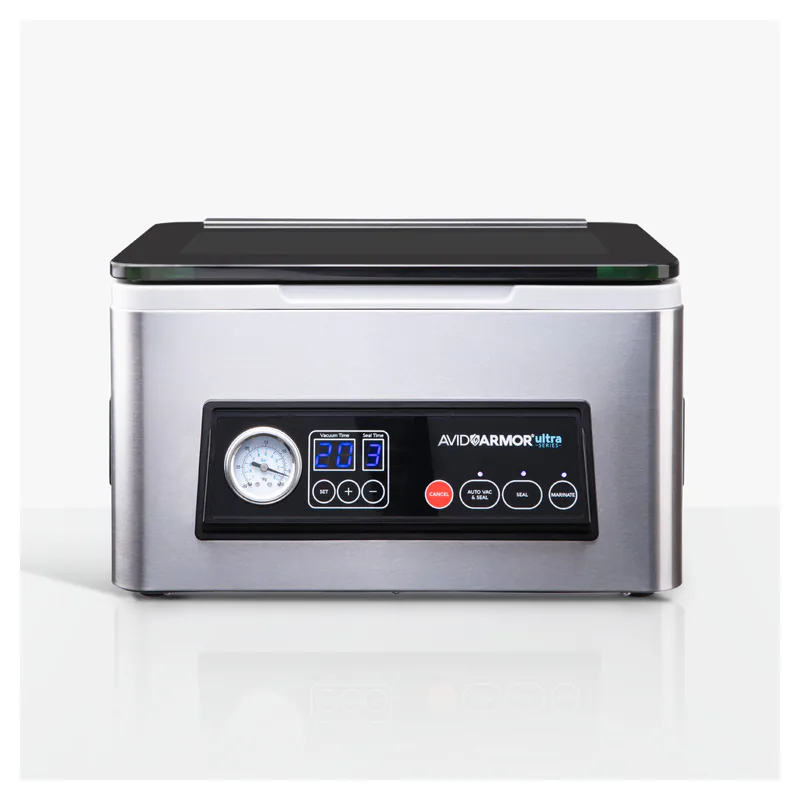
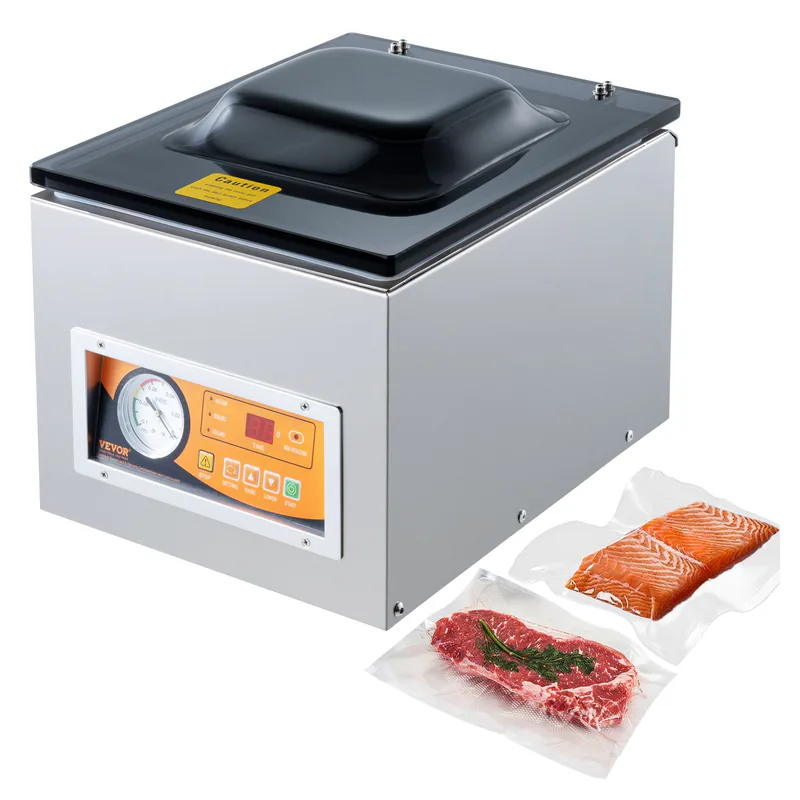
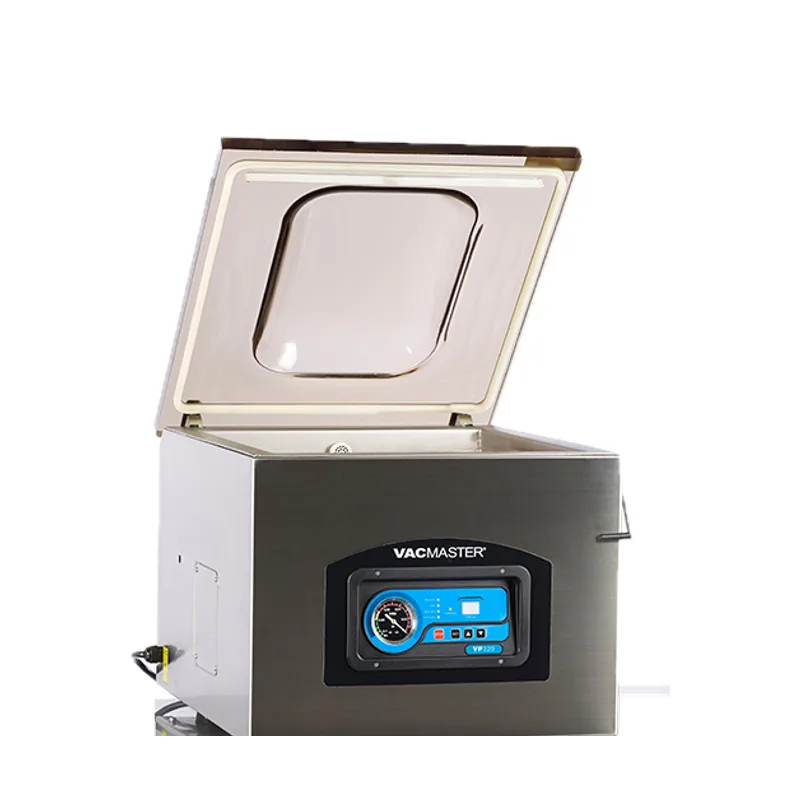
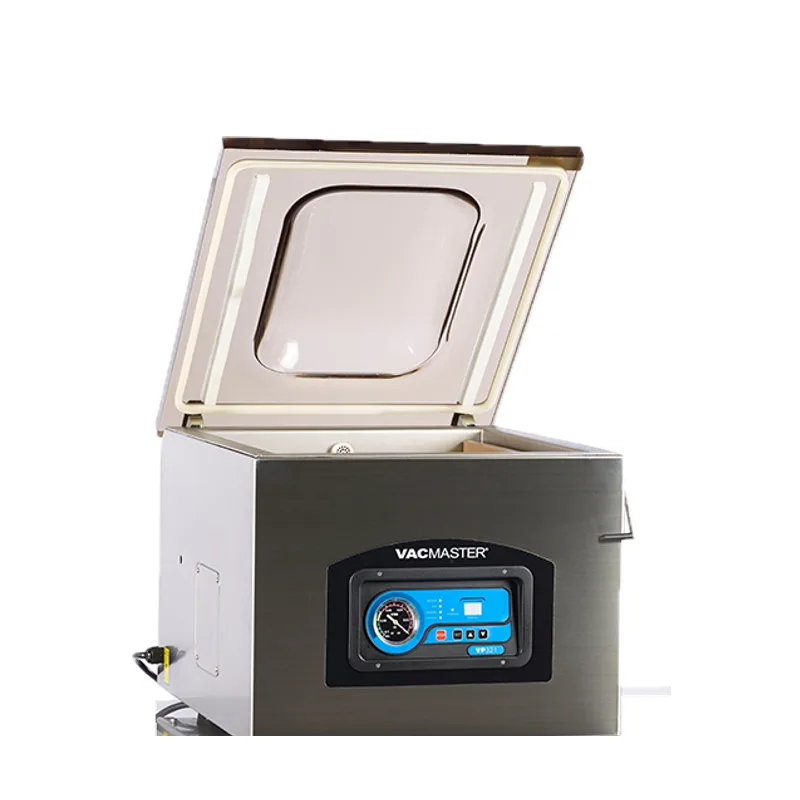
The fixed chamber rules it out. Chamber heights run from 2 inches on the VEVOR DZ-260S to 5 inches on the three VacMaster VP units across the six of the eight analysed machines with a settled chamber record, so a package taller than the lid clearance is eliminated before pump architecture, brand, or feature count enters the decision at all.
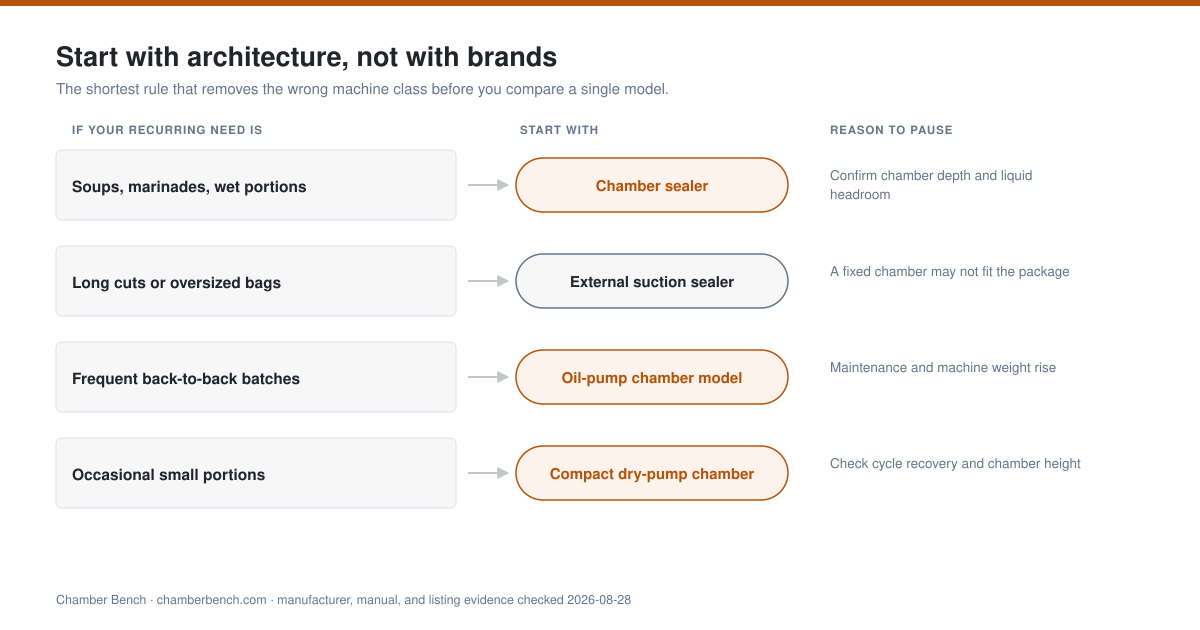
Scroll horizontally to see every column.
| If your recurring need is… | Start with… | Reason to pause |
|---|---|---|
| Soups, marinades, or wet portions | Chamber sealer | Confirm chamber depth and liquid headroom |
| Long cuts or oversized bags | External suction sealer | A fixed chamber may not fit the package |
| Frequent back-to-back batches | Oil-pump chamber models | Maintenance and machine weight rise |
| Occasional small portions | Compact dry-pump chamber models | Check cycle recovery and chamber height |
Source basis[3] Anova Culinary · [4] Anova Culinary Support · [6] Avid Armor
Take six measurements before reading a ranking
Measure the pouch mouth, pouch length, food height, usable chamber length, usable chamber width, and lid clearance. Published exterior dimensions are useful for countertop planning, but they do not prove your common package fits under a curved lid or inside the sealing boundary.
Can I use the machine's outside dimensions to work out whether my food fits?
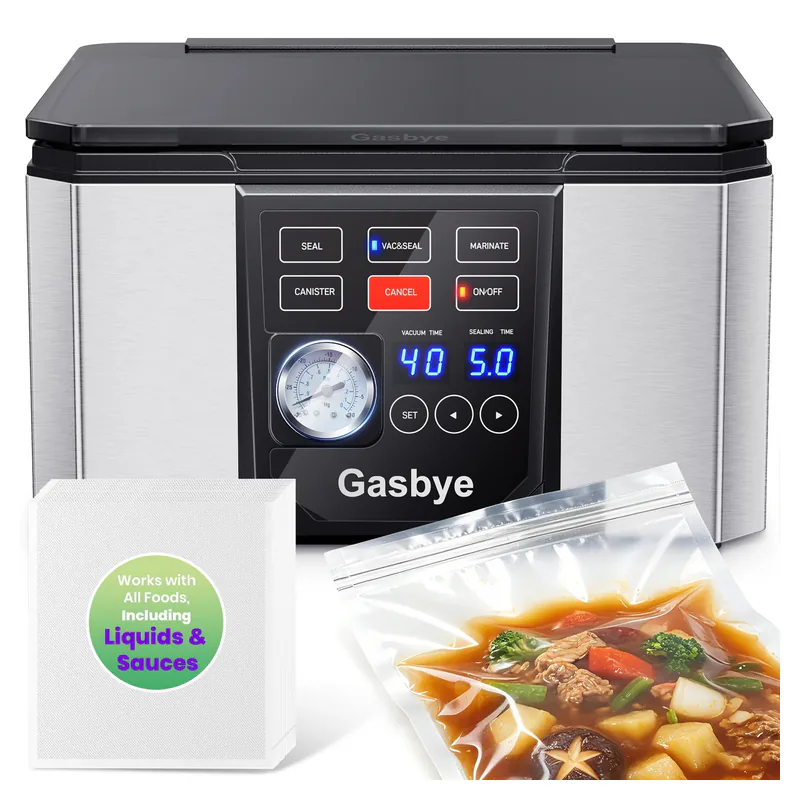
Case dimensions plan counter space and settle nothing else. Gasbye is the clearest example: it publishes a 5.28 quart chamber volume and a 9.7 inch interior width for the CV4520 but no chamber length or height, so nothing about that machine's exterior reveals whether a filled pouch clears the lid. Package fit is decided by the usable chamber envelope a manufacturer states, or it stays unresolved.
- Build a paper template from the manufacturer’s stated chamber dimensions.
- Place your largest typical portion on the template inside its intended pouch.
- Leave enough clean, flat pouch above the food for the seal bar and clamp.
- Check the lid profile, not just the deepest point in the chamber.
- Confirm the machine can remain level, ventilated, and reachable in normal use.
Source basis[4] Anova Culinary Support · [5] VacMaster: VP215 user manual · [6] Avid Armor
Match the pump to the work
Dry pumps remove oil changes from the ownership routine and appear in compact home-oriented machines. Oil pumps add service work and tend to appear in heavier machines built for more sustained use. Neither label alone proves speed, final vacuum, durability, or value; those outcomes require comparable measurements.
Count your typical seals per session and how often those sessions happen. A hunter processing a large batch and a sous-vide cook sealing two dinner portions are buying for different duty cycles even if both search for the same product category.
Does the pump rating tell me how fast a machine will be?
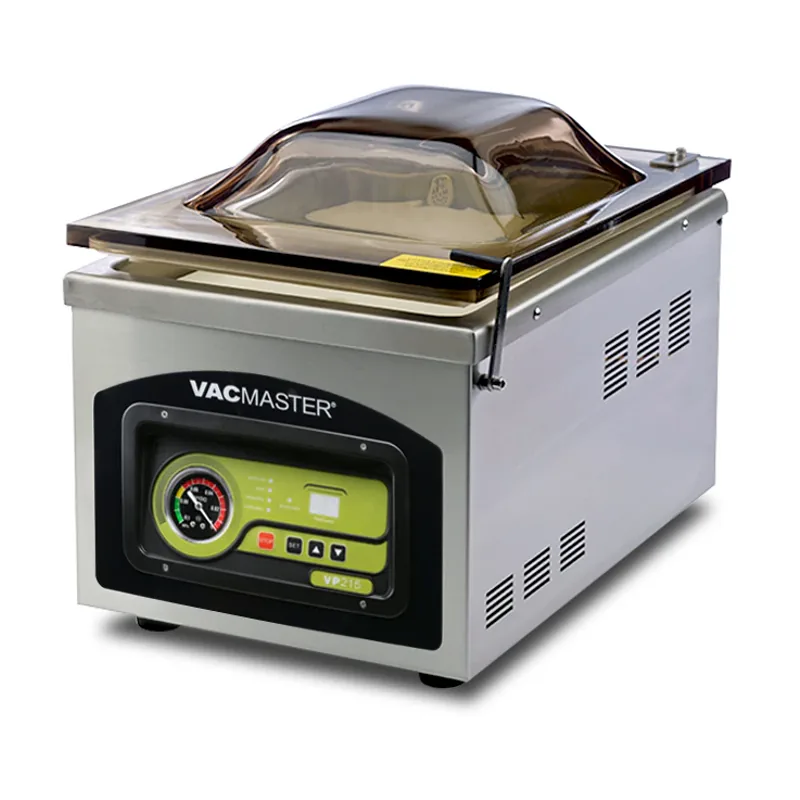
Pump ratings establish no cycle time, and on the VacMaster VP215 the rating itself is contested: the June 2024 VacMaster user guide prints .2 HP for that rotary oil pump, while VacMaster's own Help Center prints 1/4 HP. Both sources agree the architecture is rotary and oil-lubricated; neither figure is a measured cycle, and Chamber Bench has timed nothing.
Source basis[4] Anova Culinary Support · [5] VacMaster: VP215 user manual · [6] Avid Armor · [7] VacMaster: VP215 Chamber Vacuum Sealer User Guide (June 2024) · [8] VacMaster Help Center
Questions readers still ask
What is the first specification to check on a chamber vacuum sealer?
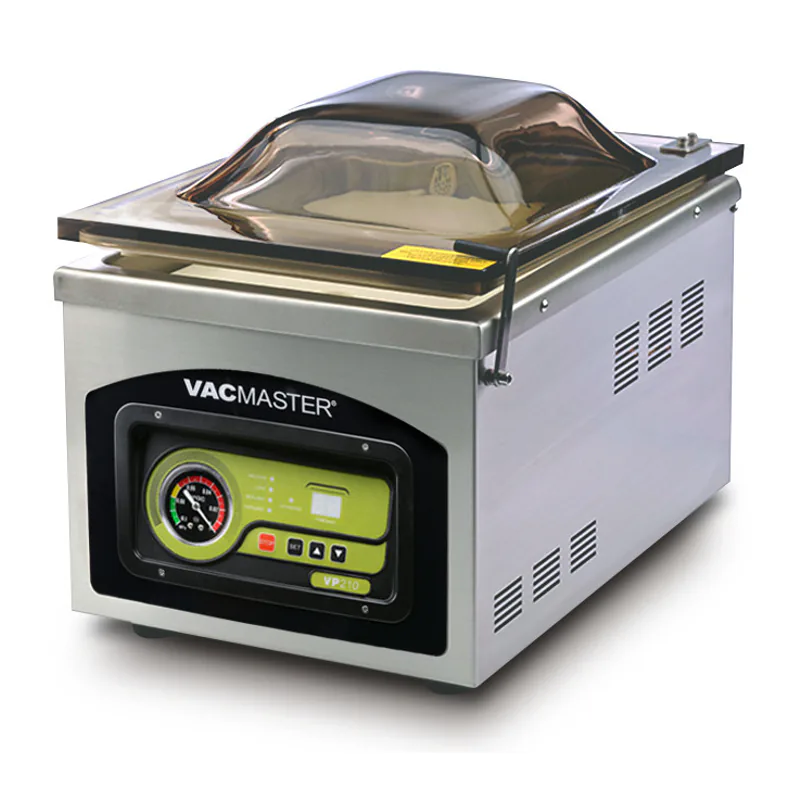
Usable chamber length, width and height come first, because a package the box will not take cannot be sealed at any pump rating. Six of the eight machines we analyse in full publish a chamber envelope Chamber Bench treats as settled, and their floors run from 8.5 inches deep on the Avid Armor USV20 to 15.25 inches on the VacMaster VP215 and VP210.
Do all manufacturers publish the same specifications?
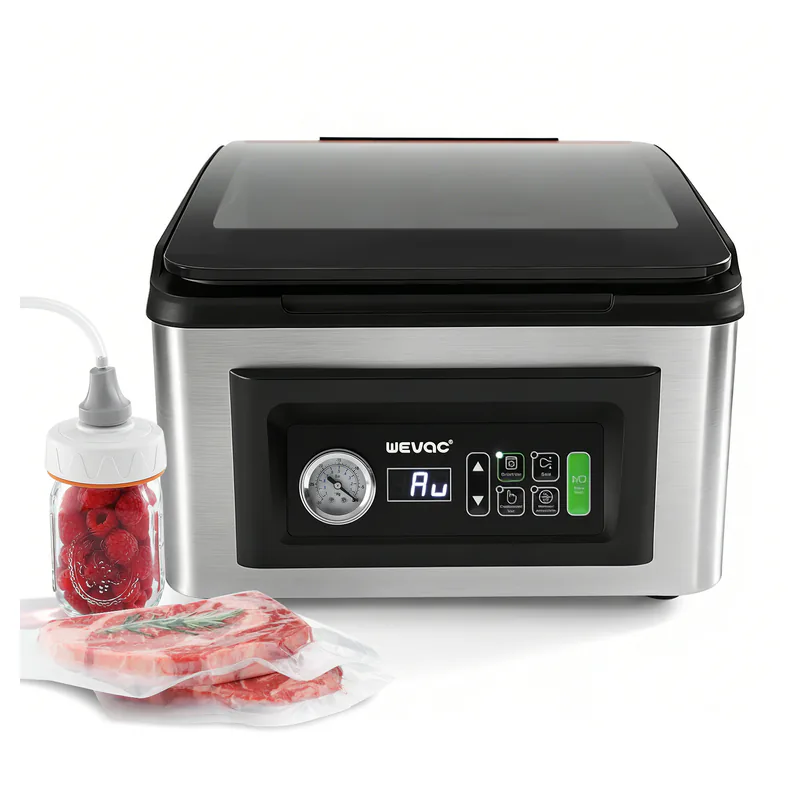
Manufacturers publish very different amounts, and the gaps are the point. Gasbye publishes only a partial chamber record for the CV4520 — 5.28 quarts of volume and a 9.7 inch interior width — and states neither a pump architecture nor a machine weight. Wevac publishes two different chamber envelopes for the CV12 Pro. Chamber Bench reports both situations as unresolved instead of filling them in.
Is a heavier chamber vacuum sealer a better one?
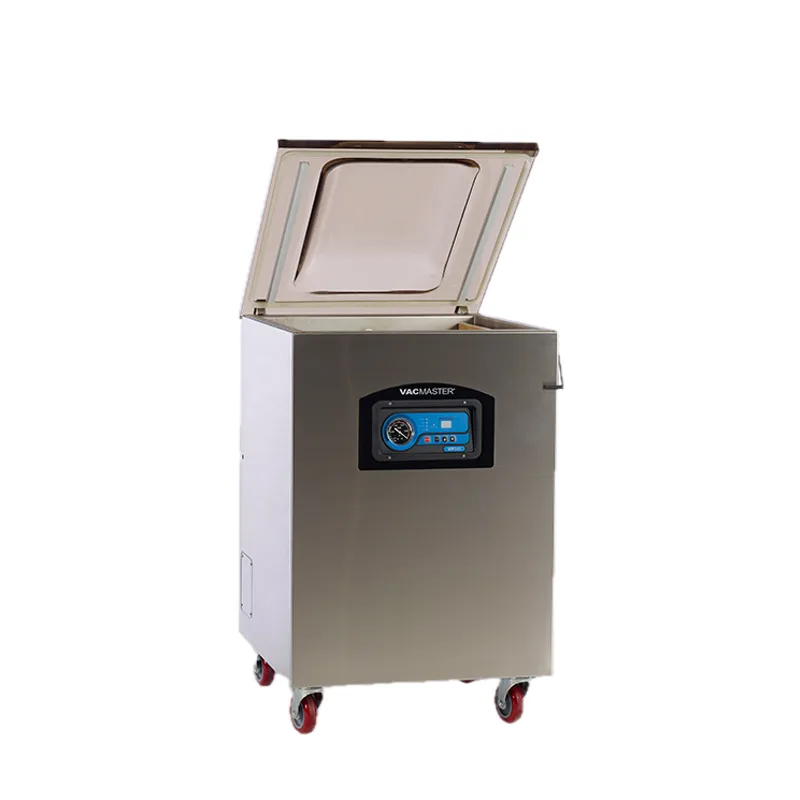
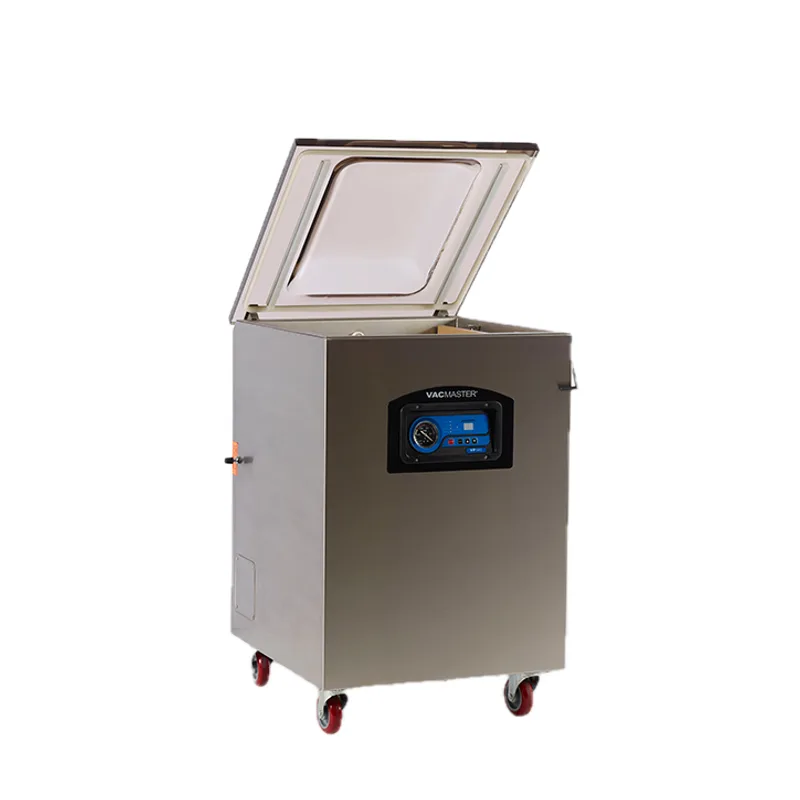
Machine weight is a placement constraint, not a quality measure. The VacMaster VP215 publishes 84 lb; the Avid Armor USV20's own published weight is contested between 17.3 and 17.55 lb. A machine heavy enough to need lifting into a cabinet after every session tends to get used less, whatever is inside it.
Does Chamber Bench name a best chamber vacuum sealer?
Chamber Bench publishes no overall ranking, score or winner, because it has run no physical test. What it publishes instead is conditional: if unfolded packer-brisket width is what binds, the VacMaster VP230 is the only one of the eight we analyse in full publishing a 12.5 by 15 by 5 inch chamber. That is an answer bounded by a constraint, not a placing.
Can a chamber vacuum sealer make food shelf stable?
A chamber vacuum sealer cannot make any food shelf stable. USDA FSIS guidance is that vacuum packaging removes air without sterilizing the contents, and that Clostridium botulinum can grow where oxygen is low, so perishable vacuum-packed food still requires refrigeration at 40°F or below, or freezing at 0°F.
Sources
Each record carries its own access date. Manufacturer statements are attributed; they are not treated as Chamber Bench test results.
- What is vacuum packaging?USDA Food Safety and Inspection Service — Government definition of vacuum packaging and its role in slowing quality loss. · Accessed
- Can Clostridium botulinum be in vacuum-packaged foods?USDA Food Safety and Inspection Service — Low-oxygen safety limits and cold-storage requirements for perishable food. · Accessed
- Precision Chamber Vacuum SealerAnova Culinary — Manufacturer explanation of chamber pressure, sealing, liquid use, and machine controls. · Accessed
- Chamber Vacuum Sealer frequently asked questionsAnova Culinary Support — Official pouch, pump, chamber-volume, seal-width, and operating specifications. · Accessed
- VP215 user manualVacMaster — Primary manual for oil-pump setup, operation, cleaning, and maintenance. · Accessed
- USV20 and USV32 side-by-side comparisonAvid Armor — Manufacturer comparison showing how chamber volume affects pouch fit and cycle behavior. · Accessed
- VP215 Chamber Vacuum Sealer User Guide (June 2024)VacMaster — Current 24-page guide: oil schedule and quantity, duty-cycle safeguard, seal-appearance rule, troubleshooting, and the full specification table. · Accessed
- What is the difference between the VP210 and the VP215?VacMaster Help Center — Manufacturer pump comparison, the contested 1/4 HP rating, and a third oil interval expressed as roughly twice a year. · Accessed