Not one manufacturer in this comparison publishes the height of its machine with the lid open. Not one — and on a chamber sealer the lid hinges at the back and swings up, so that is the figure deciding whether the machine can be used in the spot you cleared for it. A unit that fits your counter perfectly can be unusable eight inches under a wall cabinet, and no spec sheet on the market will warn you. Counter depth is the constraint buyers check and misjudge; cabinet clearance is the one nobody checks at all; and mass is the third, which settles whether the machine gets stowed after a session or simply moves in permanently.
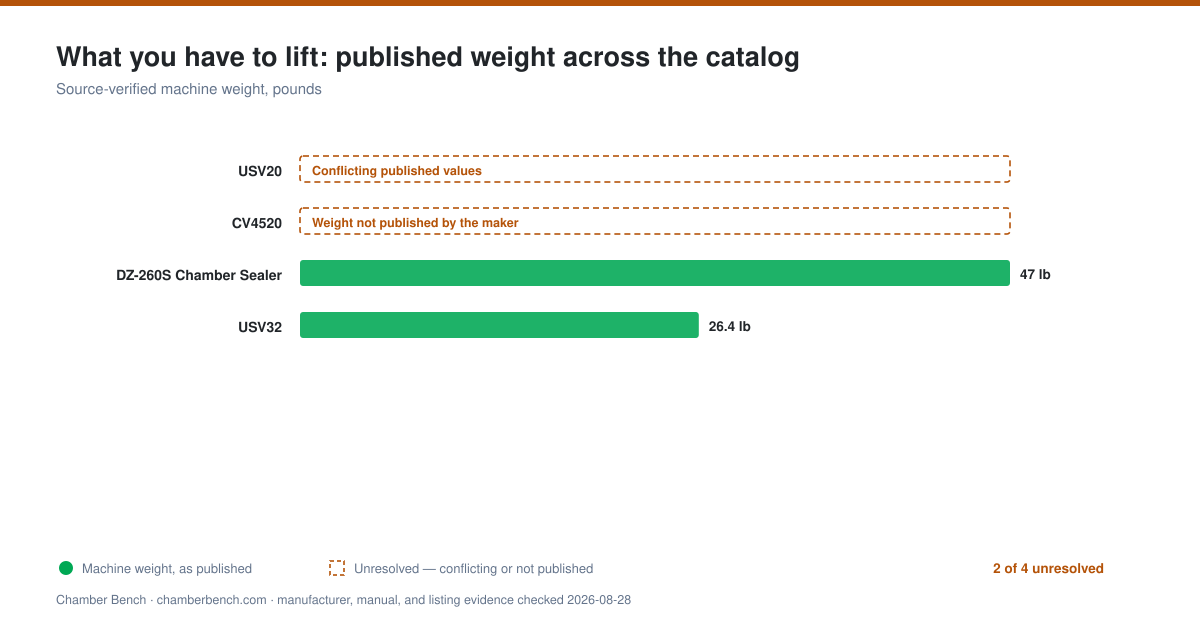
The three measurements your kitchen imposes
Counter depth is the constraint people check and still get wrong. The usable depth is not what the countertop was sold as; it is the distance from whatever already lives against the backsplash to the front edge, and a chamber machine wants all of it plus room for the cord and the lid hinge behind. Every machine in this comparison is deeper than it is tall, which is the opposite of the toaster-oven mental model most buyers arrive with.
Cabinet clearance is the constraint nobody checks, and it is the one that ruins a purchase after the box is open. A chamber lid does not slide or lift off; it rotates up and back on a hinge, so the machine occupies far more vertical space in use than at rest. No manufacturer in this comparison publishes a height with the lid open. Not one. That means the measurement that decides whether you can raise the lid under your own cabinets cannot be checked against any spec sheet on the market, and the only reliable answer is a tape measure held against your own kitchen.
- Measure counter depth from the back of whatever already occupies the wall, not from the wall itself.
- Measure from the countertop to the underside of the wall cabinet directly above the spot you intend to use.
- Assume the lid needs meaningful clearance above the machine and some room behind it for the hinge, because no maker here publishes either figure.
- Decide before you order whether the machine stows or stays. That single answer rules out more of this category than seal bar length ever will.
Kitchen clearances vary by house, by cabinet run and by whether anything sits on the counter beneath. We have not verified a figure that would hold for yours, so we will not print one. Measure the gap above the spot you actually intend to use, then read the table below.
Every dimension in this category measures the hole, not the machine
Almost every dimension published in this category describes the chamber, not the machine. That distinction is invisible on a listing page and decisive in a kitchen: the chamber is the hole in the middle, and the body wraps around it with walls, a control panel, a pump and a hinge. So a published chamber width is not a footprint. It is a floor under a footprint, and the real machine is wider, deeper and taller than the number you were given.
Used that way, the chamber figure is still worth having. A machine cannot be narrower than its own chamber, so a 13-inch chamber width means at least 13 inches of counter is gone before you count the case. The table below states each published figure, labels what it actually measures, and treats the chamber width as the floor it is.
Scroll horizontally to see every column.
| Machine | Published weight | What the published dimensions measure | Chamber width (footprint floor) | Placement reality |
|---|---|---|---|---|
| Avid Armor USV32 | 26.4 lb | Usable chamber, 11.5 x 12 x 3.5 in | 11.5 in | |
| VacMaster VP210 | 72 lb | Usable chamber, 11.25 x 15.25 x 5 in | 11.25 in | |
| VacMaster VP215 | 84 lb | Usable chamber, 11.25 x 15.25 x 5 in | 11.25 in | |
| Gasbye CV4520 | Not published | 5.3 qt volume and a 9.7 in chamber width only | 9.7 in | |
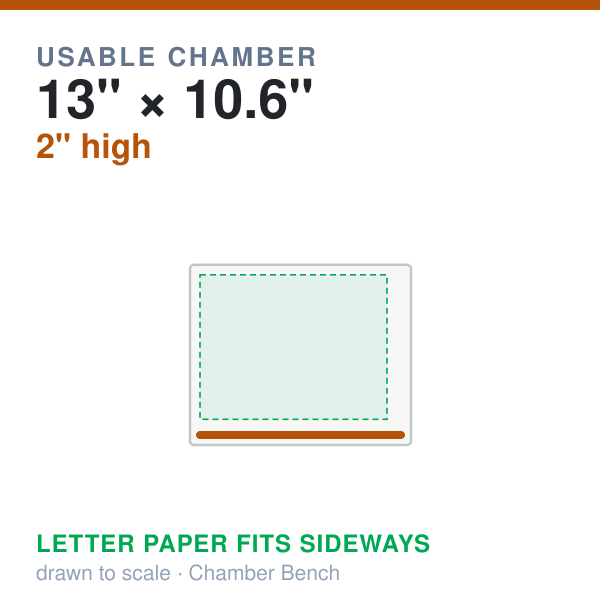
| VEVOR DZ-260S | 47 lb | Usable chamber, 13 x 10.6 x 2 in | 13 in |
Specifications compared
Scroll horizontally to see every column.
| Model | Seal bar | Chamber | Pump | Weight | Analysis |
|---|---|---|---|---|---|
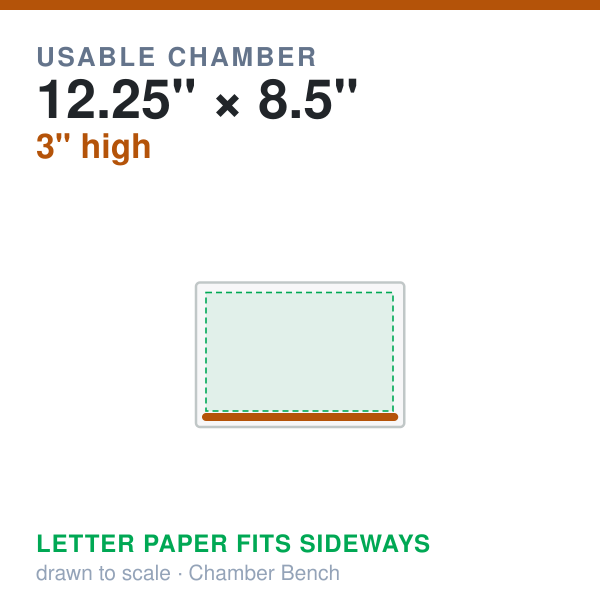
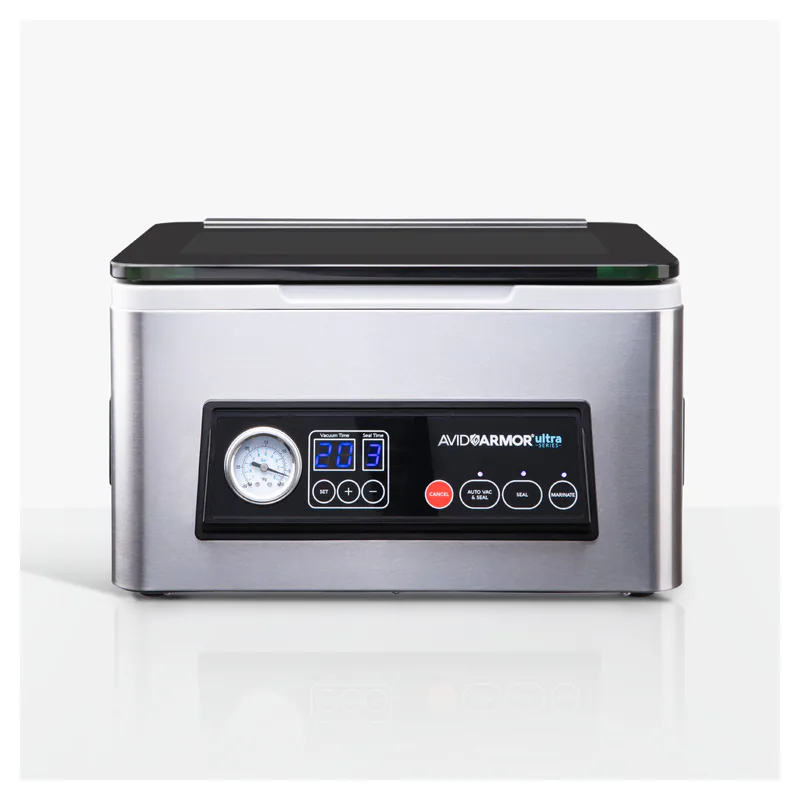 Avid Armor USV20 Avid Armor USV20 | Conflicting published values: 17.3 pounds / 17.55 lb — Conflicting published record — Amazon listing · Avid Armor product page | Open analysis | |||
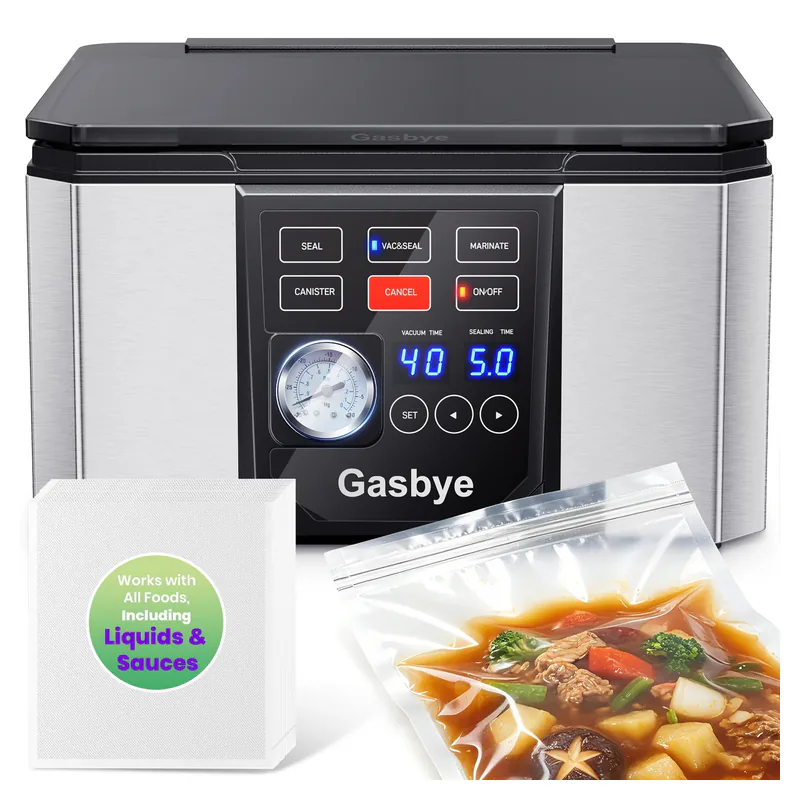 Gasbye CV4520 Gasbye CV4520 | Open analysis | ||||
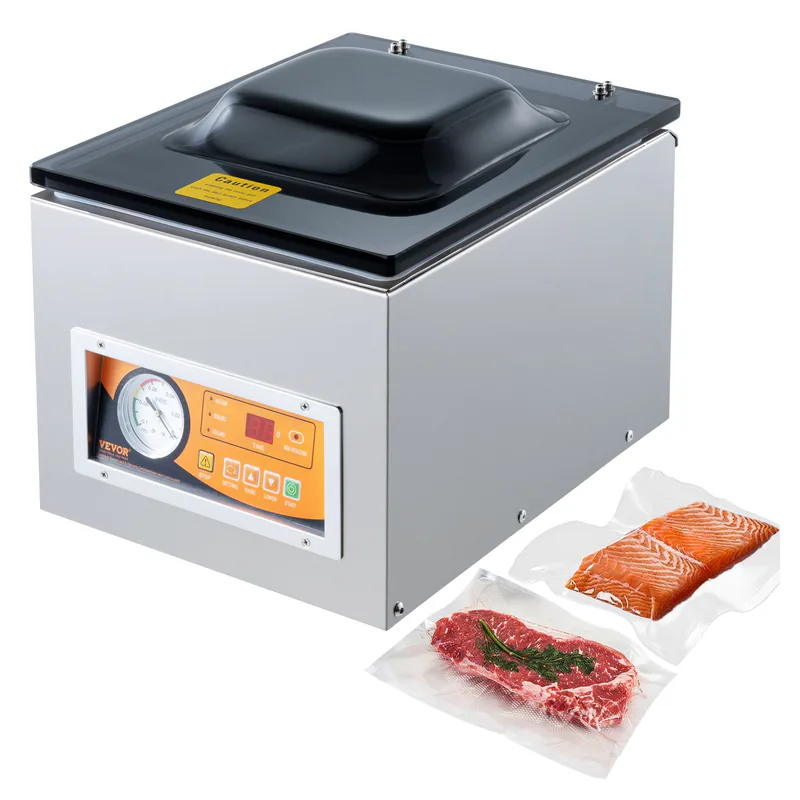 VEVOR DZ-260S Chamber Sealer VEVOR DZ-260S Chamber Sealer | Conflicting published values: 120W vacuum pump / 180W vacuum pump — Conflicting published record — VEVOR product page | Open analysis | |||
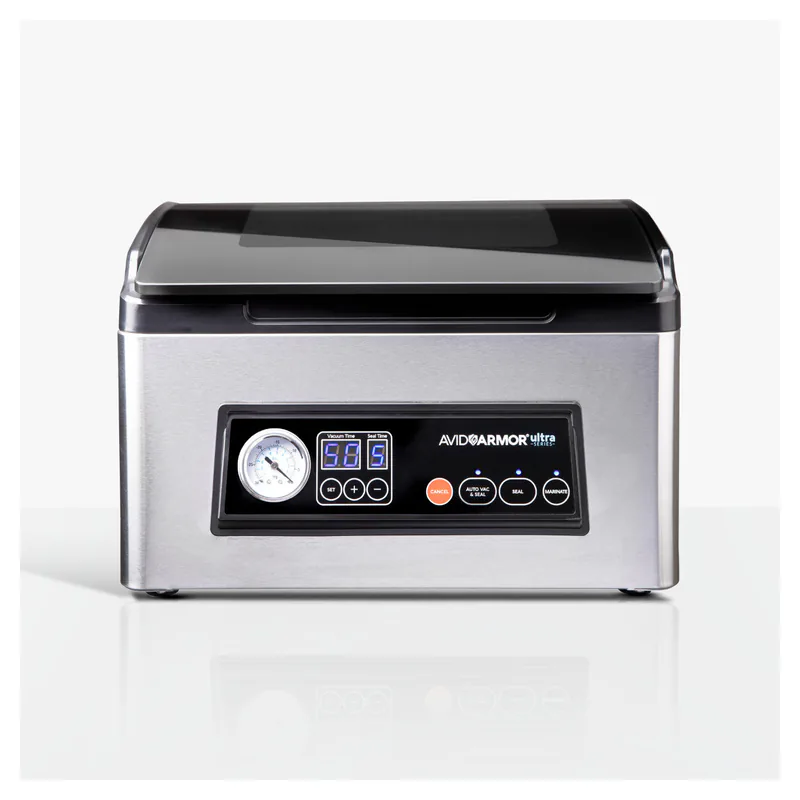 Avid Armor USV32 Avid Armor USV32 | Open analysis |
Cells reading “Not stated” mean the manufacturer does not publish that figure. We have not substituted an estimate.
Model analyses
Why it fits
- Seal bar:
- Chamber:
- Pump:
Unanswered or conflicting specifications
- Power: Conflicting published values: 300 watts at 110 volts / Vacuum Power: 300 Watts; Voltage: 120v - 60hz — Conflicting published record — Amazon listing
- Weight: Conflicting published values: 17.3 pounds / 17.55 lb — Conflicting published record — Amazon listing · Avid Armor product page
Published specifications
- Seal bar:
- Chamber:
- Pump:
- Power: Conflicting published values: 300 watts at 110 volts / Vacuum Power: 300 Watts; Voltage: 120v - 60hz — Conflicting published record — Amazon listing
- Weight: Conflicting published values: 17.3 pounds / 17.55 lb — Conflicting published record — Amazon listing · Avid Armor product page
View chamber sizing diagram
Why it fits
- Seal bar:
- Power:
Unanswered or conflicting specifications
- Chamber: Partial specification: 5.28 qt (5 L); 9.7 in interior width; full usable envelope not published — Partial published record — Gasbye product page
- Pump:
- Weight:
Published specifications
- Seal bar:
- Chamber: Partial specification: 5.28 qt (5 L); 9.7 in interior width; full usable envelope not published — Partial published record — Gasbye product page
- Pump:
- Power:
- Weight:
Why it fits
- Seal bar:
- Chamber:
- Weight:
Unanswered or conflicting specifications
- Pump: Conflicting published values: 120W vacuum pump / 180W vacuum pump — Conflicting published record — VEVOR product page
- Power: Conflicting published values: Maximum Power 950W (+5%/-10%); Seal Power 260W; 120W vacuum pump; AC 120V, 60Hz / 180W vacuum pump — Conflicting published record — VEVOR product page
Published specifications
- Seal bar:
- Chamber:
- Pump: Conflicting published values: 120W vacuum pump / 180W vacuum pump — Conflicting published record — VEVOR product page
- Power: Conflicting published values: Maximum Power 950W (+5%/-10%); Seal Power 260W; 120W vacuum pump; AC 120V, 60Hz / 180W vacuum pump — Conflicting published record — VEVOR product page
- Weight:
View chamber sizing diagram
Data quality note: The retained VEVOR product page contains internally inconsistent values. Treat its published figures as unconfirmed.
Why it fits
- Seal bar:
- Chamber:
- Pump:
- Weight:
Unanswered or conflicting specifications
- Power: Conflicting published values: 380 watts at 110 volts / Vacuum Power: 380 Watts; Voltage: 120v - 60hz — Conflicting published record — Amazon listing
Published specifications
- Seal bar:
- Chamber:
- Pump:
- Power: Conflicting published values: 380 watts at 110 volts / Vacuum Power: 380 Watts; Voltage: 120v - 60hz — Conflicting published record — Amazon listing
- Weight:
View chamber sizing diagram
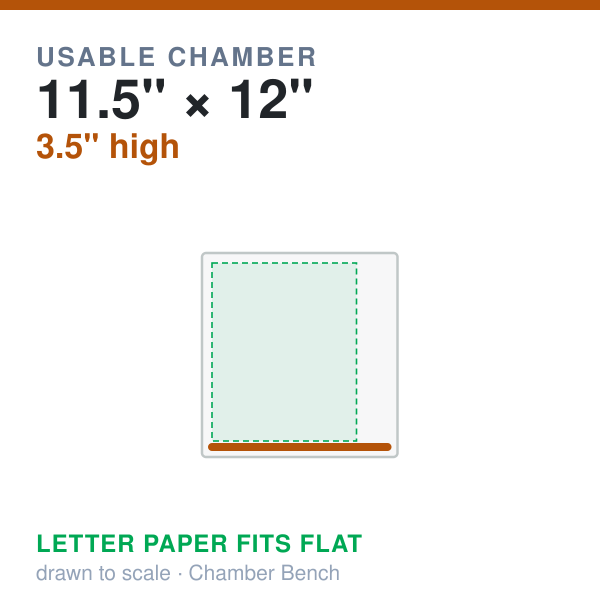
Data quality note: Avid Armor now publishes the usable chamber dimensions and identifies a dry piston pump.
Pouches and accessories are the second footprint
The machine is not the only thing that needs a home. Chamber pouches ship in cases rather than rolls, and a starter assortment such as the Avid Armor 300-count box holds 100 each of 6 by 10, 8 by 12 and 10 by 13 inch pouches, which is a carton rather than a drawer item. Add the accessory hose, the filler plates that come with most of these machines and a jar kit if you use one, and the storage requirement is a shelf, not a gap beside the toaster.
Consumables also affect storage planning. If you later choose an oil-pump model, allow shelf space for oil and a drain container alongside it.
Fit summary
Counter depth is where this shortlist actually thins out. Front to back, the Avid Armor USV20 publishes 8.5 in of chamber, the VEVOR DZ-260S 10.6 in and the Avid Armor USV32 12 in, and every one of those numbers is the hole rather than the case around it. Gasbye publishes 5.28 qt of volume and a 9.7 in interior width for its machine and no depth figure at all, which is the one gap on this page a tape measure cannot close until the box is open.
Open the Avid Armor USV20 analysis · Return to the specifications
Frequently asked questions
How much does a chamber vacuum sealer weigh?
Between 26.4 lb and 84 lb, if you count only the machines whose makers publish one settled figure. Avid Armor states 26.4 lb for the USV32, Wevac 29.4 lb for the CV12 Pro, VEVOR 47 lb with accessories for the DZ-260S, and VacMaster 72 lb for the VP210 and 84 lb for the VP215. Nothing in that set lands between 47 lb and 72 lb, which is the practical line between a machine you can put away and one that gets sited once and stays. Three of the eight have no single published weight: Gasbye states none, the retained sources for the USV20 give two different values, and those for the VP230 give three.
Will a chamber vacuum sealer fit under my kitchen cabinets?
You cannot answer that from any spec sheet, because no manufacturer in this comparison publishes a height with the lid open, and the lid hinges upward. Measure from your countertop to the underside of the wall cabinet above the spot you intend to use, and treat that as a constraint you will have to test on delivery. If the clearance is tight, plan to work with the machine pulled forward to the counter edge, or place it on an island or table with nothing above it.
What is the smallest chamber vacuum sealer for a home kitchen?
On published chamber floor area — width times depth — the Avid Armor USV20 is the small one on this page: 12.25 by 8.5 in, roughly 104 square inches, against 138 on the Avid Armor USV32 and 172 on the VacMaster VP215. The chamber is the size record this category publishes; the case that wraps it is always larger. Outside body size is not a field this site records for any of the eight machines, though VacMaster's June 2024 VP215 manual states 20 by 14 by 15 in for that one. Two things sit under that number. Gasbye publishes a narrower interior width, 9.7 in, but no length and no height, so its floor cannot be worked out at all. The USV20 publishes 3 in of chamber height and the VEVOR DZ-260S publishes 2 in, so the smallest floor on this page is not the shallowest chamber.
How much counter space does a chamber vacuum sealer take?
More than the published dimensions suggest, because nearly every figure in this category describes the chamber rather than the machine. Treat the published chamber width as a floor and add the case walls, the control panel and room behind for the hinge and cord. The floors we verified run from 9.7 inches on the Gasbye up to 13 inches on the VEVOR, and depth is the larger dimension on every machine here.
What this page covers, and what it does not
This page compares the eight chamber vacuum sealers verified against live Amazon listing data on 2026-08-26 using published weight and footprint records for a home kitchen. The Anova chamber sealer is outside the verified source set.
How published evidence is evaluated
Chamber Bench compares manufacturer and listing evidence for the eight machines in this comparison. The current analysis covers usable chamber geometry, seal-bar length, pump type, serviceability, and other published ownership constraints.
Where a manufacturer publishes nothing, we say so rather than filling the gap:
- We record which specifications a manufacturer declines to publish.
- We flag contradictions inside a listing rather than quietly picking one figure.
- We keep partial records distinct from complete published dimensions.
- We do not reproduce retailer ratings or prices as editorial fact.
What we have not done: we have not physically run these machines. No cycle times, seal-strength figures, or noise measurements on this site come from our own bench, and none are presented as if they do. Our test protocol documents the measurements required before any model can carry a tested performance conclusion.