The ownership tradeoff matrix
Is an oil pump better than a dry pump in a chamber vacuum sealer?
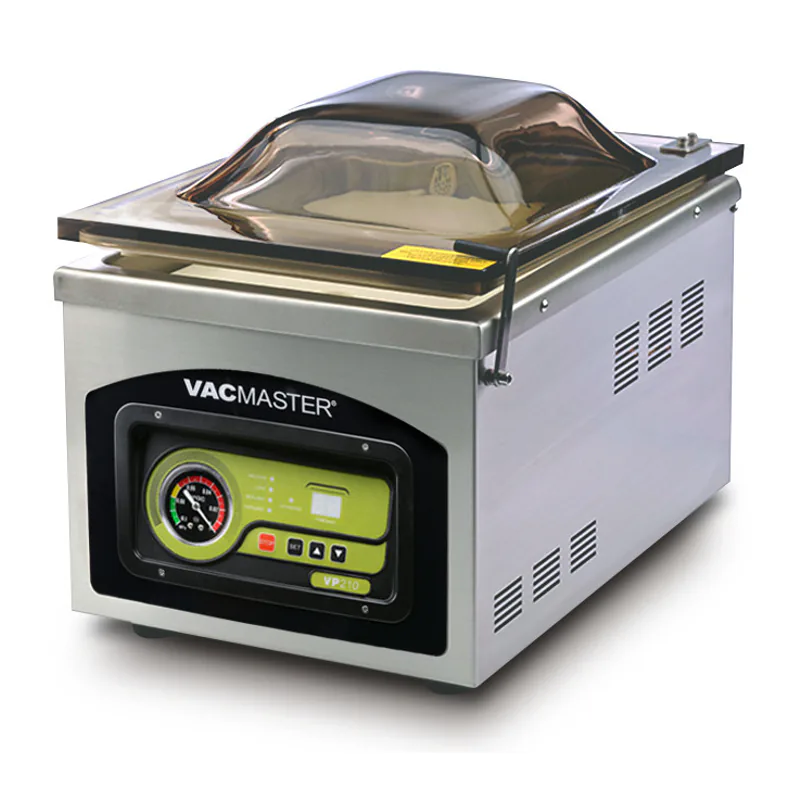
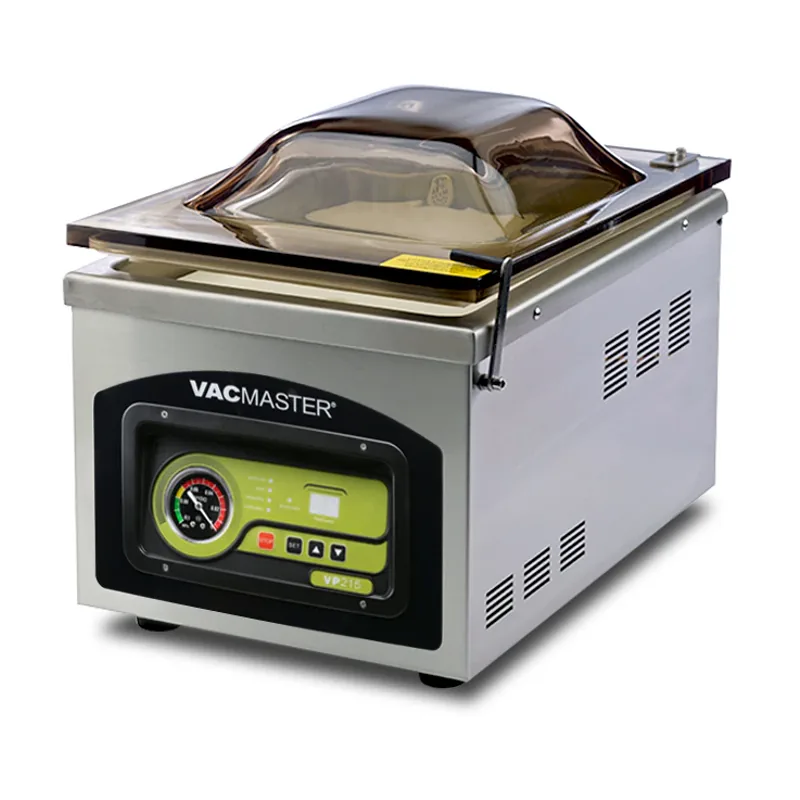
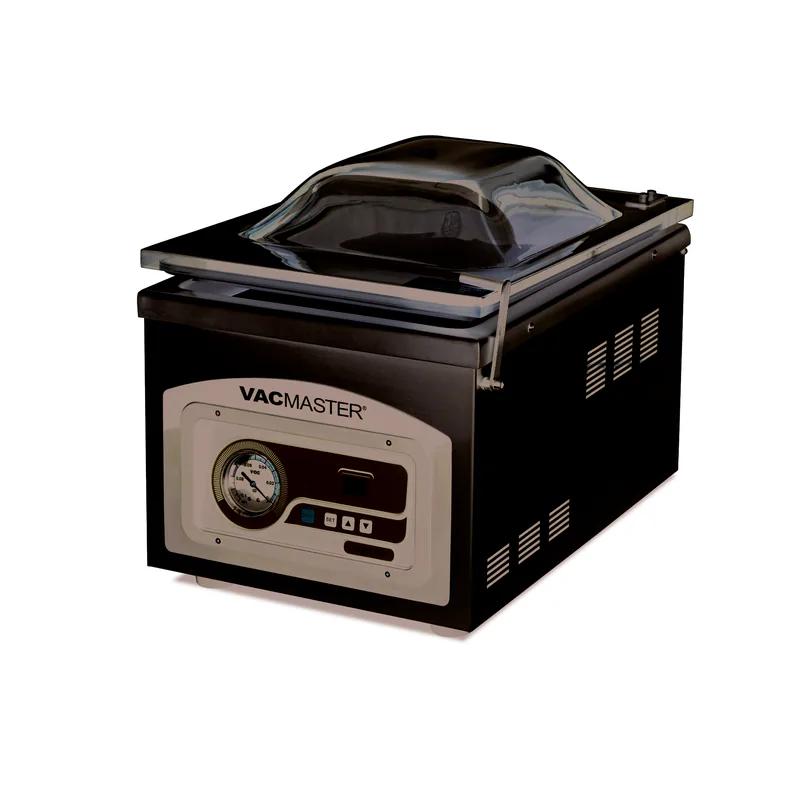
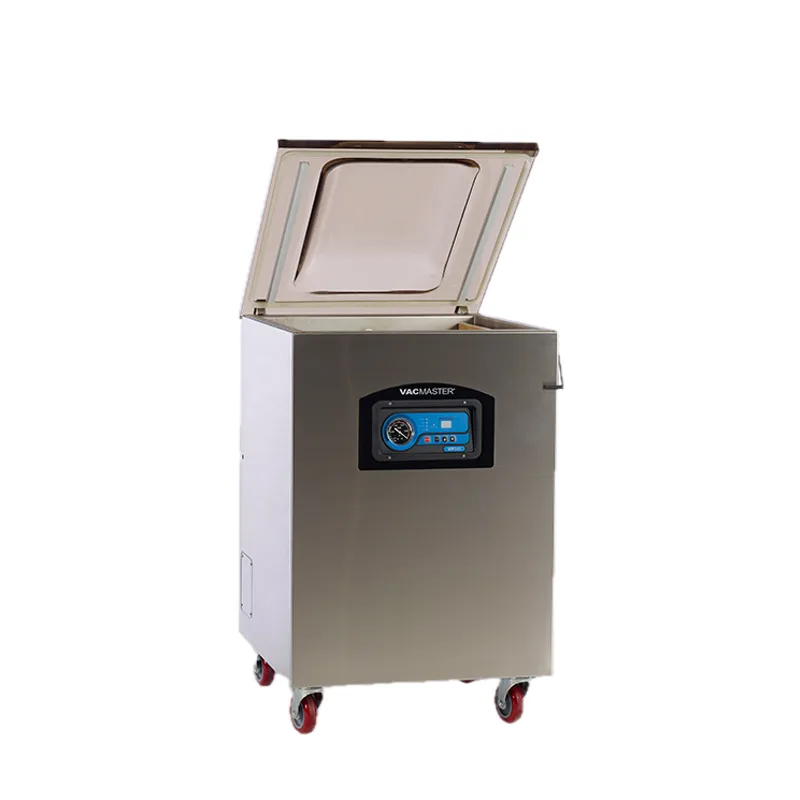
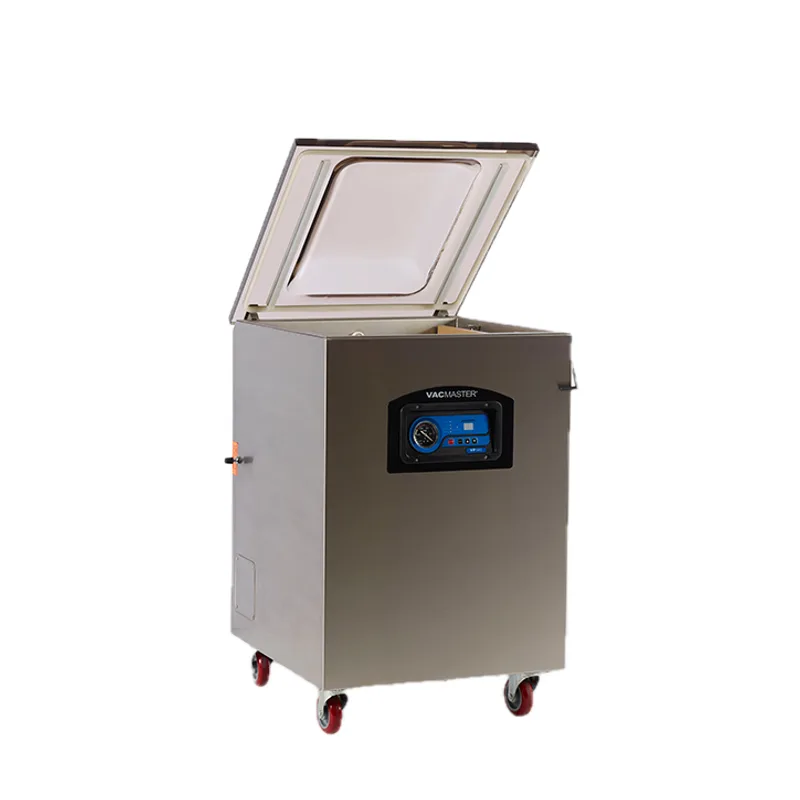
Neither architecture is better in general; they carry different obligations. VacMaster's own pair makes the trade legible: the oil-pump VP215 and the dry-pump VP210 publish the same 11.25 by 15.25 by 5 inch chamber, and differ by a scheduled oil change and 12 pounds — 84 lb against 72 lb. What the oil buys is not established by either record, because neither publishes a final-vacuum figure to compare.
Scroll horizontally to see every column.
| Factor | Dry pump | Oil pump |
|---|---|---|
| Routine oil service | None | Required on the manual’s schedule/condition |
| Typical form | Compact home-oriented machines are common | Heavier commercial-style machines are common |
| Transport | Follow manual; often simpler | Keep level and follow oil transport instructions |
| Best shortlist signal | Low-to-moderate batch work, low maintenance appetite | Higher batch demand, owner accepts service |
| Still needs testing | Warm cycles, noise, final vacuum, longevity | Same—pump label is not a result |
Source basis[1] VacMaster: VP215 user manual · [2] VacMaster Help Center: VP215 manuals, specifications, and technical support · [3] Anova Culinary Support · [4] Avid Armor Help Center
Estimate your real duty cycle
Count seals in a normal session, the longest likely session, and sessions per month. Note whether food prep creates natural pauses between cycles. A published pump-flow number does not directly equal package throughput because chamber volume, target pressure, control logic, seal time, cooling, and operator loading all affect the cycle.
For the future bench test, Chamber Bench records the first cycle and a ten-cycle sequence with the same load. That exposes recovery or slowdown without pretending a short test proves years of durability.
How many bags can I seal back to back?
Some makers publish a duty limit and VacMaster is one of them. Its June 2024 VP215 user guide states a maximum vacuum-on time of 70 seconds with a minimum 10 seconds off between cycles, and instructs the operator to stop and let the machine come back to ambient temperature after 45 minutes of use. No comparable figure exists for most machines in this category, which is a gap rather than permission to run them indefinitely.
Source basis[1] VacMaster: VP215 user manual · [3] Anova Culinary Support · [4] Avid Armor Help Center · [5] VacMaster: VP215 Chamber Vacuum Sealer User Guide (June 2024)
What oil-pump ownership adds
The exact model manual controls. Typical checks include correct oil type and level, oil color or condition, level placement, cleaning, and safe transport. Never substitute an internet rule for the manufacturer’s service procedure.
How much work is an oil pump to own?
Oil-pump ownership adds three recurring facts to keep straight: which oil, how much of it, and how often. VacMaster answers the first for its chamber machines — 10W non-detergent hydraulic oil — but publishes three different change intervals for the VP215 in three different units, so the routine has to be pinned to the manual that came with your own machine rather than to any category rule.
- Confirm replacement oil and service parts are obtainable before purchase.
- Locate fill, sight, and drain access in the planned installation.
- Keep a dated service log rather than relying on memory.
- Stop and consult support if oil, sound, heat, or vacuum behavior changes materially.
Source basis[1] VacMaster: VP215 user manual · [2] VacMaster Help Center: VP215 manuals, specifications, and technical support · [5] VacMaster: VP215 Chamber Vacuum Sealer User Guide (June 2024) · [6] VacMaster Help Center: What type of oil is used in chamber vacuum sealers? · [7] VacMaster Help Center: What is the difference between the VP210 and the VP215?
Demand pump evidence before accepting a duty claim
A pump label describes an architecture; it does not establish how a complete machine behaves in your batch. For every shortlist entry, connect the pump description to the current manual, service support, chamber volume, controls, and a repeat-cycle result. Until a normalized test exists, treat claims such as ‘commercial duty,’ ‘maintenance free,’ or ‘faster’ as manufacturer statements tied to that model—not as a cross-model verdict.
Keep architecture evidence and performance evidence in separate columns. The manual can establish required oil, inspection access, or a supported operating procedure; it cannot prove that one machine will evacuate your package faster than another. A repeat-cycle comparison should use the same pouch, load, starting condition, target or control mode, and operator sequence, with first-cycle and later-cycle times recorded rather than selectively reporting the fastest run.
Short testing also cannot establish pump life. Record heat, sound, incomplete cycles, recovery time, and any stop condition as observations, then leave durability unresolved until longer use or defensible service data exists. This prevents a clean ten-cycle session from becoming an unsupported ownership promise.
Scroll horizontally to see every column.
| Question | Acceptable evidence | If missing |
|---|---|---|
| What pump is installed? | Current official specification or manual | Mark architecture unverified |
| What service is required? | Model manual and support procedure | Do not estimate an interval |
| How does it repeat? | Same-load multi-cycle measurement | Withhold throughput conclusion |
| Can it be supported? | Current parts and support route | Record ownership risk |
Source basis[1] VacMaster: VP215 user manual · [2] VacMaster Help Center: VP215 manuals, specifications, and technical support · [3] Anova Culinary Support · [4] Avid Armor Help Center
Questions readers still ask
Which chamber vacuum sealers use an oil pump?
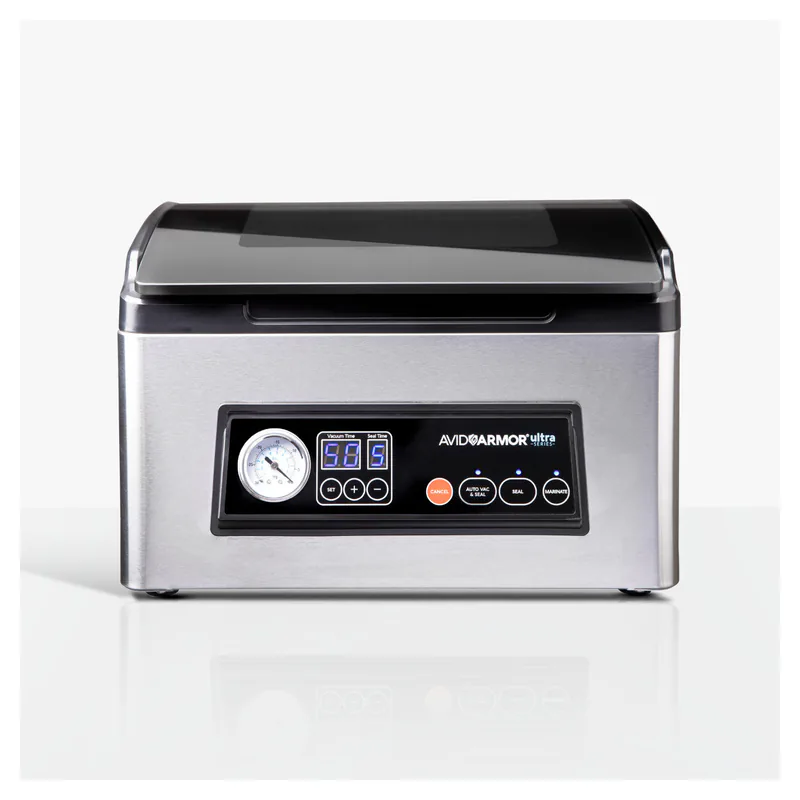
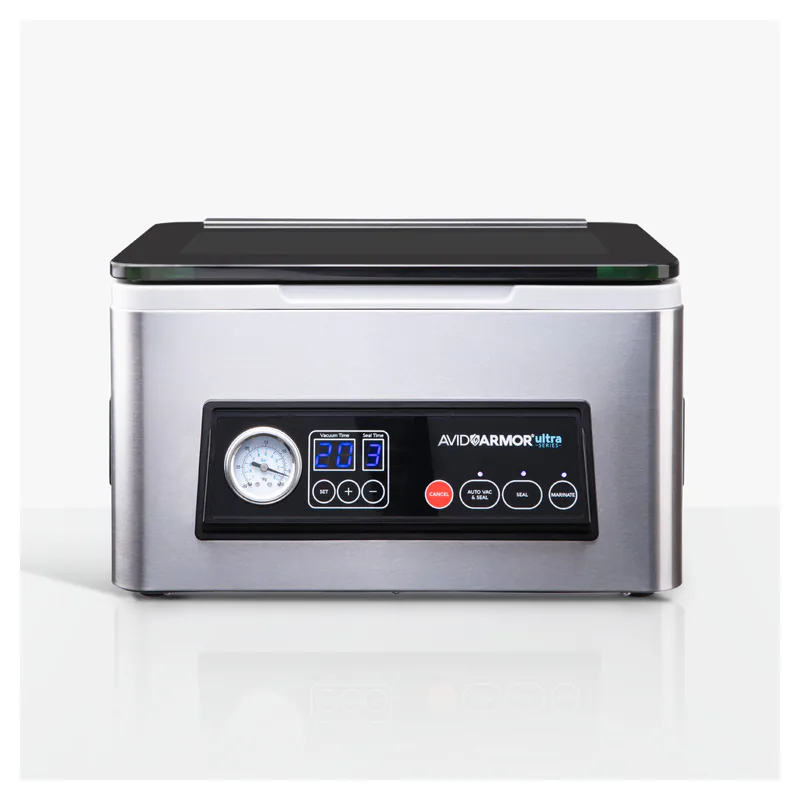
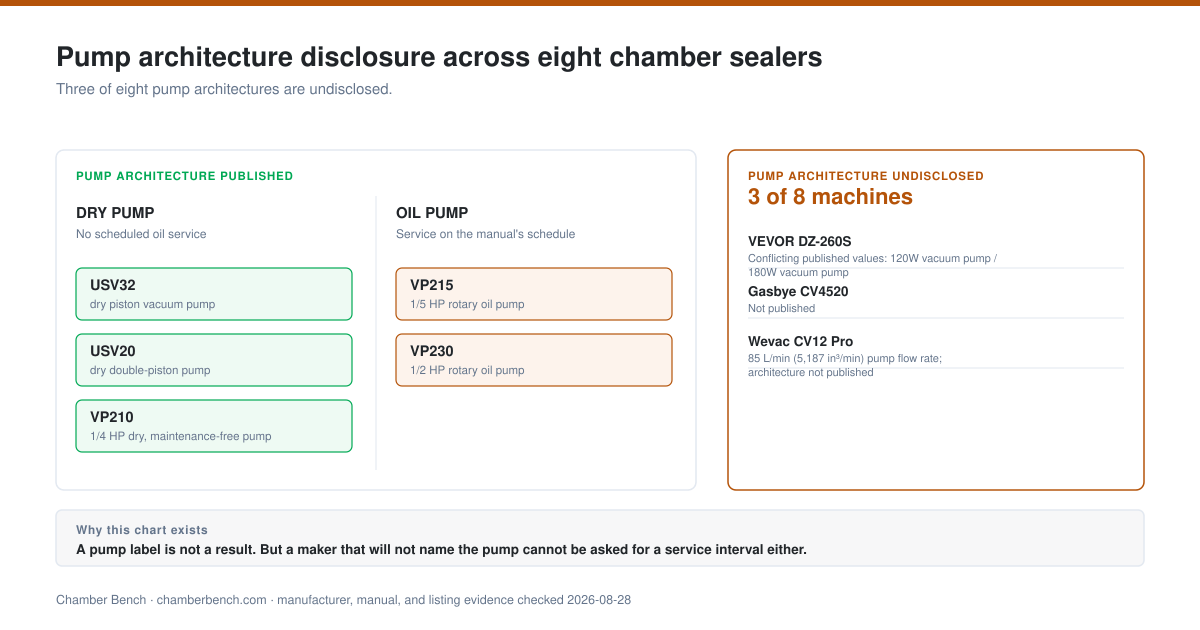
Two of the eight machines Chamber Bench tracks publish an oil pump: the VacMaster VP215, whose rotary oil pump is rated .2 HP in the June 2024 manual and 1/4 HP in VacMaster's Help Center, and the VacMaster VP230 at 1/2 HP rotary oil. Three publish dry pumps — the VP210, Avid Armor USV20 and USV32 — and the remaining three name no architecture at all.
Do I have to change the oil if I barely use the machine?
The VP215 schedule carries a calendar clause, and a calendar clause does not wait for use. VacMaster's June 2024 guide pairs a three-month limit with a 250-cycle limit and applies whichever arrives sooner, so a machine used twice a month reaches the calendar limit long before it approaches the cycle count.
Does a dry pump mean no maintenance at all?
A dry pump removes the oil change and nothing else. Chamber cleanup, seal-bar condition, gasket condition and a record of failed packages apply to every machine on this site. VacMaster describes the VP210 pump as maintenance-free, which is a statement about the pump rather than about the machine built around it.
Is an oil pump stronger than a dry one?
Published ratings do not settle strength, and for the VP215 they do not even agree with each other: .2 HP in VacMaster's current manual against 1/4 HP in its own Help Center, for the same rotary oil pump. Chamber Bench publishes no pull-down or final-vacuum measurement for any machine, so no strength order exists here to report.
What does the pump architecture not tell me?
Architecture tells you nothing about cycle time, final vacuum, noise or service life. For three machines it does not even tell you whether an oil routine exists — Gasbye and VEVOR state no architecture for the CV4520 and DZ-260S, and Wevac publishes an 85 L/min flow rate for the CV12 Pro without saying whether that pump is oil-lubricated or dry.
Sources
Each record carries its own access date. Manufacturer statements are attributed; they are not treated as Chamber Bench test results.
- VP215 user manualVacMaster — Primary manual for oil-pump setup, operation, cleaning, and maintenance. · Accessed
- VP215 manuals, specifications, and technical supportVacMaster Help Center — Official model support index, including oil and troubleshooting guidance. · Accessed
- Chamber Vacuum Sealer frequently asked questionsAnova Culinary Support — Official pouch, pump, chamber-volume, seal-width, and operating specifications. · Accessed
- USV20 technical supportAvid Armor Help Center — Official operational and troubleshooting guidance for a compact dry-pump chamber machine. · Accessed
- VP215 Chamber Vacuum Sealer User Guide (June 2024)VacMaster — Current 24-page guide: oil schedule and quantity, duty-cycle safeguard, seal-appearance rule, troubleshooting, and the full specification table. · Accessed
- What type of oil is used in chamber vacuum sealers?VacMaster Help Center — Manufacturer statement of the oil grade its chamber machines take, dated April 13 2020. · Accessed
- What is the difference between the VP210 and the VP215?VacMaster Help Center — Manufacturer pump comparison, the contested 1/4 HP rating, and a third oil interval expressed as roughly twice a year. · Accessed