A chamber sealer is bought on what fits inside it. Seal bar length decides how wide a pouch you can close; usable chamber length, depth and lid height decide whether the package goes in at all. Every head-to-head is therefore only as good as the numbers both manufacturers agree to print.
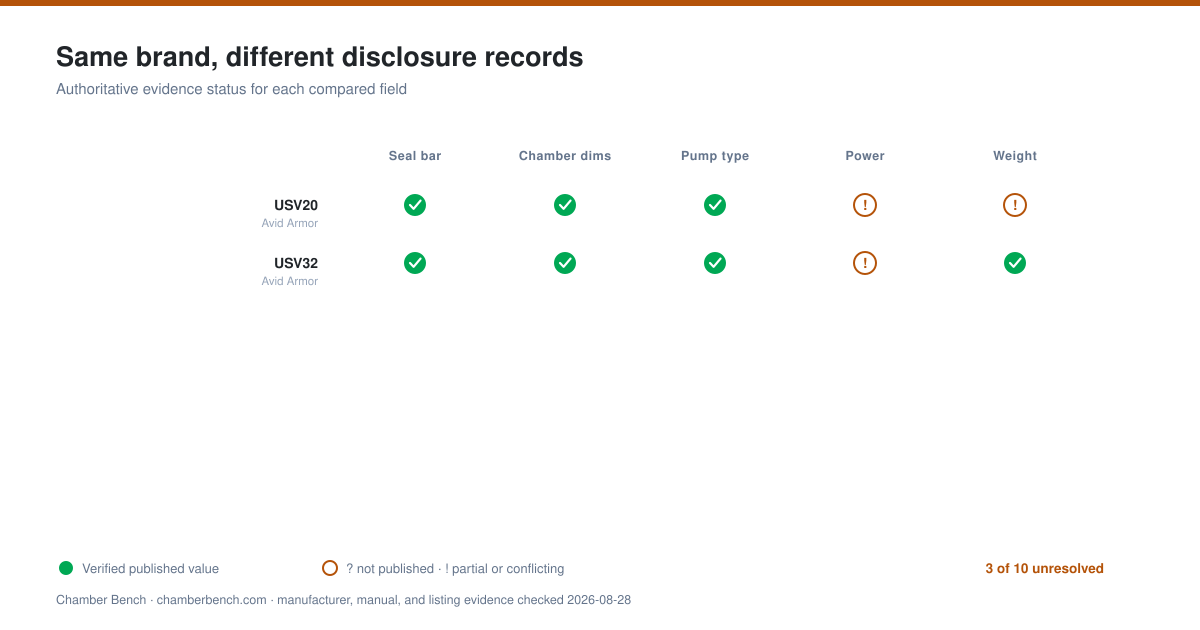
Weight, power, and the features that are not specifications
The rest of the split is features rather than measurements, and it lines up cleanly by intent. The USV32 adds a tempered glass lid, so a liquid cycle can be watched and stopped rather than guessed at, and an external accessory port that covers jars and canisters without buying a second appliance. The USV20 answers with serviceability and control: a bar you can replace and a vacuum time you can dial between 15 and 60 seconds, which is the adjustment that matters when you move from dry portions to wet marinades in the same session.
Specifications compared
Scroll horizontally to see every column.
| Model | Seal bar | Chamber | Pump | Weight | Analysis |
|---|---|---|---|---|---|
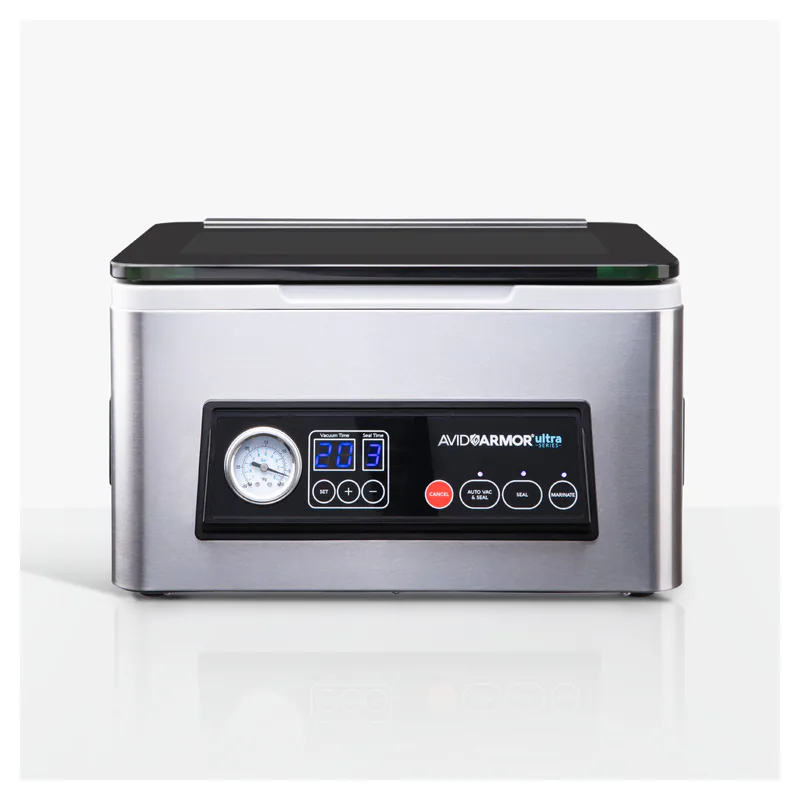 Avid Armor USV20 Avid Armor USV20 | Conflicting published values: 17.3 pounds / 17.55 lb — Conflicting published record — Amazon listing · Avid Armor product page | Open analysis | |||
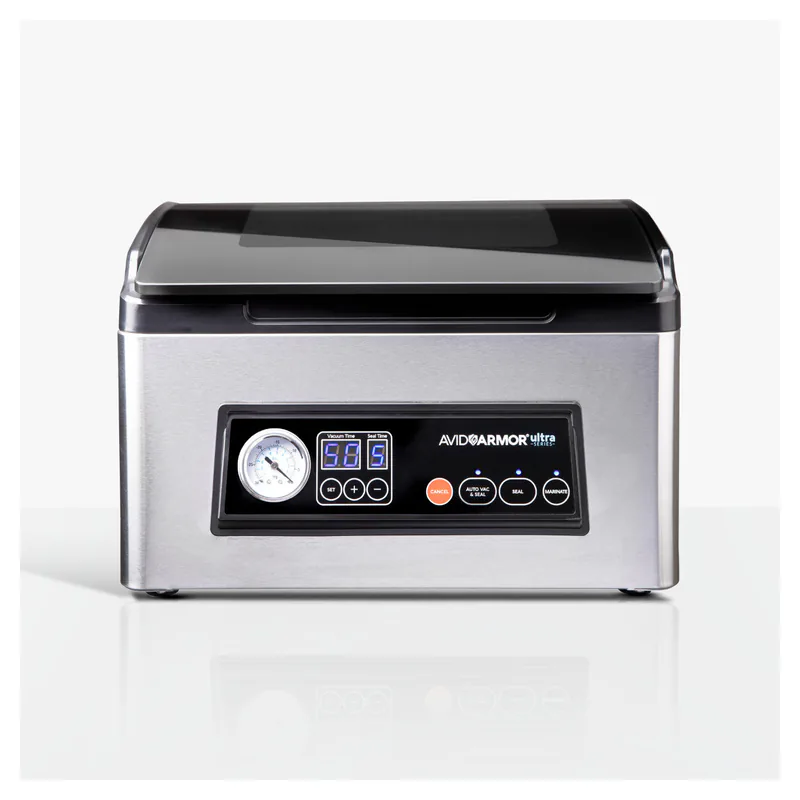 Avid Armor USV32 Avid Armor USV32 | Open analysis |
Cells reading “Not stated” mean the manufacturer does not publish that figure. We have not substituted an estimate.
Model analyses
Why it fits
- Seal bar:
- Chamber:
- Pump:
Unanswered or conflicting specifications
- Power: Conflicting published values: 300 watts at 110 volts / Vacuum Power: 300 Watts; Voltage: 120v - 60hz — Conflicting published record — Amazon listing
- Weight: Conflicting published values: 17.3 pounds / 17.55 lb — Conflicting published record — Amazon listing · Avid Armor product page
Published specifications
- Seal bar:
- Chamber:
- Pump:
- Power: Conflicting published values: 300 watts at 110 volts / Vacuum Power: 300 Watts; Voltage: 120v - 60hz — Conflicting published record — Amazon listing
- Weight: Conflicting published values: 17.3 pounds / 17.55 lb — Conflicting published record — Amazon listing · Avid Armor product page
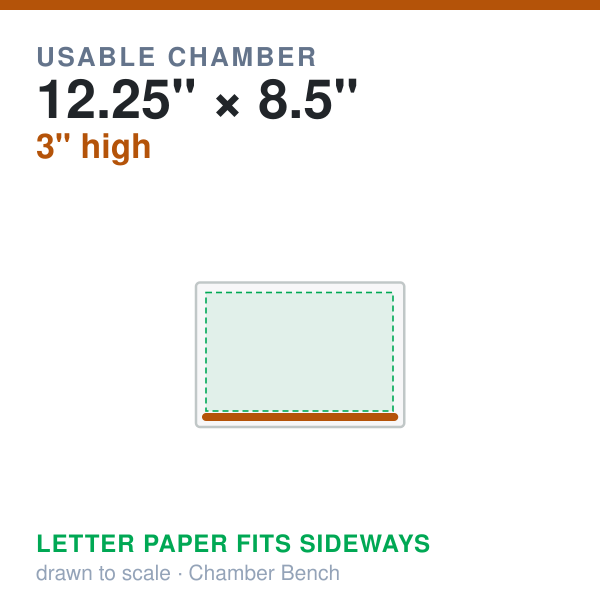
View chamber sizing diagram
Why it fits
- Seal bar:
- Chamber:
- Pump:
- Weight:
Unanswered or conflicting specifications
- Power: Conflicting published values: 380 watts at 110 volts / Vacuum Power: 380 Watts; Voltage: 120v - 60hz — Conflicting published record — Amazon listing
Published specifications
- Seal bar:
- Chamber:
- Pump:
- Power: Conflicting published values: 380 watts at 110 volts / Vacuum Power: 380 Watts; Voltage: 120v - 60hz — Conflicting published record — Amazon listing
- Weight:
View chamber sizing diagram
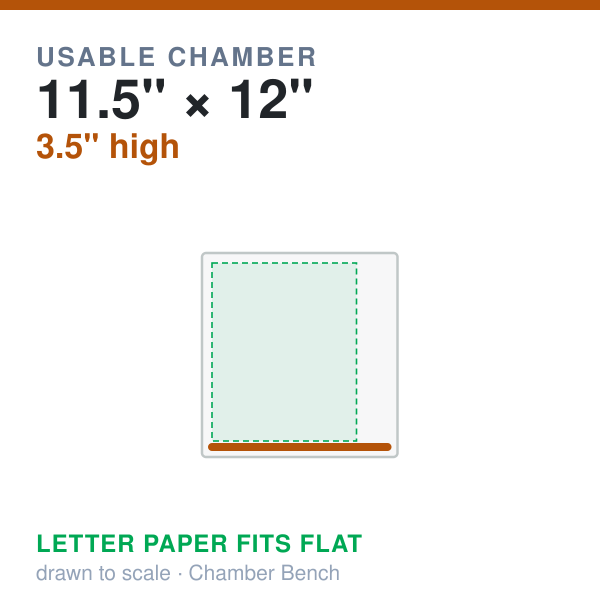
Data quality note: Avid Armor now publishes the usable chamber dimensions and identifies a dry piston pump.
Fit summary
Pouch length is what separates the Avid Armor USV20 from the USV32. Avid Armor publishes a smooth-pouch ceiling of 11 by 10 inches on the USV20 and 11 by 13 inches on the USV32, off an identical 11.5-inch bar, so both close an 11-inch-wide pouch and only the USV32 closes a 13-inch-long one. The published chambers behind those ceilings agree: 8.5 inches of chamber length against 12.
The two published USV20 weights sit a quarter pound apart, which changes no counter or shelf decision, but Chamber Bench does not average published values, so 17.3 lb and 17.55 lb both stay on the page. The USV32's 26.40 lb is the only weight here that resolves to one figure. No final vacuum level and no duty cycle appear in the Avid Armor records retained here, and nothing on this page rests on a physical test.
Open the Avid Armor USV20 analysis · Return to the specifications
Frequently asked questions
Do the USV20 and USV32 use the same seal bar length?
Yes. Both publish an 11.5-inch seal bar, so both close the same pouch widths. The construction differs: the USV20's heating bar is user-replaceable, while the USV32 uses a dual-wire bar that lays two parallel seals for redundancy.
Can either machine seal Mason jars?
The USV32 publishes an external accessory port that covers jars and canisters through a hose, rather than sealing them inside the chamber. Avid Armor does not publish an accessory port for the USV20. Neither listing states that a jar kit is included, so budget for one separately. Jar sealing is storage for dry or refrigerated contents; it is not canning and does not make anything shelf-stable.
Will a 10 x 13 inch chamber pouch work in the USV20?
No. Avid Armor states the USV20 accepts smooth pouches up to 11 by 10 inches, so a 10 by 13 pouch is too long for it even though the 10-inch width sits comfortably inside the 11.5-inch bar. This is the trap in buying pouches by seal bar width rather than by chamber length.
What this page covers, and what it does not
This comparison covers two of the eight chamber vacuum sealers we verified against live Amazon listing data on 2026-08-26. The Anova chamber sealer is not compared here or listed in the catalogue, because we could not verify its Amazon listing.
How published evidence is evaluated
Chamber Bench compares manufacturer and listing evidence for the eight machines in this comparison. The current analysis covers usable chamber geometry, seal-bar length, pump type, serviceability, and other published ownership constraints.
Where a manufacturer publishes nothing, we say so rather than filling the gap:
- We record which specifications a manufacturer declines to publish.
- We flag contradictions inside a listing rather than quietly picking one figure.
- We keep partial records distinct from complete published dimensions.
- We do not reproduce retailer ratings or prices as editorial fact.
What we have not done: we have not physically run these machines. No cycle times, seal-strength figures, or noise measurements on this site come from our own bench, and none are presented as if they do. Our test protocol documents the measurements required before any model can carry a tested performance conclusion.