Chamber sealer decisions, one constraint at a time
Grouped by where you are in the decision rather than the order we wrote them. Use the published specification comparison to compare the eight catalog models.
Before you buy
Work out which machine the job actually needs, before comparing brands.
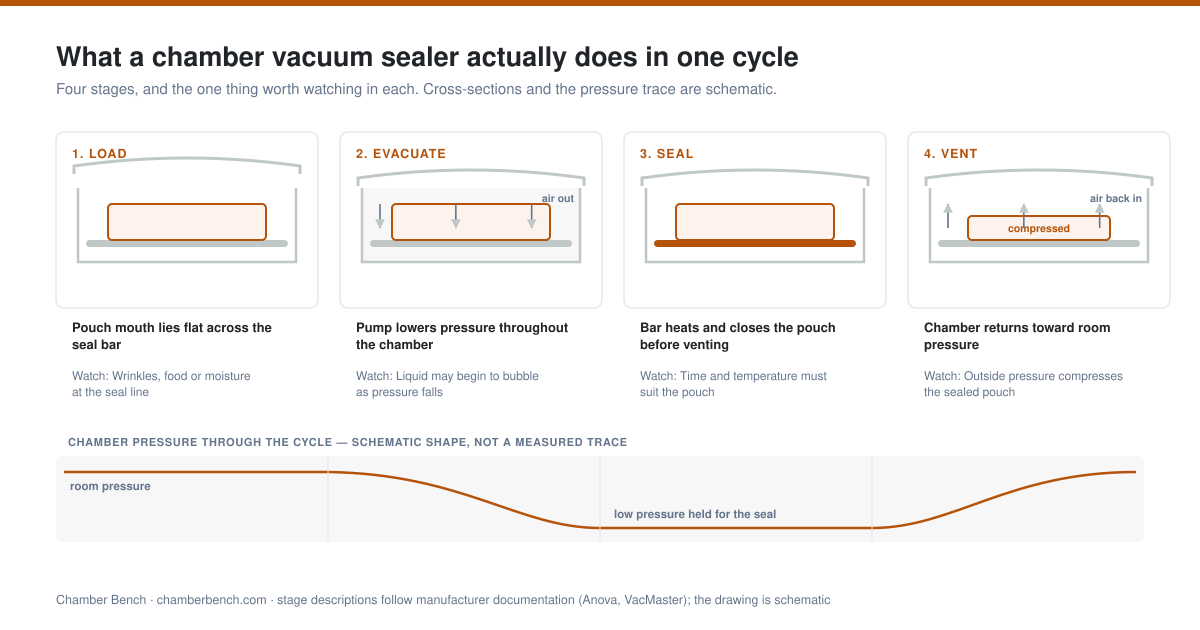
How a chamber vacuum sealer works, stage by stage
The four-stage chamber cycle, why liquid usually stays in the pouch, and where the published record on compressing fruit and vacuum marination contradicts itself.
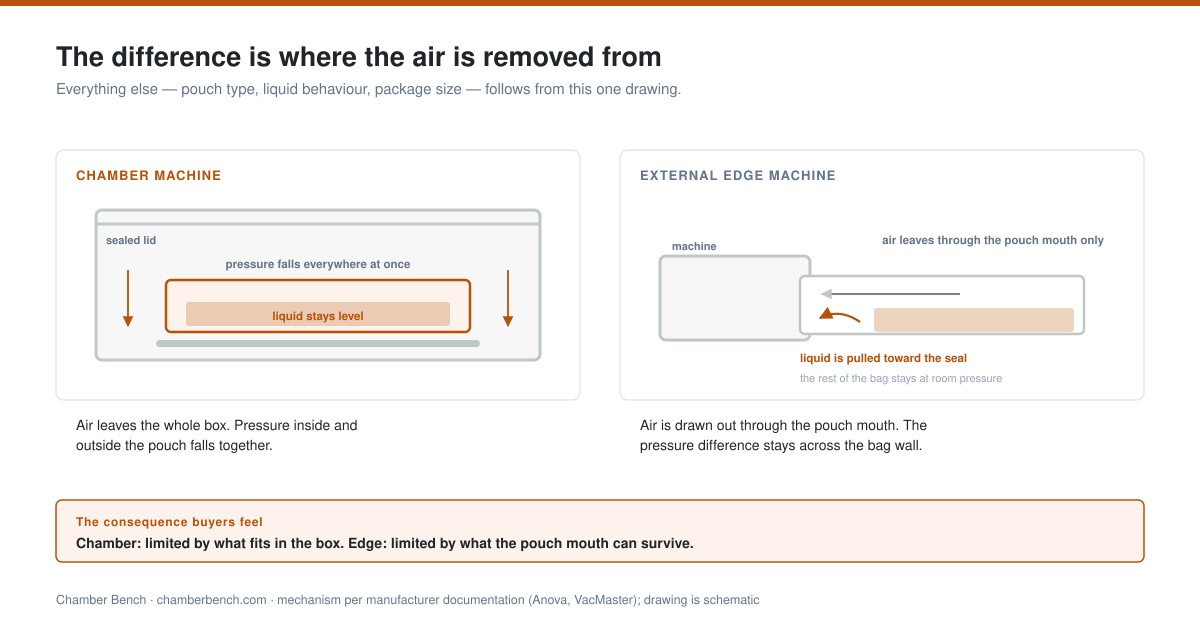
Chamber vacuum sealer vs. edge sealer: choose by package, not prestige
Chamber and edge vacuum sealers compared on published seal-bar, chamber, film and pressure specs — including where the manufacturers' own documents disagree.
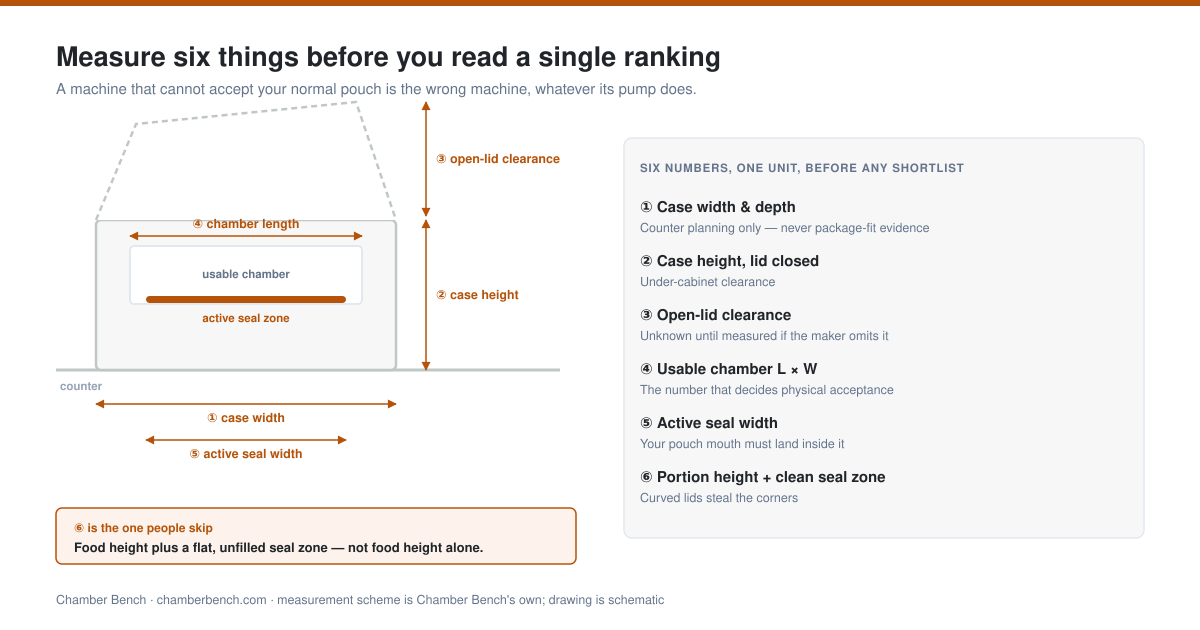
How to size a chamber vacuum sealer before it reaches your counter
Use a paper-template method to check chamber, pouch, lid, portion, counter, and service clearance before choosing a model.
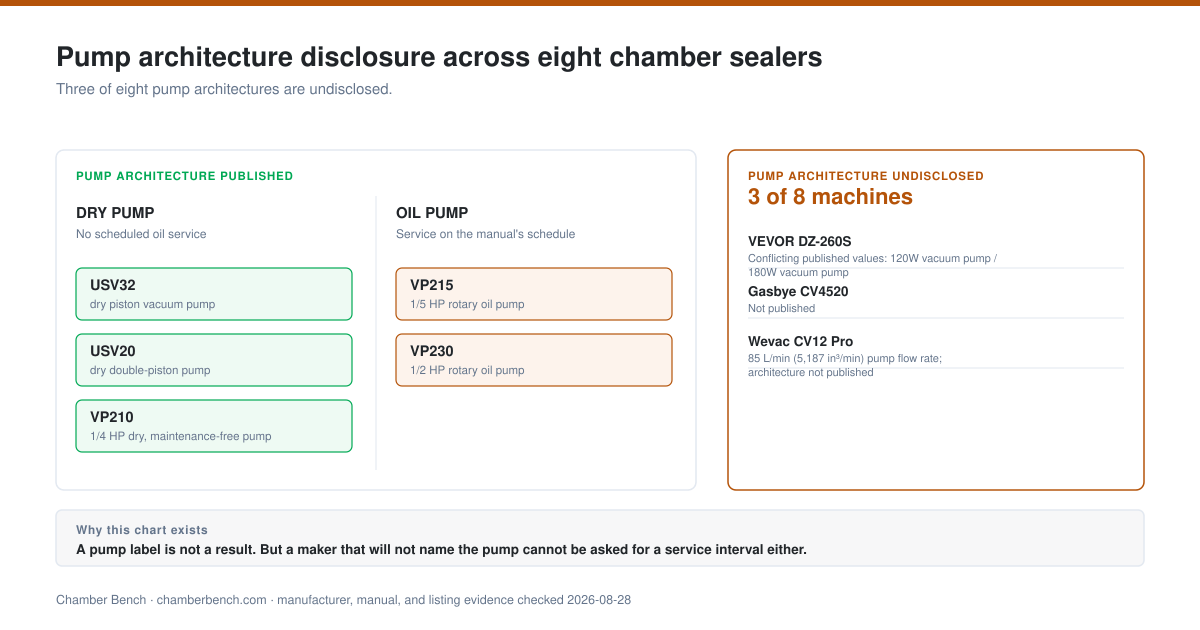
Oil pump vs. dry pump chamber sealers: choose by duty and upkeep
Compare chamber-vacuum pump types through batch volume, maintenance, placement, recovery, and ownership—not a blanket winner.
Using your sealer
Pouches, liquids and the workflows a chamber machine is bought for.
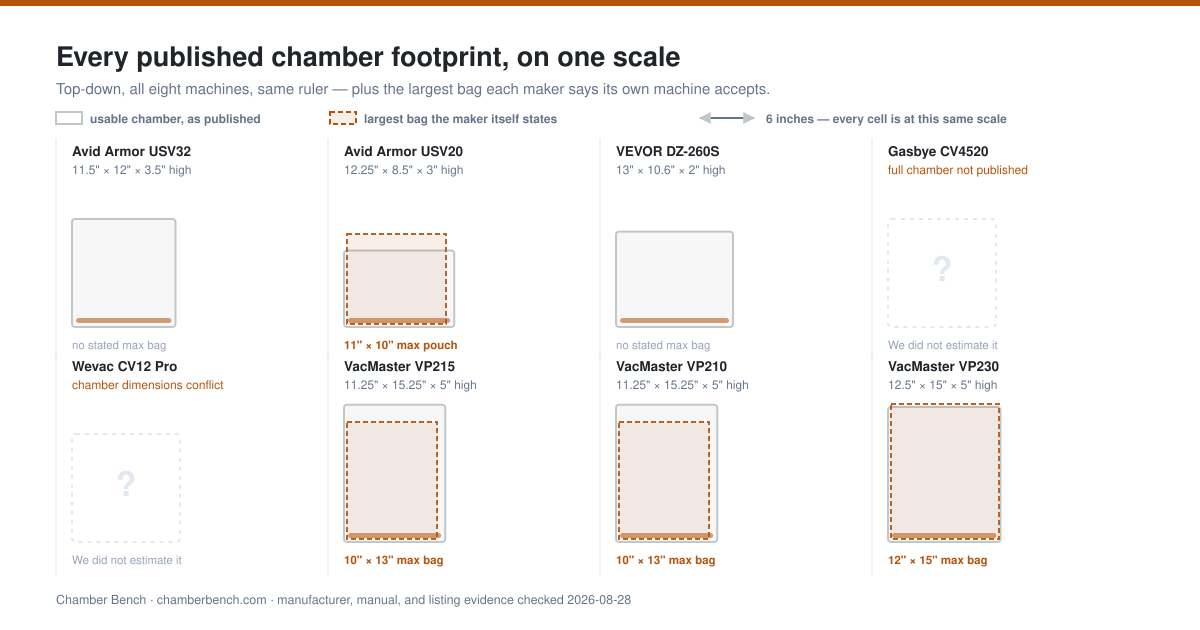
Chamber vacuum sealer bag sizes: a five-point compatibility check
Choose a chamber pouch by mouth width, length, food height, material, thickness, and clean seal clearance—not dimensions alone.
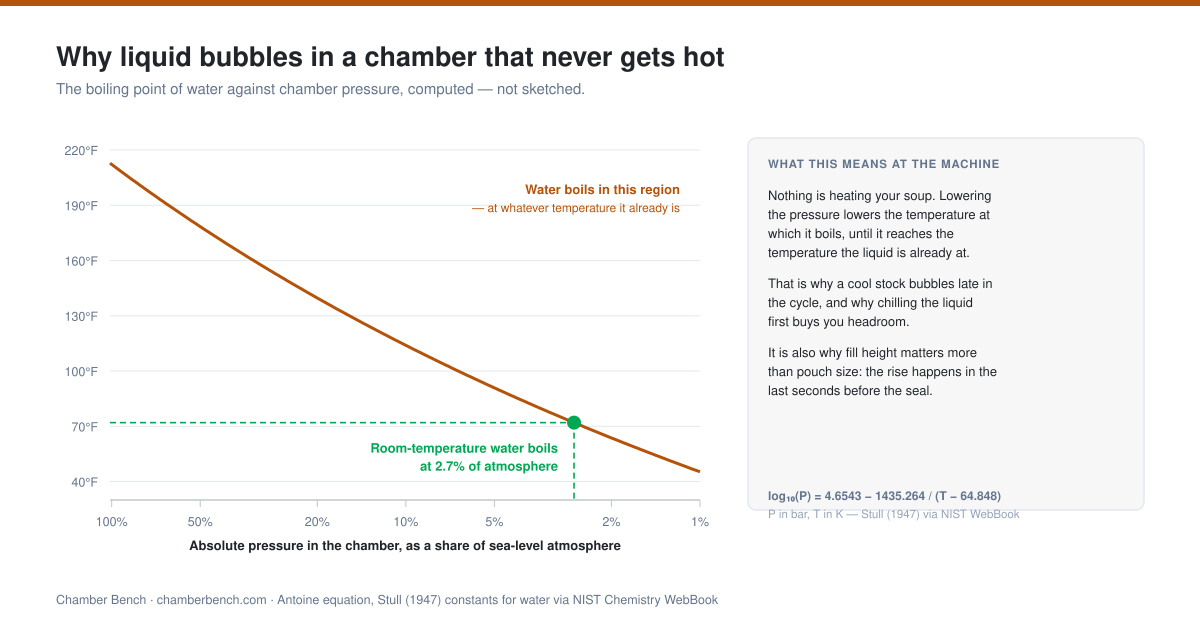
Vacuum sealing liquids in a chamber: control headroom and boil
A careful liquid-sealing workflow covering pouch headroom, pressure behavior, stop points, clean seals, and food-safety limits.
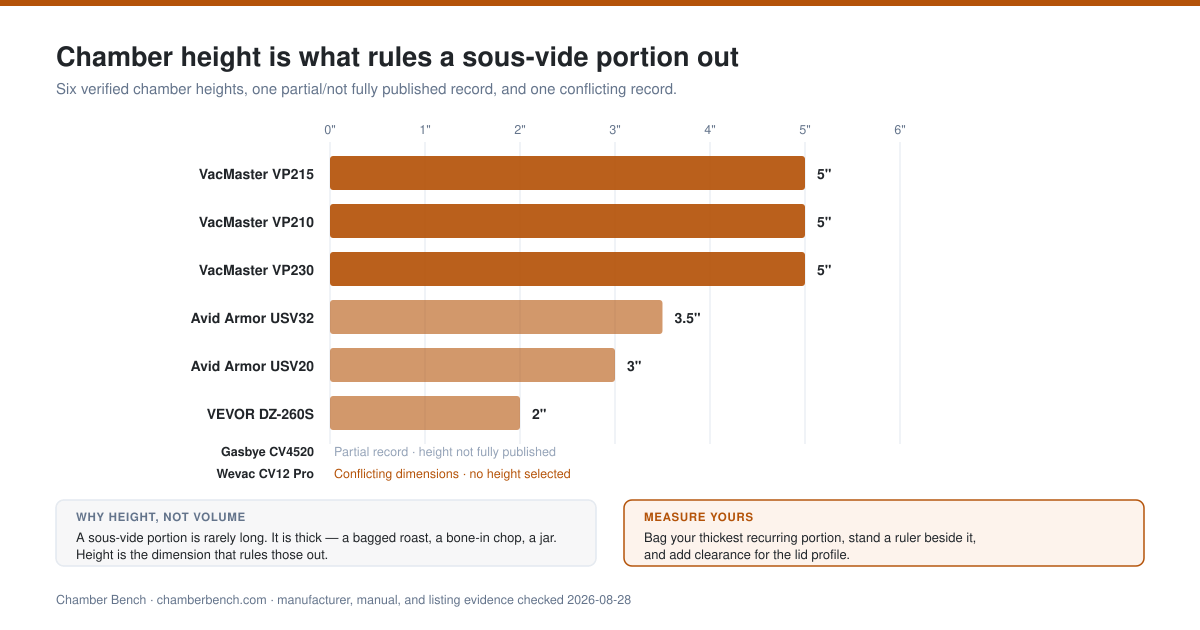
Chamber vacuum sealers for sous vide: useful, not mandatory, and the pouch records disagree
A chamber sealer helps with marinades and batch portions. Published pouch temperature ceilings from six makers disagree, and FoodSaver contradicts itself.
Owning one
What it costs to run and what it needs to keep running.
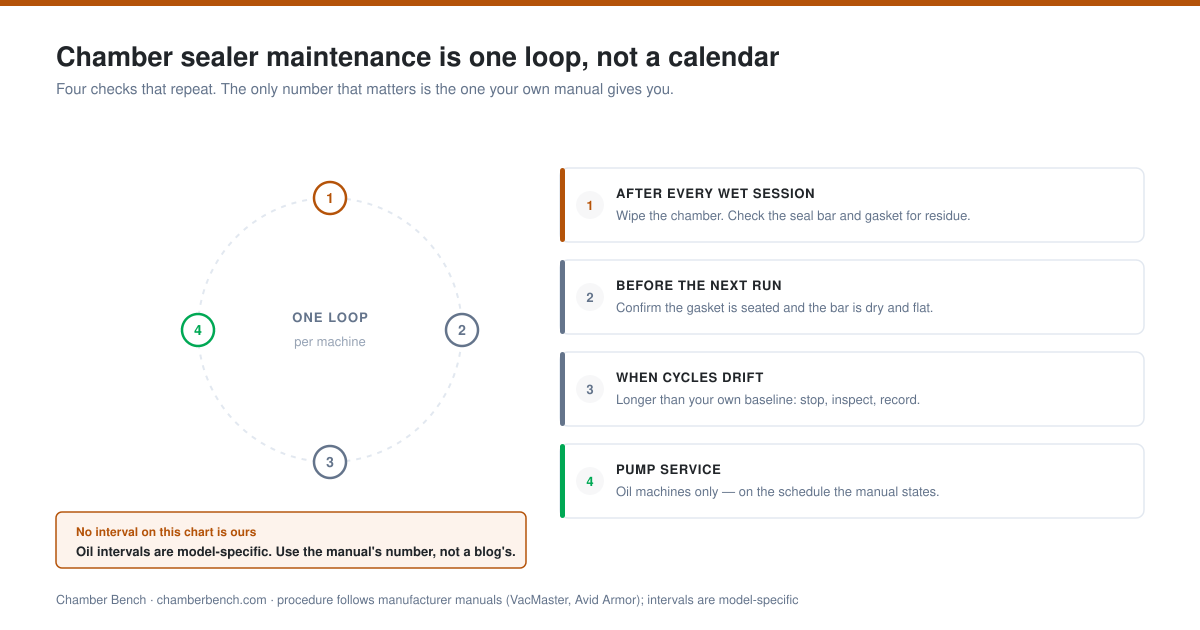
Chamber vacuum sealer maintenance and repair: a manual-first log
Four oil-change intervals sit across the VacMaster documents covering the VP215, in three units that do not convert. Every figure here carries its document and date.
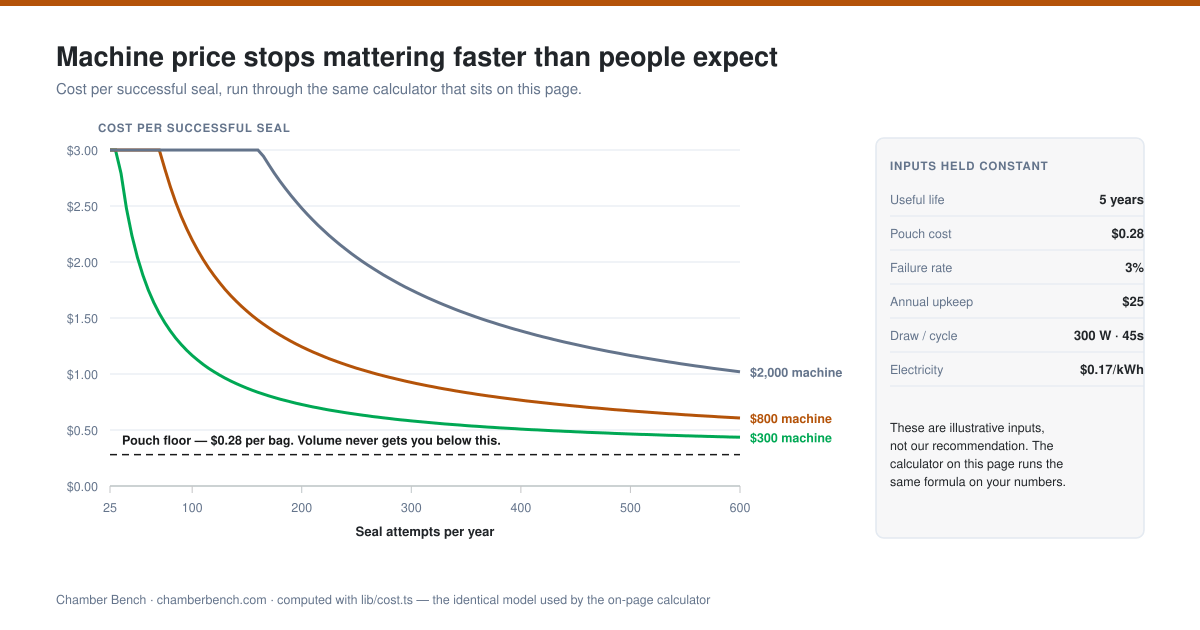
Chamber vacuum sealer cost per seal: a transparent calculator
Cost per successful seal from your own inputs: pouches, maintenance, electricity from the wattage you enter, and the manufacturer records that disagree.
Storage and safety
What vacuum packing does to shelf life — and, just as importantly, what it does not.
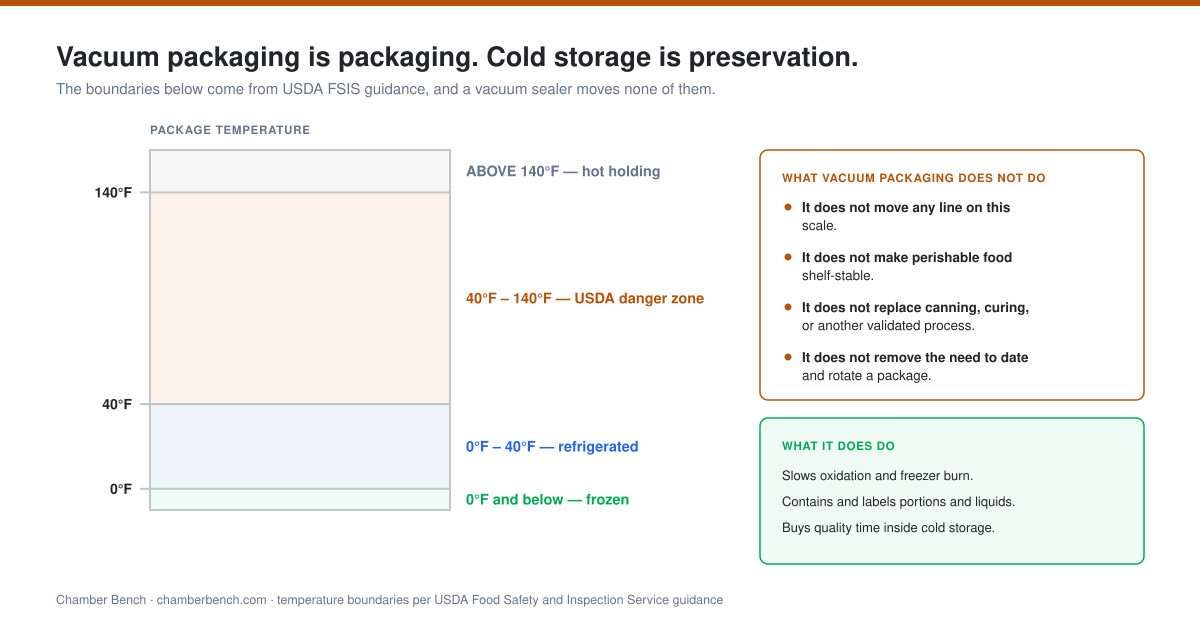
Vacuum sealing food safely: the low-oxygen limit and what the storage charts actually say
USDA, FDA Food Code and industry storage figures for vacuum-packed food, compared per number: the low-oxygen limit, fridge and freezer windows, thawing.
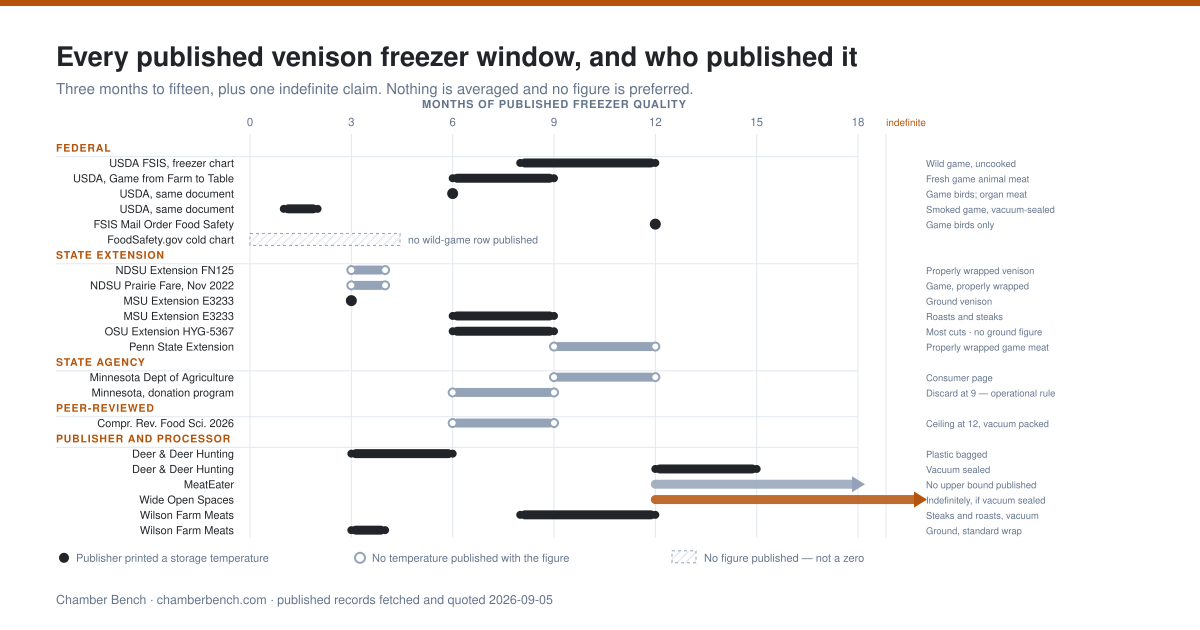
Venison freezer life: every published month figure, attributed
Every published freezer-quality window for venison, from three months to fifteen, each attributed to its source, with the safety-versus-quality split.
How these guides are built
Every guide lists the sources behind its claims. Government food-safety pages and official product manuals take priority; manufacturer specifications are attributed and are not presented as Chamber Bench measurements.