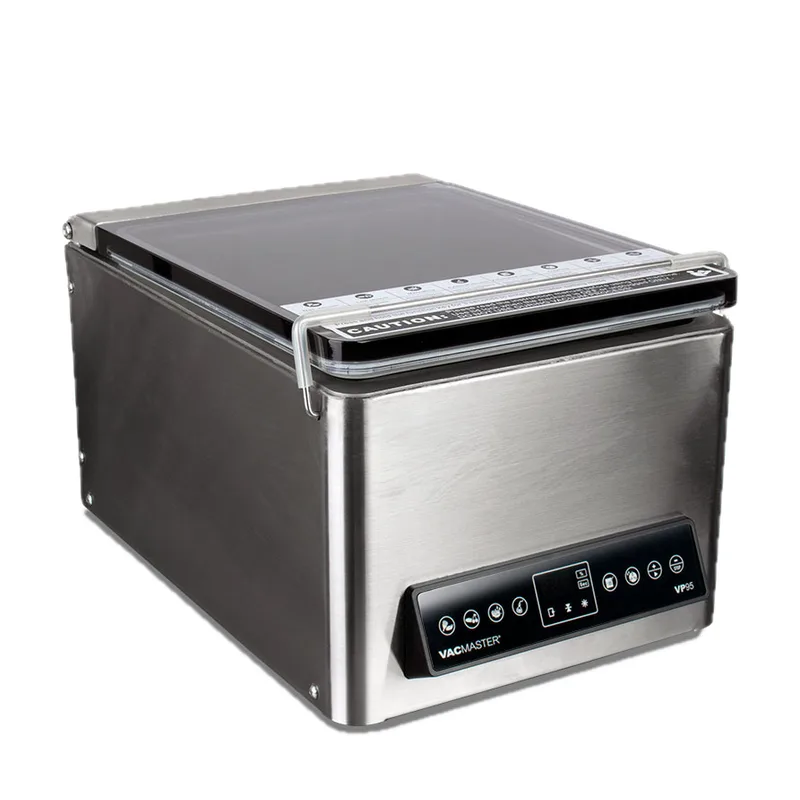
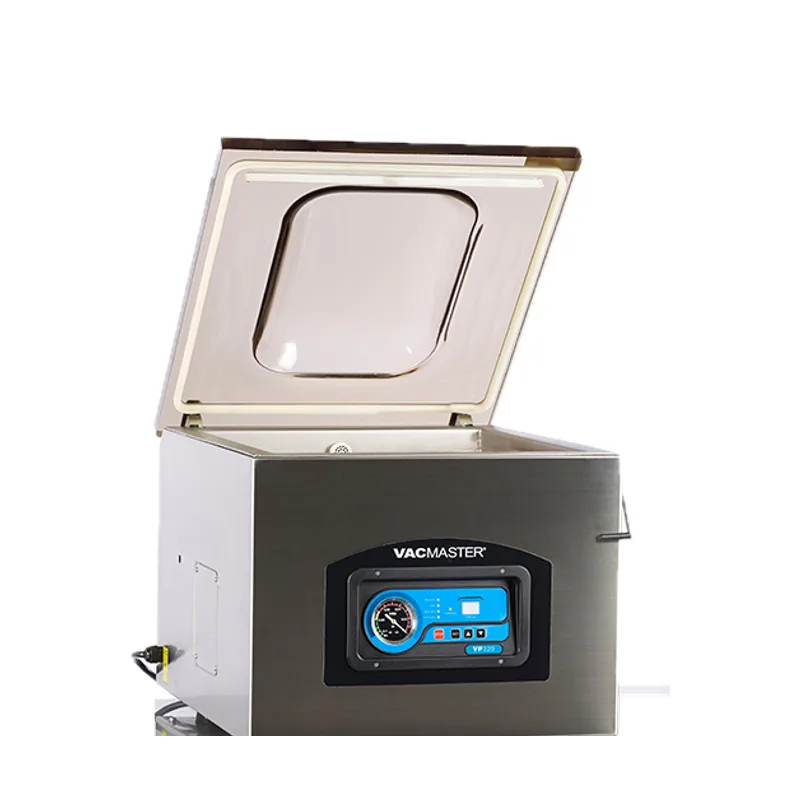
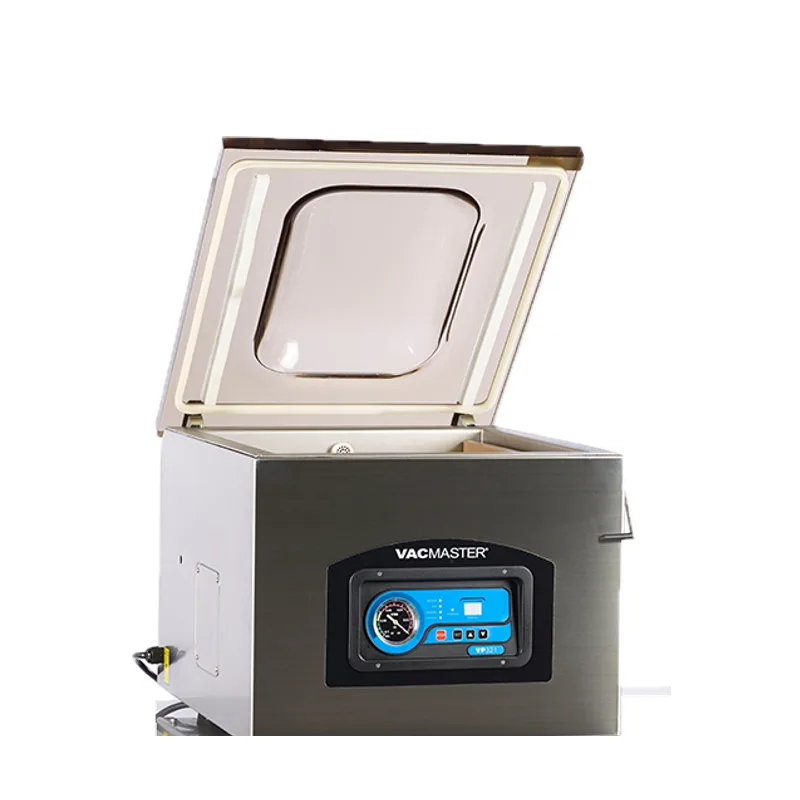
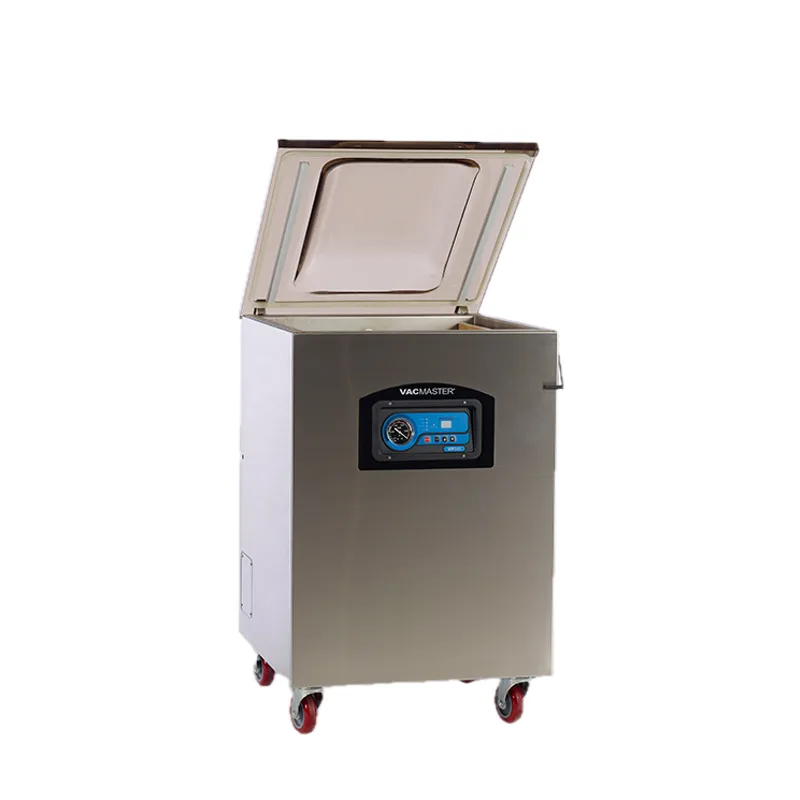
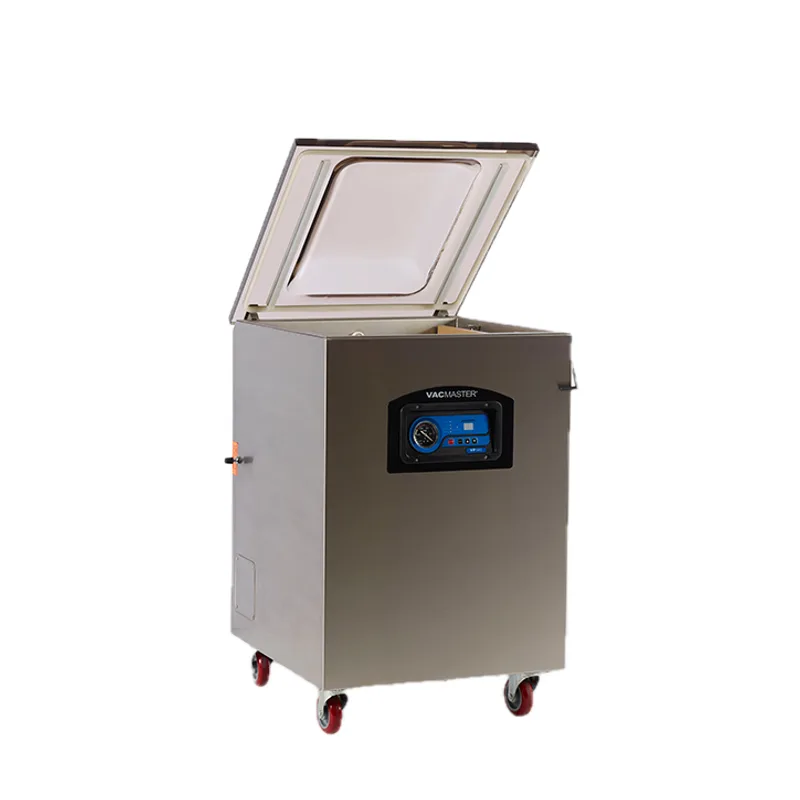
A model ladder is the maker's own answer to a question the buyer has not asked yet. Three machines in a line usually means three changes stacked on top of each other, which is why brand pages so often end up comparing everything against everything and settling nothing. A line built cleanly enough that each step moves exactly one lever is rare, and when it happens the whole purchase collapses into two yes-or-no questions.
Two rungs, and each moves a single lever
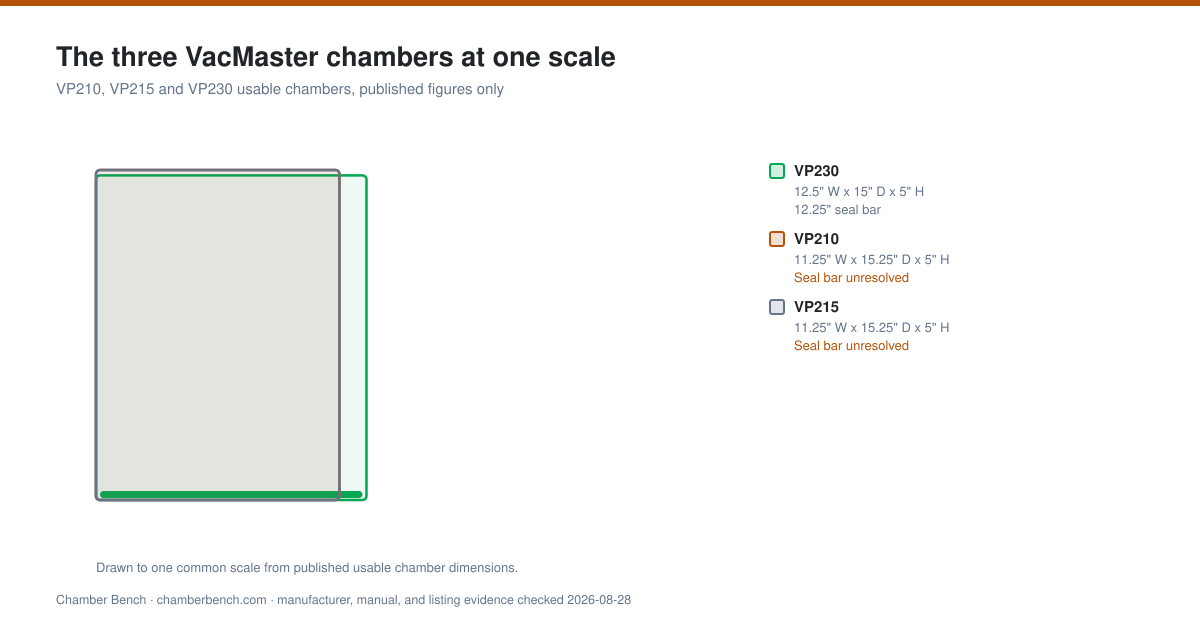
Rung two changes what the machine can swallow. The VP230 takes the seal bar to 12.25 inches and the maximum bag to 12 by 15 inches, and steps the pump to 1/2 HP oil. How large that step is depends on which VP215 rating you read: the June 2024 VP215 user guide prints .2 HP and VacMaster's own Help Center prints 1/4 HP, which makes the VP230 either two and a half times the VP215's rating or exactly twice it. The chamber gets wider and, marginally, shallower.
VacMaster states support for 3-7 mil Mylar and retort pouches on the VP215 and the VP230, and publishes no such statement for the VP210. Those are precisely the two oil-pump machines.
The bar-width rung gives back a quarter inch of depth
VacMaster publishes 11.25 by 15.25 by 5 inches for the VP215 and 12.5 by 15 by 5 inches for the VP230: the chamber gains 1.25 inches of width and loses a quarter inch of depth. The gain is on the axis the wider seal bar needs, and the loss is on the axis a long package uses. If what defeats your current machine is length rather than width, the VP230 is not the rung that fixes it.
Scroll horizontally to see every column.
| Published figure | VP215 | VP230 | Net change |
|---|---|---|---|
| Maximum bag | 10 x 13 in | 12 x 15 in | Plus 2 in on both axes |
| Chamber width | 11.25 in | 12.5 in | Plus 1.25 in |
| Chamber depth | 15.25 in | 15 in | Minus 0.25 in |
| Chamber height | 5 in | 5 in | No change |
| Pump | Rotary oil; .2 HP and 1/4 HP both published | 1/2 HP rotary oil | Twice, or 2.5x, depending on the VP215 figure |
Specifications compared
Scroll horizontally to see every column.
| Model | Seal bar | Chamber | Pump | Weight | Analysis |
|---|---|---|---|---|---|
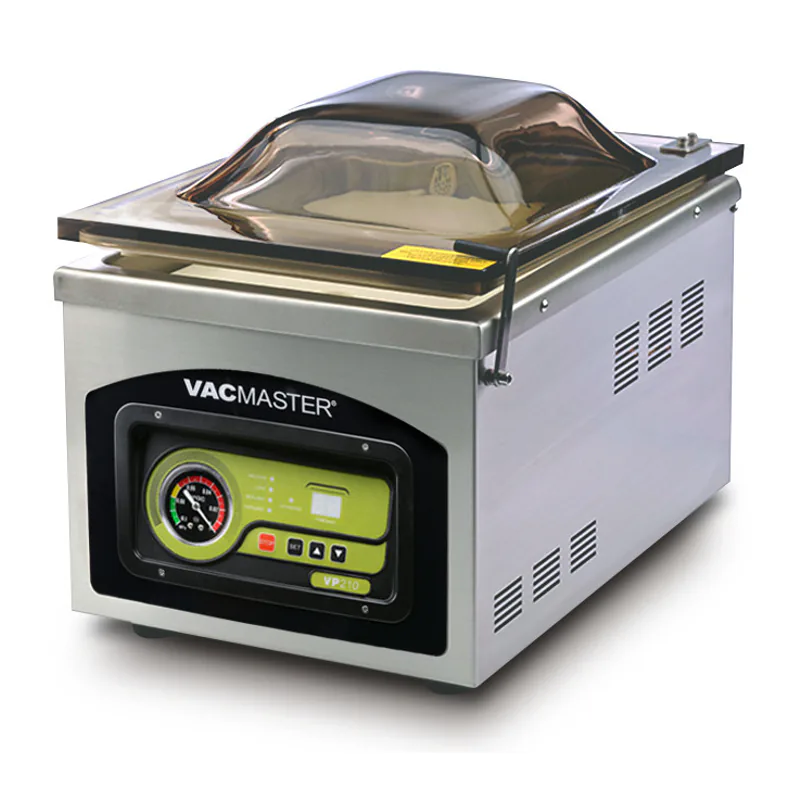 VacMaster VP210 VacMaster VP210 | Conflicting published values: 10 Inch removable seal bar with double seal wire / 10.25 in — Conflicting published record — VacMaster product page · VacMaster manual | 1/4 HP dry, maintenance-free pump — Verified published record — VacMaster product page · VacMaster manual | Open analysis | ||
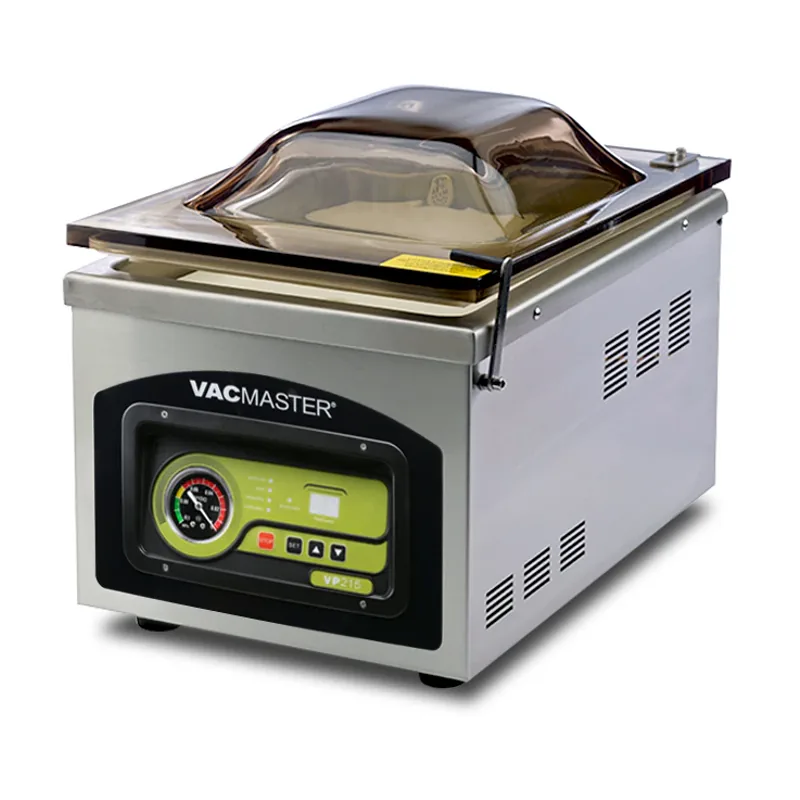 VacMaster VP215 VacMaster VP215 | Conflicting published values: 10 Inch removable seal bar with double seal wire / 10.25 in — Conflicting published record — VacMaster product page · VacMaster manual | Conflicting published values: 1/5 HP (.2 HP) rotary oil pump / 1/4 HP rotary oil pump — Conflicting published record — VacMaster manual · VacMaster support note | Open analysis | ||
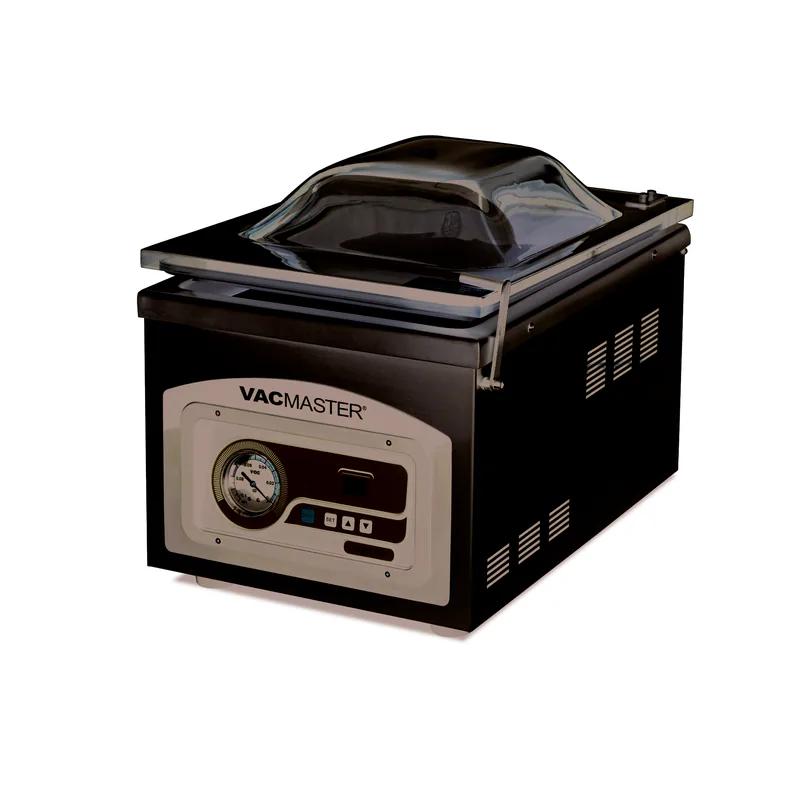 VacMaster VP230 VacMaster VP230 | 1/2 HP rotary oil pump — Verified published record — VacMaster product page · VacMaster support note | Conflicting published values: 89 Pounds / 82 lbs / 96.8 lbs — Conflicting published record — VacMaster product page · VacMaster support note · Amazon listing | Open analysis |
Cells reading “Not stated” mean the manufacturer does not publish that figure. We have not substituted an estimate.
Model analyses
Why it fits
- Chamber:
- Pump: 1/4 HP dry, maintenance-free pump — Verified published record — VacMaster product page · VacMaster manual
- Weight:
Unanswered or conflicting specifications
- Seal bar: Conflicting published values: 10 Inch removable seal bar with double seal wire / 10.25 in — Conflicting published record — VacMaster product page · VacMaster manual
- Power: Conflicting published values: 110 watts at 110 volts / 110V, 60Hz, 4.2 Amps / Single phase 110 V, 20 AMP — Conflicting published record — Amazon listing · VacMaster product page · VacMaster manual
Published specifications
- Seal bar: Conflicting published values: 10 Inch removable seal bar with double seal wire / 10.25 in — Conflicting published record — VacMaster product page · VacMaster manual
- Chamber:
- Pump: 1/4 HP dry, maintenance-free pump — Verified published record — VacMaster product page · VacMaster manual
- Power: Conflicting published values: 110 watts at 110 volts / 110V, 60Hz, 4.2 Amps / Single phase 110 V, 20 AMP — Conflicting published record — Amazon listing · VacMaster product page · VacMaster manual
- Weight:
View chamber sizing diagram

Why it fits
- Chamber:
- Weight:
Unanswered or conflicting specifications
- Seal bar: Conflicting published values: 10 Inch removable seal bar with double seal wire / 10.25 in — Conflicting published record — VacMaster product page · VacMaster manual
- Pump: Conflicting published values: 1/5 HP (.2 HP) rotary oil pump / 1/4 HP rotary oil pump — Conflicting published record — VacMaster manual · VacMaster support note
- Power: Conflicting published values: 110 watts at 110 volts / 110V, 60Hz, 4 Amps / Single Phase 110 V, 20 Amp — Conflicting published record — Amazon listing · VacMaster product page · VacMaster manual
Published specifications
- Seal bar: Conflicting published values: 10 Inch removable seal bar with double seal wire / 10.25 in — Conflicting published record — VacMaster product page · VacMaster manual
- Chamber:
- Pump: Conflicting published values: 1/5 HP (.2 HP) rotary oil pump / 1/4 HP rotary oil pump — Conflicting published record — VacMaster manual · VacMaster support note
- Power: Conflicting published values: 110 watts at 110 volts / 110V, 60Hz, 4 Amps / Single Phase 110 V, 20 Amp — Conflicting published record — Amazon listing · VacMaster product page · VacMaster manual
- Weight:
View chamber sizing diagram

Why it fits
- Seal bar:
- Chamber:
- Pump: 1/2 HP rotary oil pump — Verified published record — VacMaster product page · VacMaster support note
- Power: 370 W; 110 V, 60 Hz, 4 A — Verified published record — Amazon listing · VacMaster product page · VacMaster support note
Unanswered or conflicting specifications
- Weight: Conflicting published values: 89 Pounds / 82 lbs / 96.8 lbs — Conflicting published record — VacMaster product page · VacMaster support note · Amazon listing
Published specifications
- Seal bar:
- Chamber:
- Pump: 1/2 HP rotary oil pump — Verified published record — VacMaster product page · VacMaster support note
- Power: 370 W; 110 V, 60 Hz, 4 A — Verified published record — Amazon listing · VacMaster product page · VacMaster support note
- Weight: Conflicting published values: 89 Pounds / 82 lbs / 96.8 lbs — Conflicting published record — VacMaster product page · VacMaster support note · Amazon listing
View chamber sizing diagram

Data quality note: Current official and listing sources publish 82 lb, 89 lb, and 96.8 lb. We retain all three and select none.
What each rung commits you to after delivery
Pouches are the other running commitment, and this ladder attaches a specific one at rung two. The VP210 and VP215 share a pouch inventory outright — same 10 by 13 inch ceiling, same stock, interchangeable between the two machines. The VP230 does not: its 12 by 15 inch ceiling is a size the other two cannot seal. So rung two is the rung where a household running two VacMasters stops being able to buy one size of film for both.
Fit summary
The VP230 publishes a 12.25-inch bar and 12-by-15-inch bag limit.
These analyses compare published manufacturer figures and live listing data across all three models. Chamber Bench has not bench-tested them. Where published figures conflict, as with the VP230 weight, every value remains visible and none is selected.
Open the VacMaster VP210 analysis · Return to the specifications
Frequently asked questions
What is the actual difference between the VP210 and the VP215?
The pump and 12 pounds.
Do all three VacMaster models take the same bags?
No. The VP210 and VP215 both accept bags up to 10 by 13 inches. The VP230 accepts bags up to 12 by 15 inches. All three use plain smooth chamber pouches, not the embossed channel bags an external sealer requires, so a pouch bought for one will physically work in another provided it fits the chamber and the seal bar.
Can a VacMaster chamber sealer sit on a normal kitchen counter?
Physically yes, practically it becomes permanent. All three chambers are 15 inches deep or more, so the body needs real bench depth. If the machine has to be stowed between uses, look at the compact end of the category instead.
How often does the oil pump need changing?
Of the three VacMaster models on this page only two take oil at all: the VP215 and the VP230 run rotary oil pumps, while the VP210's pump is published as dry and maintenance-free. VacMaster's current instruction covers the VP215, in the June 2024 user guide, and reads: “Required oil change schedule: First Change: one week after use. Future Change: every 3 months or 250 cycles, which ever comes first.” Dated 13 April 2020, two Help Center pages measure the same duty in other units: one in running hours, 25 and then 60, the other as roughly two changes a year, and no cycle length is published that would convert one unit into another. Nothing in the records retained here sets an interval for the VP230, so work from the manual that ships with it.
Is the VP series being discontinued?
We have seen unconfirmed forum claims to that effect and can verify none of them. What we can state is that all three models returned live Amazon listing data when we retrieved specifications on 26 August 2026. Treat availability chatter as unverified and check current listing status yourself before making a decision that depends on it.
Does a commercial-tier machine seal well enough to store food at room temperature?
No, and the tier is the reason the question comes up. USDA guidance is explicit that vacuum-packed perishable meat still needs refrigeration or freezing, low-oxygen storage carries its own risks with certain organisms, and a 1/2 HP oil pump does not change either fact.
What this page covers, and what it does not
This hub covers the three VacMaster chamber machines among the eight we verified against live Amazon listing data on 2026-08-26: the VP210, the VP215 and the VP230. VacMaster's other chamber machines are listed on the VacMaster brand page with VacMaster's own figures, but are not compared here; the Anova chamber sealer is not in the catalogue because we could not verify its Amazon listing.
How published evidence is evaluated
Chamber Bench compares manufacturer and listing evidence for the eight machines in this comparison. The current analysis covers usable chamber geometry, seal-bar length, pump type, serviceability, and other published ownership constraints.
Where a manufacturer publishes nothing, we say so rather than filling the gap:
- We record which specifications a manufacturer declines to publish.
- We flag contradictions inside a listing rather than quietly picking one figure.
- We keep partial records distinct from complete published dimensions.
- We do not reproduce retailer ratings or prices as editorial fact.
What we have not done: we have not physically run these machines. No cycle times, seal-strength figures, or noise measurements on this site come from our own bench, and none are presented as if they do. Our test protocol documents the measurements required before any model can carry a tested performance conclusion.