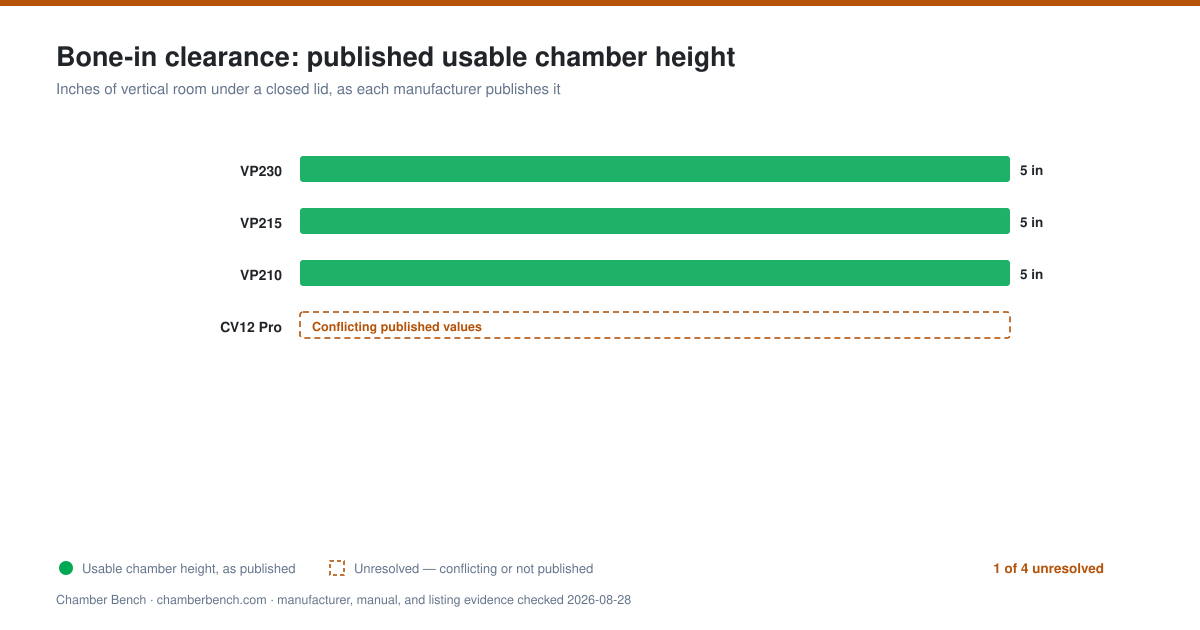
The bone is what breaks the machine choice. A boned-out loin lies flat and seals in anything, which is why most vacuum sealer advice for hunters is interchangeable and mostly useless. Leave the bone in a shank and you have an object with a minimum thickness that no vacuum will compress — and the same is true of a packaged shoulder, a rib section, a doubled brick of ground meat. Those have to go under a lid that then has to close and hold a seal. Seal bar length, the figure printed in every product title, decides none of it. Vertical room under the closed lid decides all of it.
The five awkward packages, not the forty easy ones
Butchering output is not uniform. Shanks with the bone in are the classic case: the bone sets a minimum thickness you cannot compress, and unlike a steak it will not flatten under vacuum. Packaged shoulder sections, rib slabs and double-stacked ground bricks behave the same way.
Hunters commonly cite something in the range of forty to fifty packages from an average whitetail. We have not verified that figure and it is not our finding — treat it as folk arithmetic for planning pouch purchases, not as a specification. What matters more for machine choice is the shape of the largest five packages, not the count of the easy forty.
So the sizing method for this job inverts the usual one. Take the thickest package you genuinely intend to freeze, put it in the pouch you intend to use, and measure its height. Then compare that against published usable chamber height. We do not publish a shank thickness on this site, because it varies by animal, by how the leg was cut and by how much meat stayed on the bone. Your tape measure is the authority here, not us.
Lid clearance across all eight machines
Every figure below is what the manufacturer publishes, retrieved from live Amazon listing data, and two rows are blank because the makers gave us a case or a bare litre figure instead. Those stay blank. On this particular specification a wrong number is materially worse than a missing one: a chamber depth guessed half an inch generous does not disappoint you on a spec sheet, it disappoints you with a shank already bagged, on a processing day, with the rest of the animal on the table behind it.
- The three 5-inch machines are the only ones in this comparison that publish a chamber deep enough to be worth measuring a bone-in package against.
Scroll horizontally to see every column.
| Machine | Usable chamber height | Usable chamber W x D | Seal bar | What the published height allows |
|---|---|---|---|---|
| VacMaster VP230 | 5 in | 12.5 x 15 in | 12.25 in, bags to 12 x 15 in | Deepest clearance and widest bag ceiling on this page |
| VacMaster VP215 | 5 in | 11.25 x 15.25 in | Same clearance, narrower bag ceiling, oil pump | |
| VacMaster VP210 | 5 in | 11.25 x 15.25 in | Same clearance and chamber, dry pump instead | |
| VEVOR DZ-260S | 2 in | 13 x 10.6 in | 10.2 in | |
| Avid Armor USV20 | 3 in | 12.25 x 8.5 in | 11.5 in, pouches to 11 x 10 in | Thinnest clearance here, flat packages only |
| Avid Armor USV32 | 3.5 in | 11.5 x 12 in | 11.5 in dual-wire | |
| Gasbye CV4520 | Not published | Not published, 9.7 in chamber width only | 11.5 in replaceable | Clearance cannot be compared; we do not estimate it |
A processing day is a duty-cycle question nobody answers
Butchering is not one seal, it is an afternoon of them, and the natural next question is how many packages a machine will run before it needs to rest. We cannot answer it. Not one of the eight machines in this comparison has a published duty cycle or cycle time, and we have bench-tested nothing, so any seals-per-hour figure on this subject — ours or anyone else's — is invention. We would rather say that than print a number.
What the specifications do support is a pump-type comparison. These records establish different maintenance requirements, not measured duty-cycle performance.
No packages per hour, no seals per hour, no cycle time. No manufacturer here states one, we have run no bench, and a fabricated throughput figure would be the most quotable wrong number on this site.
Pouch wall matters more when the freezer holds it for a year
One thing no machine on this page does: make venison shelf-stable. USDA is explicit that vacuum packaging does not sterilise food and does not remove the need for refrigeration or freezing. Sealed venison is still perishable venison.
Specifications compared
Scroll horizontally to see every column.
| Model | Seal bar | Chamber | Pump | Weight | Analysis |
|---|---|---|---|---|---|
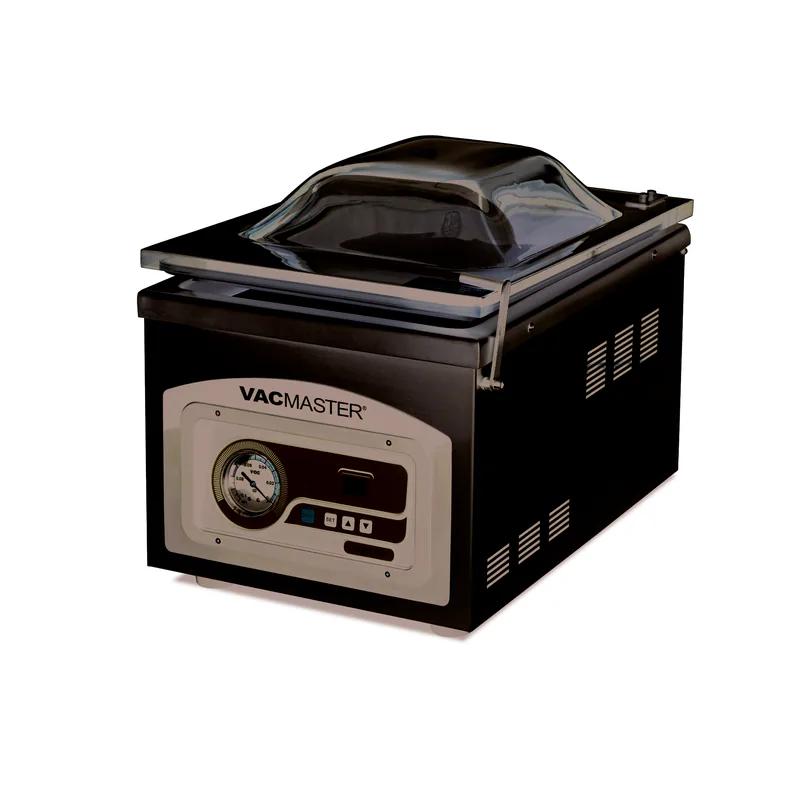 VacMaster VP230 VacMaster VP230 | 1/2 HP rotary oil pump — Verified published record — VacMaster product page · VacMaster support note | Conflicting published values: 89 Pounds / 82 lbs / 96.8 lbs — Conflicting published record — VacMaster product page · VacMaster support note · Amazon listing | Open analysis | ||
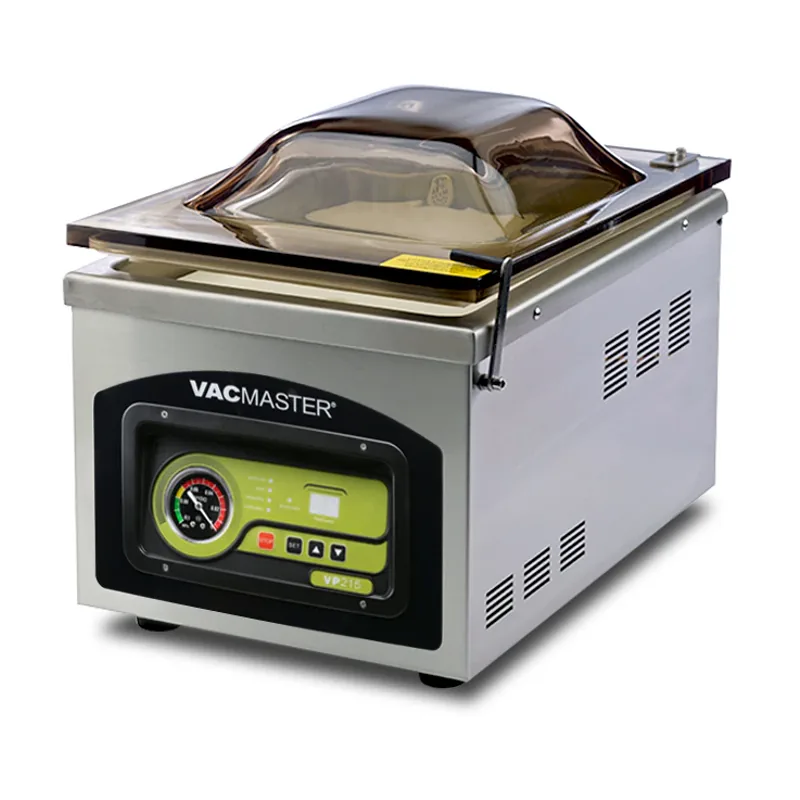 VacMaster VP215 VacMaster VP215 | Conflicting published values: 10 Inch removable seal bar with double seal wire / 10.25 in — Conflicting published record — VacMaster product page · VacMaster manual | Conflicting published values: 1/5 HP (.2 HP) rotary oil pump / 1/4 HP rotary oil pump — Conflicting published record — VacMaster manual · VacMaster support note | Open analysis | ||
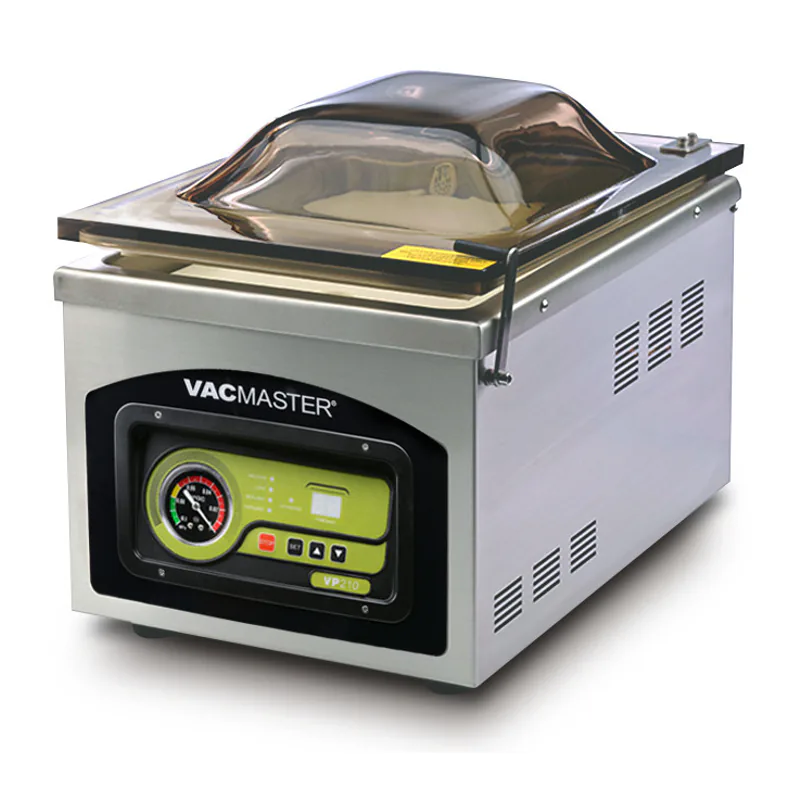 VacMaster VP210 VacMaster VP210 | Conflicting published values: 10 Inch removable seal bar with double seal wire / 10.25 in — Conflicting published record — VacMaster product page · VacMaster manual | 1/4 HP dry, maintenance-free pump — Verified published record — VacMaster product page · VacMaster manual | Open analysis | ||
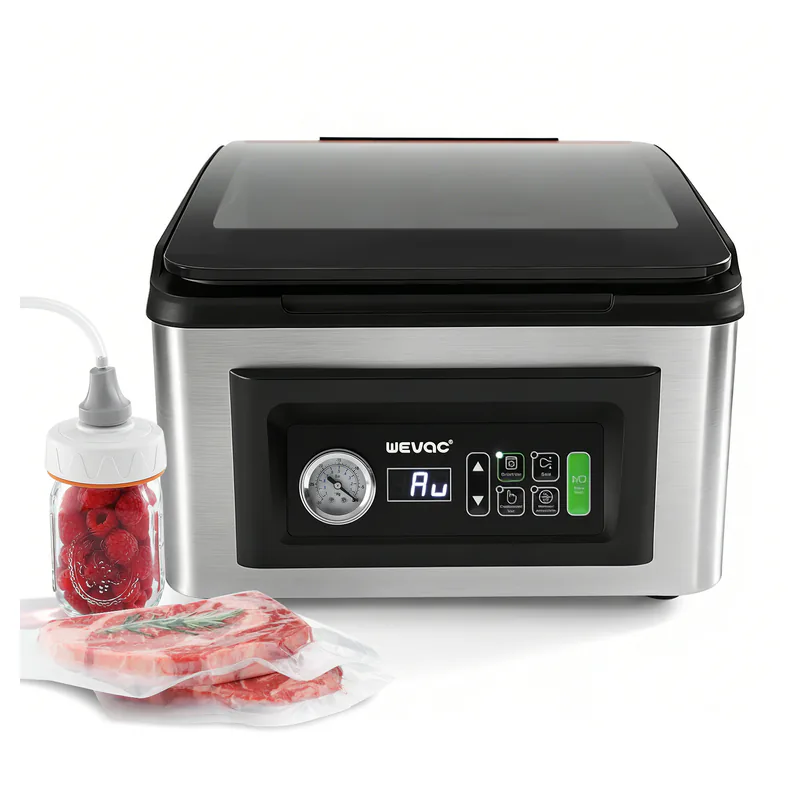 Wevac CV12 Pro Wevac CV12 Pro | 12 in — Verified published record — Wevac Technology Co., Limited product page · Wevac Technology Co., Limited manual | Conflicting published values: 12.2" W x 13.0" D x 3.9" H / 12.4" W x 12.8" L x 3.8" H — Conflicting published record — Wevac Technology Co., Limited product page | Not stated — Verified published record — Wevac Technology Co., Limited product page · Wevac Technology Co., Limited manual | Open analysis |
Cells reading “Not stated” mean the manufacturer does not publish that figure. We have not substituted an estimate.
Model analyses
Why it fits
- Seal bar:
- Chamber:
- Pump: 1/2 HP rotary oil pump — Verified published record — VacMaster product page · VacMaster support note
- Power: 370 W; 110 V, 60 Hz, 4 A — Verified published record — Amazon listing · VacMaster product page · VacMaster support note
Unanswered or conflicting specifications
- Weight: Conflicting published values: 89 Pounds / 82 lbs / 96.8 lbs — Conflicting published record — VacMaster product page · VacMaster support note · Amazon listing
Published specifications
- Seal bar:
- Chamber:
- Pump: 1/2 HP rotary oil pump — Verified published record — VacMaster product page · VacMaster support note
- Power: 370 W; 110 V, 60 Hz, 4 A — Verified published record — Amazon listing · VacMaster product page · VacMaster support note
- Weight: Conflicting published values: 89 Pounds / 82 lbs / 96.8 lbs — Conflicting published record — VacMaster product page · VacMaster support note · Amazon listing
View chamber sizing diagram
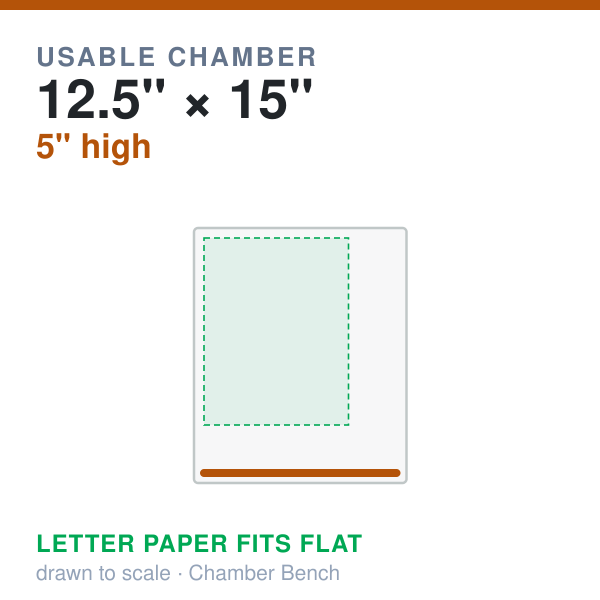
Data quality note: Current official and listing sources publish 82 lb, 89 lb, and 96.8 lb. We retain all three and select none.
Why it fits
- Chamber:
- Weight:
Unanswered or conflicting specifications
- Seal bar: Conflicting published values: 10 Inch removable seal bar with double seal wire / 10.25 in — Conflicting published record — VacMaster product page · VacMaster manual
- Pump: Conflicting published values: 1/5 HP (.2 HP) rotary oil pump / 1/4 HP rotary oil pump — Conflicting published record — VacMaster manual · VacMaster support note
- Power: Conflicting published values: 110 watts at 110 volts / 110V, 60Hz, 4 Amps / Single Phase 110 V, 20 Amp — Conflicting published record — Amazon listing · VacMaster product page · VacMaster manual
Published specifications
- Seal bar: Conflicting published values: 10 Inch removable seal bar with double seal wire / 10.25 in — Conflicting published record — VacMaster product page · VacMaster manual
- Chamber:
- Pump: Conflicting published values: 1/5 HP (.2 HP) rotary oil pump / 1/4 HP rotary oil pump — Conflicting published record — VacMaster manual · VacMaster support note
- Power: Conflicting published values: 110 watts at 110 volts / 110V, 60Hz, 4 Amps / Single Phase 110 V, 20 Amp — Conflicting published record — Amazon listing · VacMaster product page · VacMaster manual
- Weight:
View chamber sizing diagram

Why it fits
- Chamber:
- Pump: 1/4 HP dry, maintenance-free pump — Verified published record — VacMaster product page · VacMaster manual
- Weight:
Unanswered or conflicting specifications
- Seal bar: Conflicting published values: 10 Inch removable seal bar with double seal wire / 10.25 in — Conflicting published record — VacMaster product page · VacMaster manual
- Power: Conflicting published values: 110 watts at 110 volts / 110V, 60Hz, 4.2 Amps / Single phase 110 V, 20 AMP — Conflicting published record — Amazon listing · VacMaster product page · VacMaster manual
Published specifications
- Seal bar: Conflicting published values: 10 Inch removable seal bar with double seal wire / 10.25 in — Conflicting published record — VacMaster product page · VacMaster manual
- Chamber:
- Pump: 1/4 HP dry, maintenance-free pump — Verified published record — VacMaster product page · VacMaster manual
- Power: Conflicting published values: 110 watts at 110 volts / 110V, 60Hz, 4.2 Amps / Single phase 110 V, 20 AMP — Conflicting published record — Amazon listing · VacMaster product page · VacMaster manual
- Weight:
View chamber sizing diagram

Why it fits
- Seal bar: 12 in — Verified published record — Wevac Technology Co., Limited product page · Wevac Technology Co., Limited manual
- Pump: 85 L/min (5,187 in³/min) pump flow rate; architecture not published — Verified published record — Wevac Technology Co., Limited product page · Wevac Technology Co., Limited manual
- Power:
- Weight:
Unanswered or conflicting specifications
- Chamber: Conflicting published values: 12.2" W x 13.0" D x 3.9" H / 12.4" W x 12.8" L x 3.8" H — Conflicting published record — Wevac Technology Co., Limited product page
Published specifications
- Seal bar: 12 in — Verified published record — Wevac Technology Co., Limited product page · Wevac Technology Co., Limited manual
- Chamber: Conflicting published values: 12.2" W x 13.0" D x 3.9" H / 12.4" W x 12.8" L x 3.8" H — Conflicting published record — Wevac Technology Co., Limited product page
- Pump: 85 L/min (5,187 in³/min) pump flow rate; architecture not published — Verified published record — Wevac Technology Co., Limited product page · Wevac Technology Co., Limited manual
- Power:
- Weight:
Fit summary
The VacMaster VP230 is the only machine in this comparison that pairs a published 5-inch usable chamber with a 12.25-inch bar stated for 12 by 15 inch bags.
These analyses compare published manufacturer figures and live listing data; Chamber Bench has not physically tested the machines.
Open the VacMaster VP230 analysis · Return to the specifications
Frequently asked questions
What size vacuum sealer bag do I need for deer meat?
That depends on the machine more than the animal. The VacMaster VP230 is rated for bags to 12 by 15 inches, the VP215 and VP210 to 10 by 13 inches, and the Avid Armor USV20 accepts smooth pouches only up to 11 by 10 inches. Match the machine to your largest recurring package rather than trying to fit the package to a machine you already bought.
Can you vacuum seal bone-in shanks?
Only if the lid closes over them, which is why usable chamber height is the first specification to check. Measure your own thickest package rather than trusting a general rule.
What this page covers, and what it does not
This page compares the eight chamber vacuum sealers verified against live Amazon listing data on 2026-08-26, organized by published usable chamber height. The Anova chamber sealer is not included because its listing is outside the verified source set.
How published evidence is evaluated
Chamber Bench compares manufacturer and listing evidence for the eight machines in this comparison. The current analysis covers usable chamber geometry, seal-bar length, pump type, serviceability, and other published ownership constraints.
Where a manufacturer publishes nothing, we say so rather than filling the gap:
- We record which specifications a manufacturer declines to publish.
- We flag contradictions inside a listing rather than quietly picking one figure.
- We keep partial records distinct from complete published dimensions.
- We do not reproduce retailer ratings or prices as editorial fact.
What we have not done: we have not physically run these machines. No cycle times, seal-strength figures, or noise measurements on this site come from our own bench, and none are presented as if they do. Our test protocol documents the measurements required before any model can carry a tested performance conclusion.