Liquid is the one load that makes a chamber machine necessary rather than merely nicer. An edge sealer draws air out through the mouth of the bag, so it draws soup out through the mouth of the bag too. A chamber machine evacuates the whole box at once, which means the liquid never has anywhere to travel.
What is not settled is how much liquid actually fits. Six verified chamber heights, one partial/not fully published record, and one conflicting record. Gasbye publishes only a partial chamber record, while Wevac publishes two conflicting chamber envelopes; neither can support a computed fill depth. No maker publishes the separate figure that decides a pouch of stock: the depth you can fill to and still get a clean seal. A pouch has to lie open across the seal bar with its liquid level below the seal line, and the gap between the surface of the liquid and that seal line is the whole ball game. Fill past it and the cycle will move the liquid for you.
The mechanics of why liquid boils under vacuum are covered properly in our guide to sealing liquids; this page assumes you know that part and gets straight to which machine holds what.
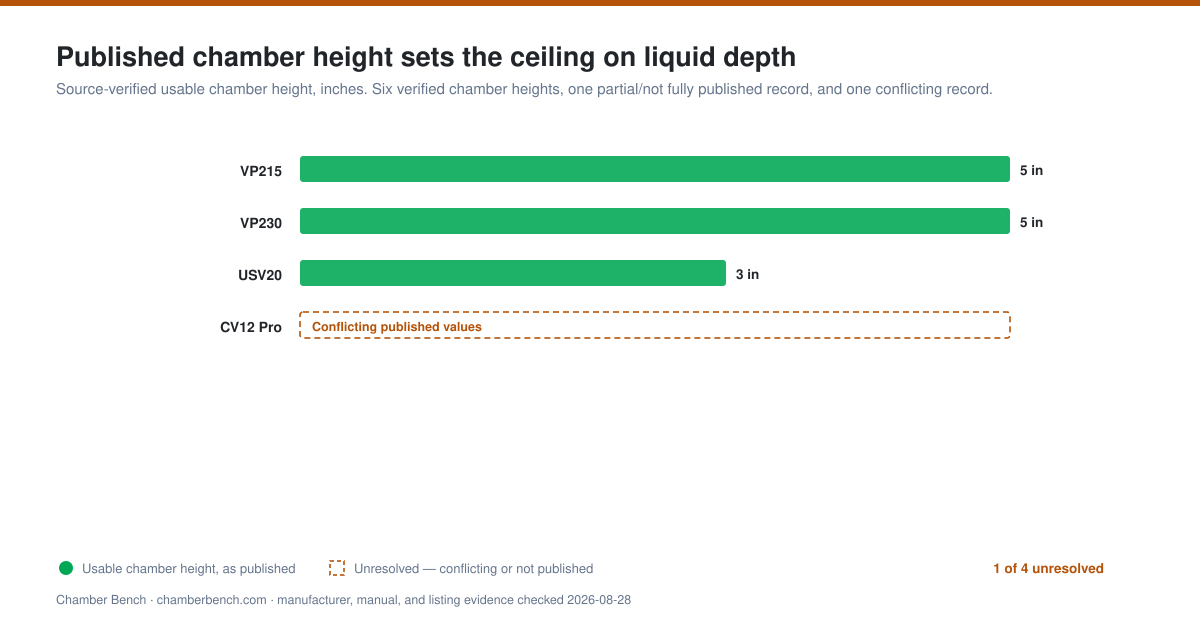
Chamber height is a ceiling, not a fill line
Usable fill depth is chamber height minus freeboard. Freeboard is the vertical distance between the surface of the liquid and the seal line, and it exists for two reasons at once: the open mouth of the pouch has to reach the seal bar and lie flat on it, and the liquid surface has to be able to move during the cycle without touching the seal. Neither of those is optional, so neither can be filled with soup.
We deduct one inch. That inch is our allowance, not a manufacturer figure, and we state it in the open so you can substitute your own. It is deliberately round and deliberately conservative: it covers the height of the seal bar itself plus the headroom a liquid surface needs when it starts moving late in a cycle. Somebody sealing chilled stock in a heavy pouch can work tighter than that. Somebody sealing a warm braise cannot. Nothing on this page treats the allowance as a measurement, and no manufacturer is being quoted when we apply it.
Run it across the eight machines in this comparison and they split into two useful groups rather than eight. The three VacMaster commercial units publish a five-inch chamber, which leaves about four inches to fill. That is not a small difference dressed up as a large one: four inches of fill depth is roughly double two inches, and it is the difference between sealing a portion of soup and sealing a meal of it.
Scroll horizontally to see every column.
| Machine | Published chamber height | Usable fill depth at a 1 in allowance | Chamber floor (W x D) | Liquid-specific hardware the maker publishes |
|---|---|---|---|---|
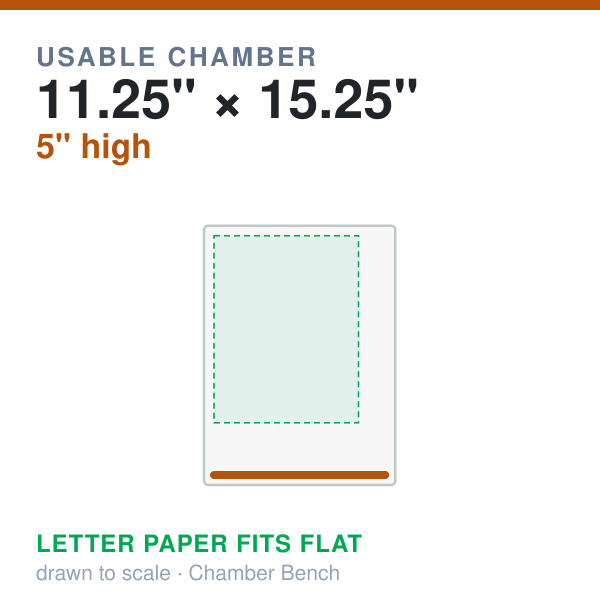
| VacMaster VP215 | 5 in | About 4 in | 11.25 x 15.25 in | Rotary oil pump, horsepower published as both .2 HP and 1/4 HP; 3-7 mil Mylar and retort pouches |
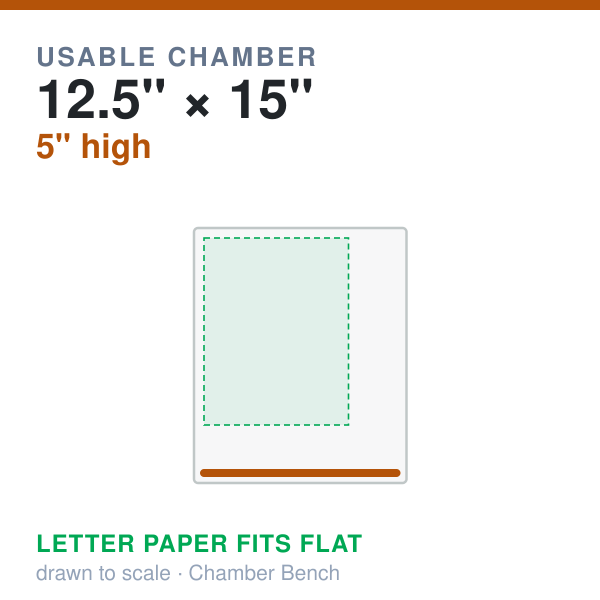
| VacMaster VP230 | 5 in | About 4 in | 12.5 x 15 in | 1/2 HP oil pump; double seal; 3-7 mil Mylar and retort pouches |
| VacMaster VP210 | 5 in | About 4 in | 11.25 x 15.25 in | Dry pump, no oil schedule to keep |
| VEVOR DZ-260S Chamber Sealer | 2 in | About 1 in | 13 x 10.6 in | Analog pressure gauge alongside the LED display |
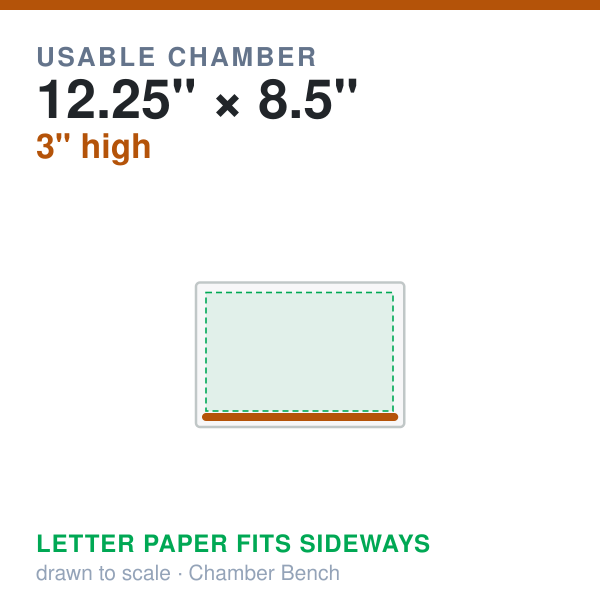
| Avid Armor USV20 | 3 in | About 2 in | 12.25 x 8.5 in | Vacuum time adjustable from 15 to 60 seconds |
| Avid Armor USV32 | 3.5 in | About 2.5 in | 11.5 x 12 in | Tempered glass lid; external accessory port |
| Gasbye CV4520 | Partial/not fully published: 5.28 qt (5 L) volume and 9.7 in width only | Not computable | Partial record: 9.7 in width; depth not published | None stated; the maker's own copy sends dry-only buyers to an external sealer |
| Wevac CV12 Pro | Conflicting published values: 12.2" W x 13.0" D x 3.9" H / 12.4" W x 12.8" L x 3.8" H | Not computable | Conflicting published values; no chamber floor selected | Detachable CleanTray and Mason jar kit; pump architecture undisclosed |
Chamber height is the manufacturer's. The one-inch freeboard deduction is ours, applied identically only to verified chamber records. Partial or conflicting heights are not used in the computation. Six verified chamber heights, one partial/not fully published record, and one conflicting record.
The failure is boil-over, and it happens before the seal
Liquid does not leak out of a chamber pouch. It boils out. Boiling point is a function of pressure, so as the chamber empties, the temperature at which the contents boil falls to meet the temperature the contents already are. Pull far enough down and water boils at room temperature. That is not a machine defect and it is not a sign the pump is too strong — it is the definition of boiling, arriving on schedule.
Temperature decides when in the cycle it arrives. A warm liquid already has a high vapour pressure, so it reaches its boiling point early, while the chamber is still at a comparatively shallow vacuum and has most of its cycle left to run. A chilled liquid has a much lower vapour pressure and stays quiet until the cycle is nearly over. Chilling the contents first is therefore the single most effective thing you can do, and it costs nothing. Our guide to vacuum sealing liquids covers the technique in full.
It also explains why the two liquid-specific features in this comparison are worth naming. Neither makes a machine seal better. Both change what happens on the day it goes wrong.
- A tempered glass lid turns a blind cycle into an observed one. The Avid Armor USV32 is the only machine here whose maker publishes one, and on liquid work it means you can see the surface start to move and stop the cycle rather than discovering the result after the seal.
- A detachable, washable chamber tray makes a spill recoverable. The Wevac CV12 Pro publishes a CleanTray that lifts out; on every machine without one, boiled-over stock goes into a chamber you have to reach into around a hot seal bar.
- A five-inch chamber buys margin rather than features. All three VacMaster units publish one, which is why they carry this page even though none of them publishes anything liquid-specific at all.
Depth constrains the machine; floor area constrains the pouch
Fill depth decides whether the liquid stays put. The chamber floor decides what shape it stays put in, and the two trade against each other in a way that is easy to get backwards. A wide, shallow pouch lying flat holds a surprising volume at two inches of depth, because the same liquid spread over a larger footprint sits lower. A tall narrow pouch of the same volume will not fit under a three-inch lid at all.
That is the case for the countertop machines on this page. The Avid Armor USV20 publishes the shallowest chamber on this page at 3 in, but it also publishes a 12.25 x 8.5 in floor and accepts smooth pouches up to 11 x 10 in, so flat-packed liquid in a wide pouch is well within it. Its adjustable 15 to 60 second vacuum time is the control that matters here, because a shorter cycle on a wet load is a legitimate technique rather than a compromise.
At the top the trade disappears, and that is what you are paying for. The VacMaster VP230 publishes a 12.5 x 15 in floor and a five-inch height together, plus a 12.25-inch bar rated for bags to 12 x 15 in — depth and width at the same time, with a 1/2 HP oil pump behind it.
Specifications compared
Scroll horizontally to see every column.
| Model | Seal bar | Chamber | Pump | Weight | Analysis |
|---|---|---|---|---|---|
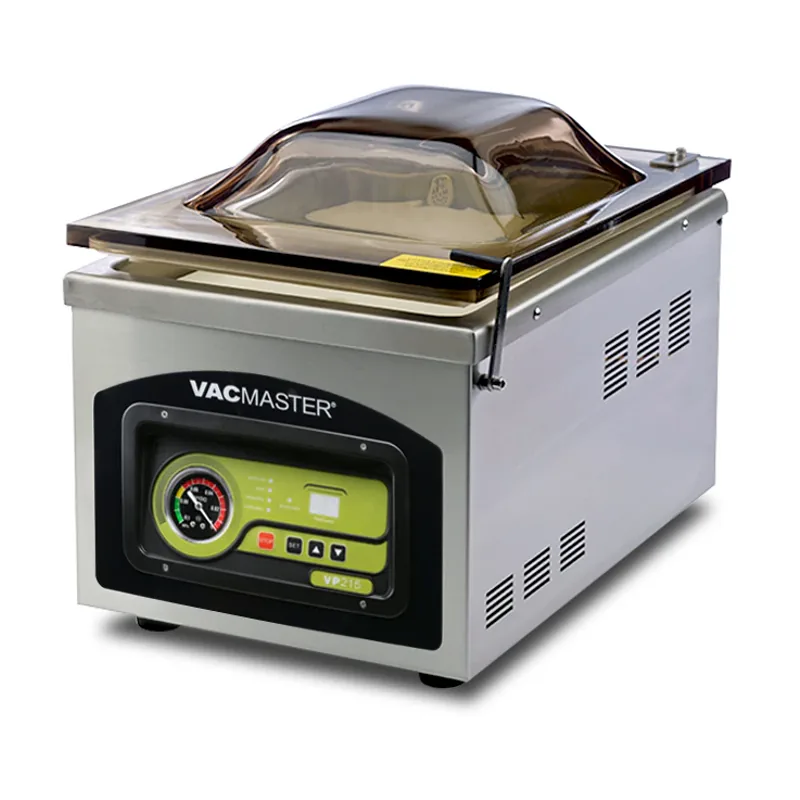 VacMaster VP215 VacMaster VP215 | Conflicting published values: 10 Inch removable seal bar with double seal wire / 10.25 in — Conflicting published record — VacMaster product page · VacMaster manual | Conflicting published values: 1/5 HP (.2 HP) rotary oil pump / 1/4 HP rotary oil pump — Conflicting published record — VacMaster manual · VacMaster support note | Open analysis | ||
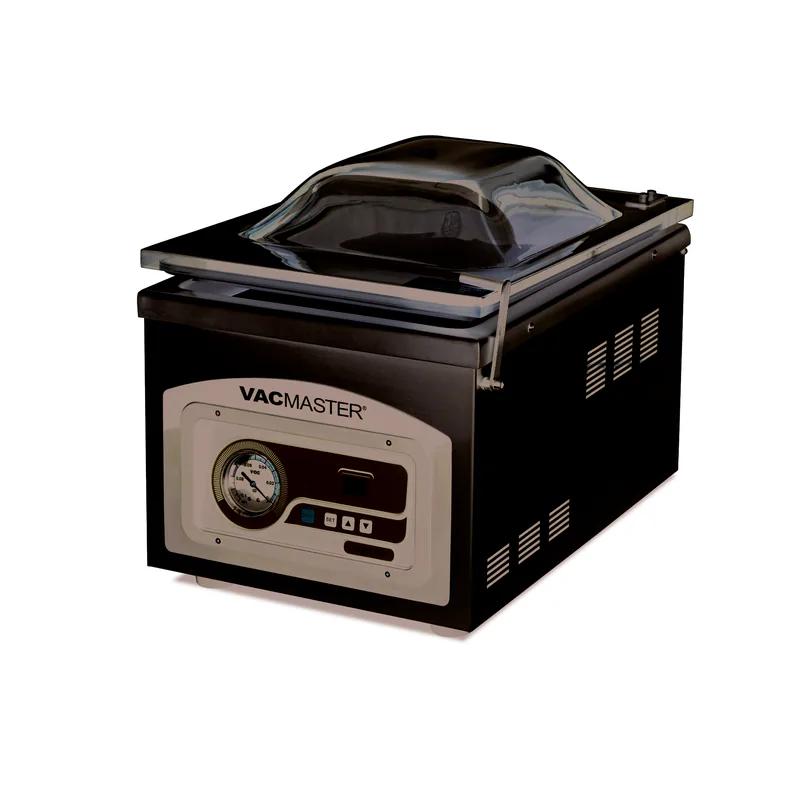 VacMaster VP230 VacMaster VP230 | 1/2 HP rotary oil pump — Verified published record — VacMaster product page · VacMaster support note | Conflicting published values: 89 Pounds / 82 lbs / 96.8 lbs — Conflicting published record — VacMaster product page · VacMaster support note · Amazon listing | Open analysis | ||
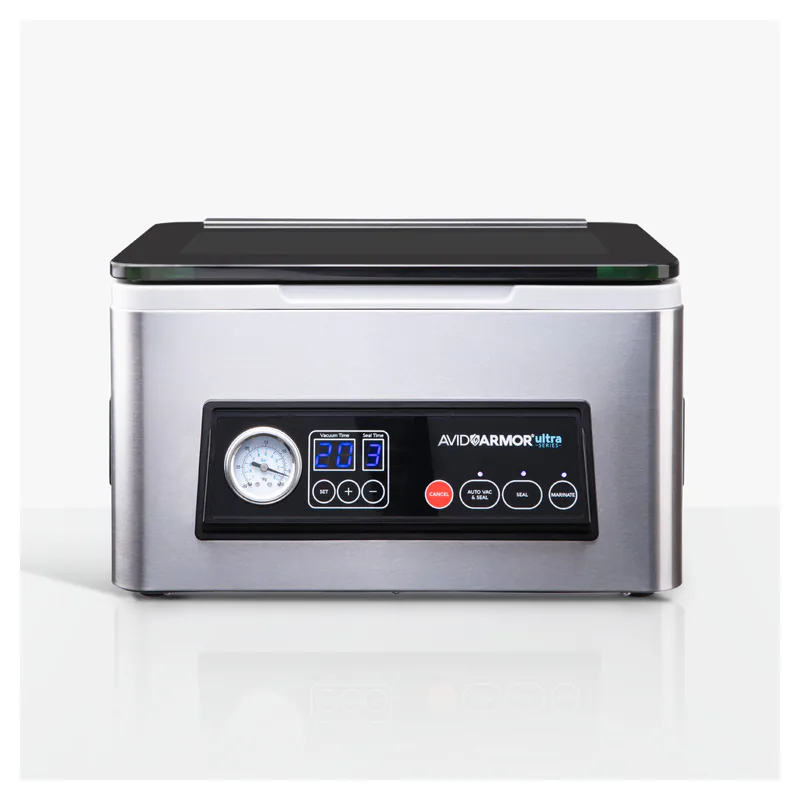 Avid Armor USV20 Avid Armor USV20 | Conflicting published values: 17.3 pounds / 17.55 lb — Conflicting published record — Amazon listing · Avid Armor product page | Open analysis | |||
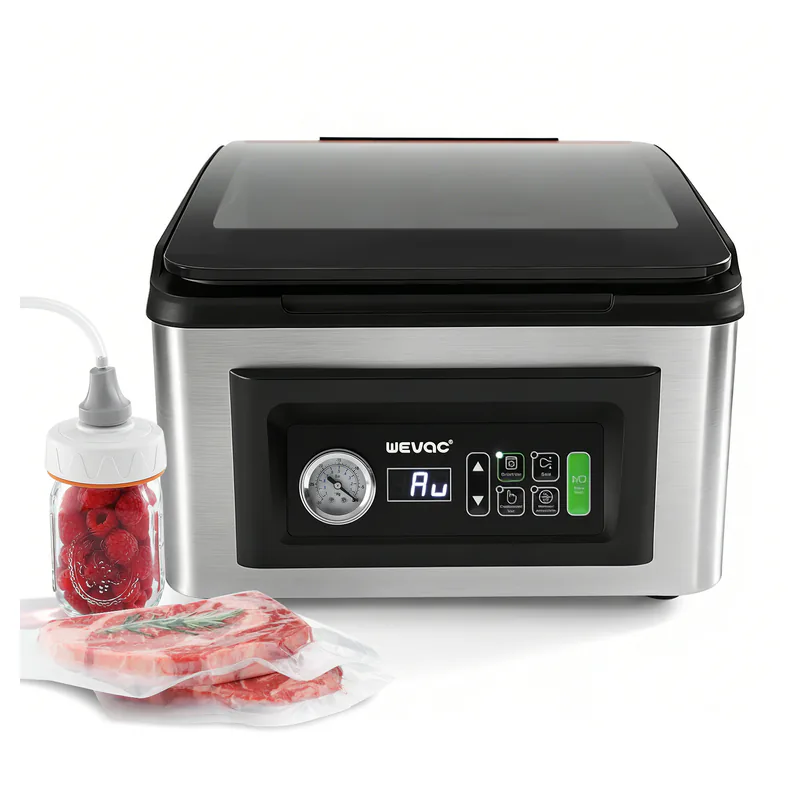 Wevac CV12 Pro Wevac CV12 Pro | 12 in — Verified published record — Wevac Technology Co., Limited product page · Wevac Technology Co., Limited manual | Conflicting published values: 12.2" W x 13.0" D x 3.9" H / 12.4" W x 12.8" L x 3.8" H — Conflicting published record — Wevac Technology Co., Limited product page | Not stated — Verified published record — Wevac Technology Co., Limited product page · Wevac Technology Co., Limited manual | Open analysis |
Cells reading “Not stated” mean the manufacturer does not publish that figure. We have not substituted an estimate.
Model analyses
Why it fits
- Chamber:
- Weight:
Unanswered or conflicting specifications
- Seal bar: Conflicting published values: 10 Inch removable seal bar with double seal wire / 10.25 in — Conflicting published record — VacMaster product page · VacMaster manual
- Pump: Conflicting published values: 1/5 HP (.2 HP) rotary oil pump / 1/4 HP rotary oil pump — Conflicting published record — VacMaster manual · VacMaster support note
- Power: Conflicting published values: 110 watts at 110 volts / 110V, 60Hz, 4 Amps / Single Phase 110 V, 20 Amp — Conflicting published record — Amazon listing · VacMaster product page · VacMaster manual
Published specifications
- Seal bar: Conflicting published values: 10 Inch removable seal bar with double seal wire / 10.25 in — Conflicting published record — VacMaster product page · VacMaster manual
- Chamber:
- Pump: Conflicting published values: 1/5 HP (.2 HP) rotary oil pump / 1/4 HP rotary oil pump — Conflicting published record — VacMaster manual · VacMaster support note
- Power: Conflicting published values: 110 watts at 110 volts / 110V, 60Hz, 4 Amps / Single Phase 110 V, 20 Amp — Conflicting published record — Amazon listing · VacMaster product page · VacMaster manual
- Weight:
View chamber sizing diagram
Why it fits
- Seal bar:
- Chamber:
- Pump: 1/2 HP rotary oil pump — Verified published record — VacMaster product page · VacMaster support note
- Power: 370 W; 110 V, 60 Hz, 4 A — Verified published record — Amazon listing · VacMaster product page · VacMaster support note
Unanswered or conflicting specifications
- Weight: Conflicting published values: 89 Pounds / 82 lbs / 96.8 lbs — Conflicting published record — VacMaster product page · VacMaster support note · Amazon listing
Published specifications
- Seal bar:
- Chamber:
- Pump: 1/2 HP rotary oil pump — Verified published record — VacMaster product page · VacMaster support note
- Power: 370 W; 110 V, 60 Hz, 4 A — Verified published record — Amazon listing · VacMaster product page · VacMaster support note
- Weight: Conflicting published values: 89 Pounds / 82 lbs / 96.8 lbs — Conflicting published record — VacMaster product page · VacMaster support note · Amazon listing
View chamber sizing diagram
Data quality note: Current official and listing sources publish 82 lb, 89 lb, and 96.8 lb. We retain all three and select none.
Why it fits
- Seal bar:
- Chamber:
- Pump:
Unanswered or conflicting specifications
- Power: Conflicting published values: 300 watts at 110 volts / Vacuum Power: 300 Watts; Voltage: 120v - 60hz — Conflicting published record — Amazon listing
- Weight: Conflicting published values: 17.3 pounds / 17.55 lb — Conflicting published record — Amazon listing · Avid Armor product page
Published specifications
- Seal bar:
- Chamber:
- Pump:
- Power: Conflicting published values: 300 watts at 110 volts / Vacuum Power: 300 Watts; Voltage: 120v - 60hz — Conflicting published record — Amazon listing
- Weight: Conflicting published values: 17.3 pounds / 17.55 lb — Conflicting published record — Amazon listing · Avid Armor product page
View chamber sizing diagram
Why it fits
- Seal bar: 12 in — Verified published record — Wevac Technology Co., Limited product page · Wevac Technology Co., Limited manual
- Pump: 85 L/min (5,187 in³/min) pump flow rate; architecture not published — Verified published record — Wevac Technology Co., Limited product page · Wevac Technology Co., Limited manual
- Power:
- Weight:
Unanswered or conflicting specifications
- Chamber: Conflicting published values: 12.2" W x 13.0" D x 3.9" H / 12.4" W x 12.8" L x 3.8" H — Conflicting published record — Wevac Technology Co., Limited product page
Published specifications
- Seal bar: 12 in — Verified published record — Wevac Technology Co., Limited product page · Wevac Technology Co., Limited manual
- Chamber: Conflicting published values: 12.2" W x 13.0" D x 3.9" H / 12.4" W x 12.8" L x 3.8" H — Conflicting published record — Wevac Technology Co., Limited product page
- Pump: 85 L/min (5,187 in³/min) pump flow rate; architecture not published — Verified published record — Wevac Technology Co., Limited product page · Wevac Technology Co., Limited manual
- Power:
- Weight:
How to fill a pouch you are about to evacuate
Fill to the depth, not to the pouch. Once you know your machine's usable fill depth from the table above, that number is a level in the pouch rather than a fraction of it — lay the pouch flat, fill it, and check the height of the liquid rather than how full the bag looks. On a three-inch chamber that is about two inches of liquid however tall the bag is. The familiar advice to fill a liquid pouch no more than two-thirds is a reasonable default, but it is a rule about the bag; the depth is a rule about the machine, and the machine is what stops the cycle.
- Chill first, and chill properly. Refrigerator-cold beats room temperature by a wide margin, and a liquid frozen solid has almost no free surface left to boil at all. Freezing stock in a container and sealing the block is the standard workaround for anything you cannot fit within the fill depth.
- Use smooth chamber pouches, not embossed channel bags. The channels exist so an edge sealer can pull air through the bag wall, which is exactly the mechanism a chamber machine does not use. Our pouch guide covers sizes and mil thickness.
- Watch the first cycle of anything new. On the USV32 the glass lid makes that literal; on everything else, listen and stop early rather than trusting a time you have not run before.
- Consider a jar instead of a pouch for storage. The Wevac CV12 Pro is the only machine here whose maker states a Mason jar kit is included, and the USV32 publishes an accessory port that covers jars — a jar under vacuum sidesteps the fill-depth problem entirely for anything you are storing rather than cooking.
What a vacuum seal does not do to a liquid
A sealed pouch of stock is a sealed pouch of stock. Vacuum packaging slows oxidation and freezer burn and buys quality time in a refrigerator or freezer; it does not sterilise anything, and USDA guidance is explicit that vacuum-packed perishable food still requires refrigeration or freezing. Liquids are not an exception to that, and low-oxygen environments carry their own specific risks with certain organisms. Treat a vacuum-sealed pouch of soup exactly as you would treat the same soup in an open container: refrigerate it or freeze it.
Fit summary
The VacMaster VP215 publishes a five-inch chamber, leaving roughly four inches of computed fill depth. The VP215 pump record is rotary oil at two published horsepower figures, .2 HP and 1/4 HP, and neither figure moves fill depth. The VP230 publishes the same depth behind a 12.25-inch bar and a verified 1/2 HP oil pump.
The Avid Armor USV20 publishes a 3-inch chamber, leaving about 2 inches of computed fill depth, plus an adjustable 15-to-60-second cycle.
Wevac contradicts itself on the one field that decides wet work: the CV12 Pro chamber is published as 12.2 x 13.0 x 3.9 in in one place and 12.4 x 12.8 x 3.8 in in another, so the height that would set its fill depth is 3.9 in or 3.8 in depending on which Wevac page you read. Both envelopes stay on the record, no fill depth is computed from either, and the verified 12-inch seal bar the CV12 Pro does publish settles pouch width without settling anything about depth.
Open the VacMaster VP215 analysis · Return to the specifications
Frequently asked questions
Can you vacuum seal soup in a chamber vacuum sealer?
Yes, and it is the main reason to own one. Because a chamber machine evacuates the whole chamber rather than pulling air through the mouth of the bag, the liquid has nowhere to be drawn to. The constraint is depth, not capability: fill to roughly your machine's chamber height minus an inch of freeboard, chill the soup first, and lay the pouch flat.
How full can I fill a bag with liquid?
Work from the machine rather than the bag. Take the published usable chamber height, subtract about an inch of freeboard for the seal line and surface movement, and fill to that depth with the pouch lying flat. On a three-inch chamber that is about two inches of liquid; on a five-inch VacMaster chamber it is about four. Filling to a fraction of the bag ignores the machine entirely.
Why does my liquid bubble and boil inside the chamber?
Because boiling point falls with pressure. As the chamber empties, the temperature at which your liquid boils drops until it meets the temperature the liquid already is, and it starts boiling. A warm liquid has a higher vapour pressure so it reaches that point early in the cycle; a chilled liquid stays quiet until the cycle is nearly finished. It is normal physics, not a fault.
Do I have to freeze liquid before sealing it?
No, but freezing removes the problem rather than managing it. A frozen block has almost no free liquid surface to boil, so fill depth stops binding and you can seal volumes that would never fit within the usable depth. For anything you can chill but not freeze, refrigerator-cold contents plus a flat pouch filled to the computed depth is enough for a clean seal.
Which chamber vacuum sealer holds the most liquid?
Among the eight machines we analyse in full, the VacMaster VP230 holds the most: a published five-inch chamber over a 12.5 x 15 in floor, so about four inches of fill depth across the largest footprint of the eight. The VP215 and VP210 match its depth on a slightly narrower 11.25 x 15.25 in floor.
Can an ordinary vacuum sealer handle liquids at all?
Not reliably. An edge sealer works by drawing air out through the open mouth of the bag, so liquid travels the same route and either ends up in the machine or wets the seal line and prevents a bond. Workarounds exist — freezing first, or the double-seal-and-fold trick — but they are workarounds. Our chamber versus edge sealer comparison covers where the boundary really sits.
Does the shallow chamber on a compact machine rule out liquids?
No, it rules out depth. The Avid Armor USV20 publishes 3 in of chamber height, which leaves about 2 in to fill, but it also publishes a 12.25 x 8.5 in floor and takes smooth pouches to 11 x 10 in. The same volume of liquid spread wide and flat sits lower, so a compact machine handles far more liquid than its height suggests, provided you do not pour tall.
Does vacuum sealing a liquid make it safe to store at room temperature?
No, and liquids are the case where assuming otherwise is least forgiving. A pouch of stock that boiled under vacuum looks processed — it has visibly done something under heat and pressure — and none of it was sterilisation; the contents boiled at room temperature because the pressure fell, not because they got hot. USDA guidance is explicit that vacuum-packed perishable food still needs refrigeration or freezing, and a sealed low-oxygen pouch of a low-acid liquid is specifically the environment certain organisms prefer. A sealed pouch of stock, sauce or brine goes in the refrigerator or the freezer, on the same clock as the same liquid in an open container.
What this page covers, and what it does not
This page centers four liquid-work records while its evidence table covers all eight chamber vacuum sealers verified against live Amazon listing data on 2026-08-26. Fill-depth calculations use only verified chamber envelopes; partial and conflicting records remain uncomputed. The Anova chamber sealer is outside the verified source set.
How published evidence is evaluated
Chamber Bench compares manufacturer and listing evidence for the eight machines in this comparison. The current analysis covers usable chamber geometry, seal-bar length, pump type, serviceability, and other published ownership constraints.
Where a manufacturer publishes nothing, we say so rather than filling the gap:
- We record which specifications a manufacturer declines to publish.
- We flag contradictions inside a listing rather than quietly picking one figure.
- We keep partial records distinct from complete published dimensions.
- We do not reproduce retailer ratings or prices as editorial fact.
What we have not done: we have not physically run these machines. No cycle times, seal-strength figures, or noise measurements on this site come from our own bench, and none are presented as if they do. Our test protocol documents the measurements required before any model can carry a tested performance conclusion.