A chamber vacuum sealer is an equipment decision, not a brand decision. The machine either closes over the package you actually seal, or it does not — and no feature list rescues a chamber that is an inch too shallow for a bone-in cut.
So this guide is built around the four measurements that decide fit: usable chamber geometry, seal bar length, pump type, and what you can replace when it wears out. We checked live listing data for the eight machines in this comparison, then compared their published fit and service facts. If you are still deciding whether you need a chamber machine at all, start with chamber versus edge sealers; if you know you do, the sizing method will rule out most of this list before you compare a single brand.
How we evaluate
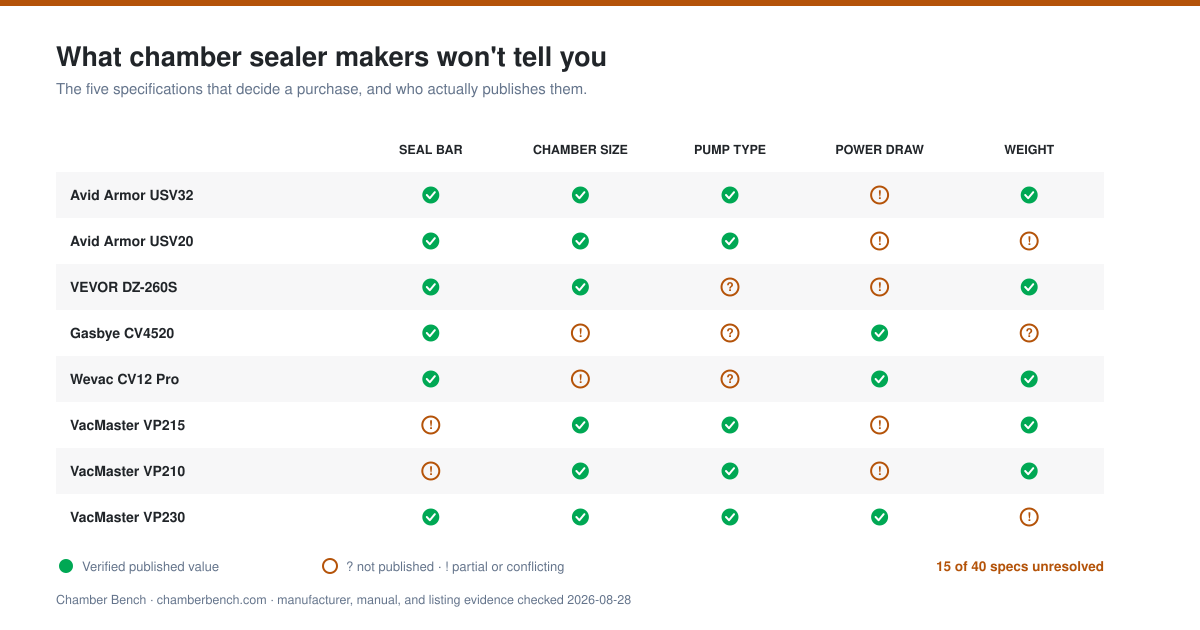
Every figure on this page comes from manufacturer documentation or live Amazon listing data retrieved on 2026-08-26. Where a manufacturer publishes nothing, the specification reads “not specified” rather than carrying an estimate we invented. Where Amazon’s own listing contradicts itself — and on two of these machines it does — we print the contradiction instead of quietly choosing the flattering number.
How published evidence is evaluated
Chamber Bench compares manufacturer and listing evidence for the eight machines in this comparison. The current analysis covers usable chamber geometry, seal-bar length, pump type, serviceability, and other published ownership constraints.
Where a manufacturer publishes nothing, we say so rather than filling the gap:
- We record which specifications a manufacturer declines to publish.
- We flag contradictions inside a listing rather than quietly picking one figure.
- We keep partial records distinct from complete published dimensions.
- We do not reproduce retailer ratings or prices as editorial fact.
What we have not done: we have not physically run these machines. No cycle times, seal-strength figures, or noise measurements on this site come from our own bench, and none are presented as if they do. Our test protocol documents the measurements required before any model can carry a tested performance conclusion.
What matters in a chamber sealer
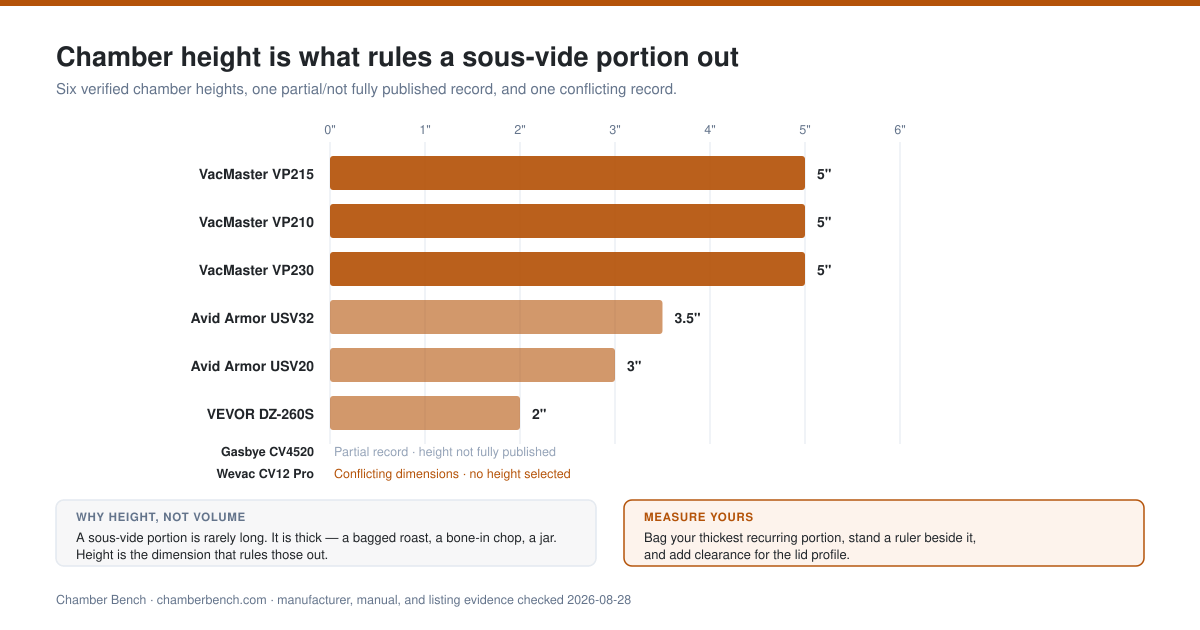
Chamber height eliminates more machines than seal width. Buyers fixate on the seal bar because it is the number in the title. In practice a three-inch lid clearance rules out tall packages long before an 11.5-inch bar becomes limiting.
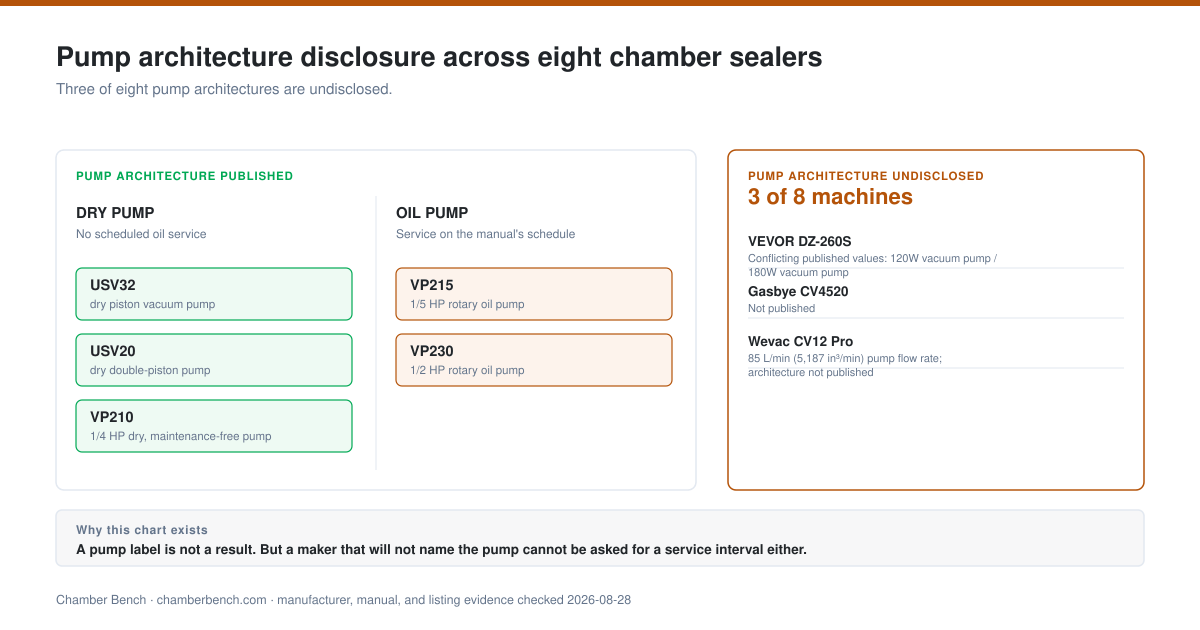
Published service information sets the ownership boundary. A named pump architecture, maintenance schedule, and replaceable wear parts tell a buyer what the manufacturer documents. They do not establish long-run durability.
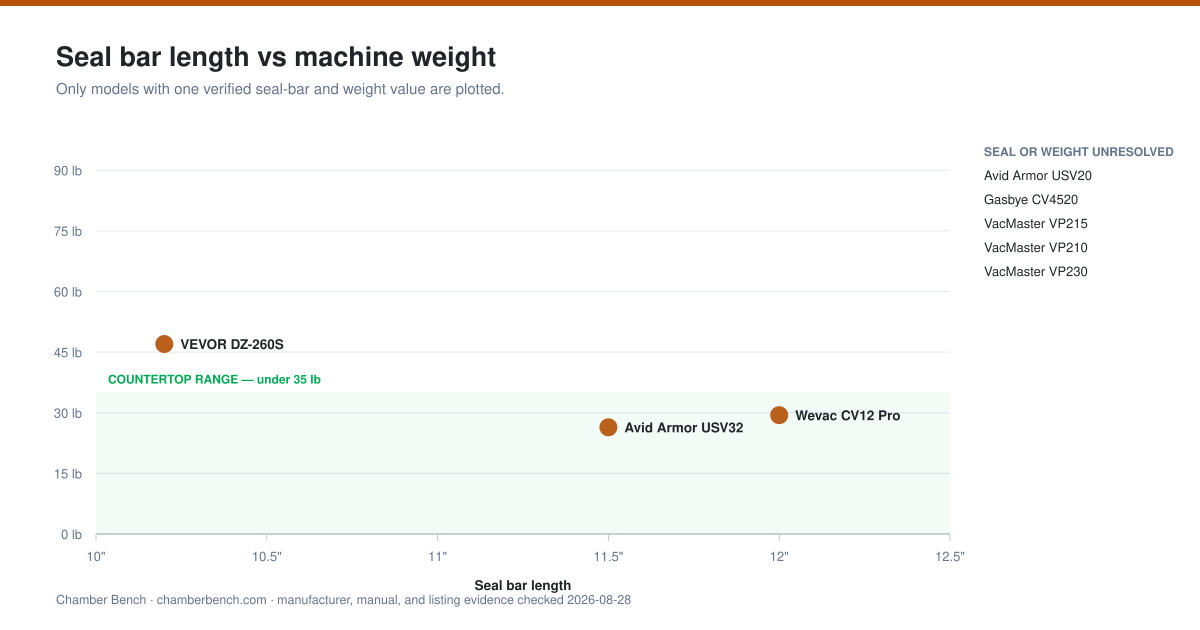
Quick answer: all 8 compared
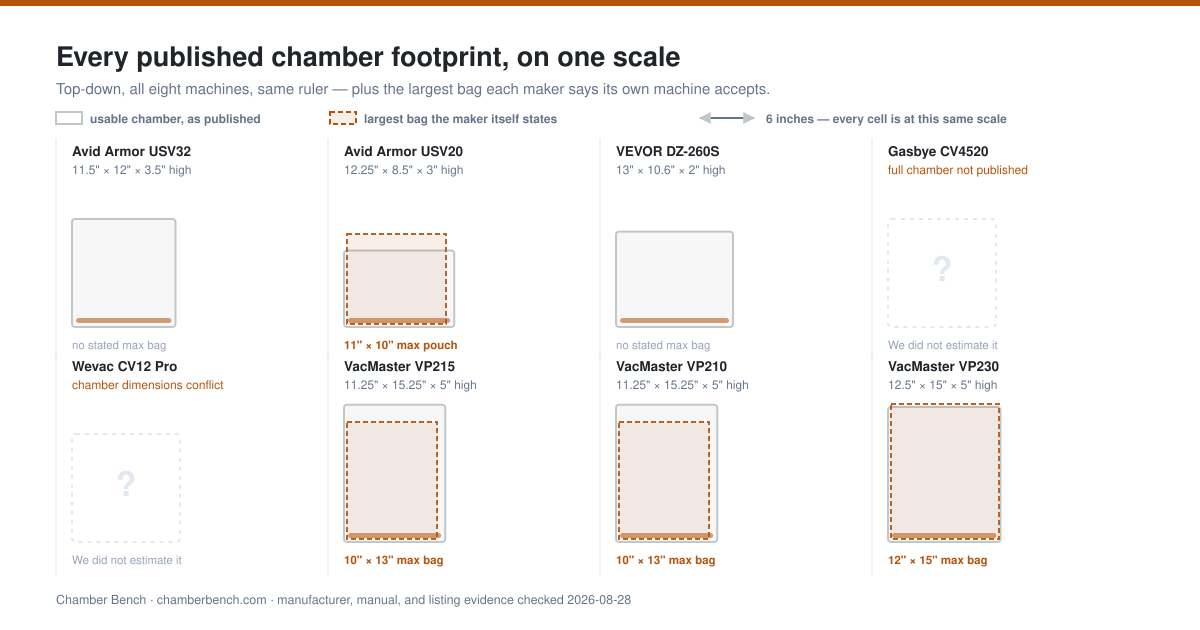
Specifications only. We do not reproduce Amazon prices or retailer ratings as editorial fact — they move constantly, and republishing them as static text is both misleading and against Amazon’s terms.
Scroll horizontally to see every column.
| Model | Seal bar | Chamber | Pump | Weight | Analysis |
|---|---|---|---|---|---|
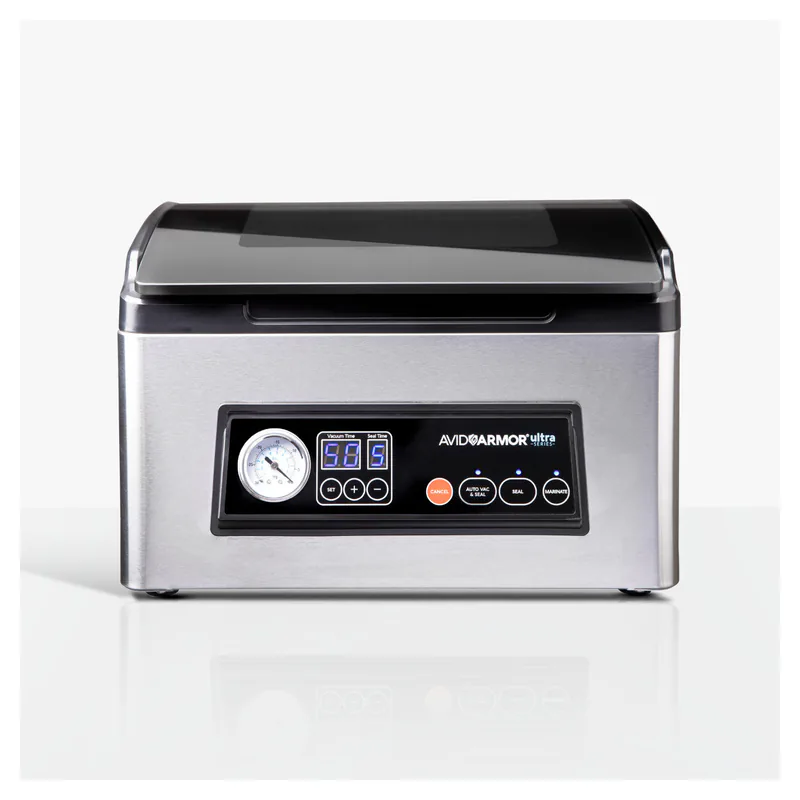 Avid Armor USV32 Avid Armor USV32 | Open analysis | ||||
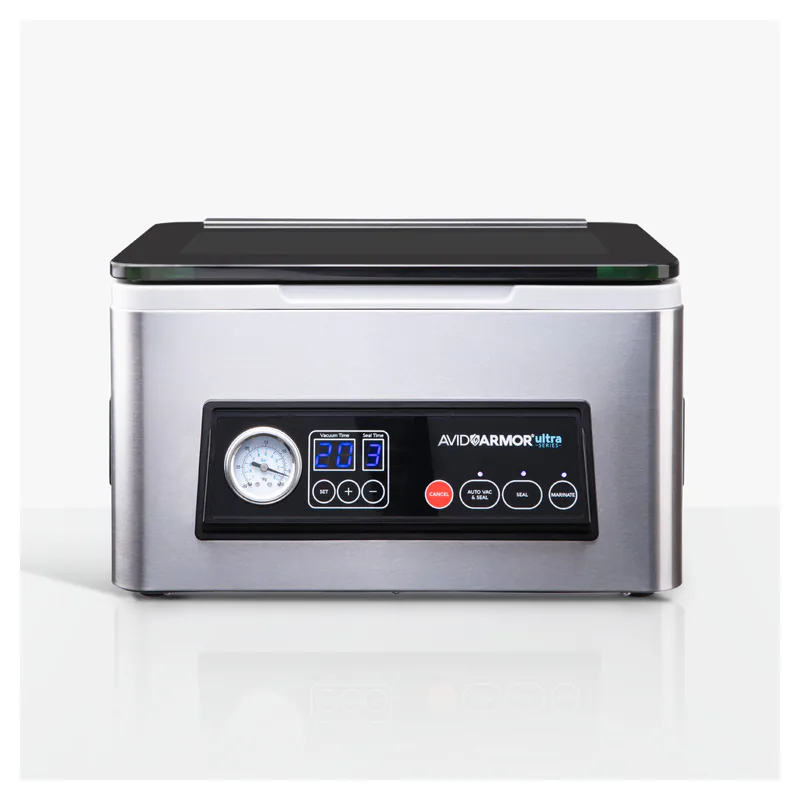 Avid Armor USV20 Avid Armor USV20 | Conflicting published values: 17.3 pounds / 17.55 lb — Conflicting published record — Amazon listing · Avid Armor product page | Open analysis | |||
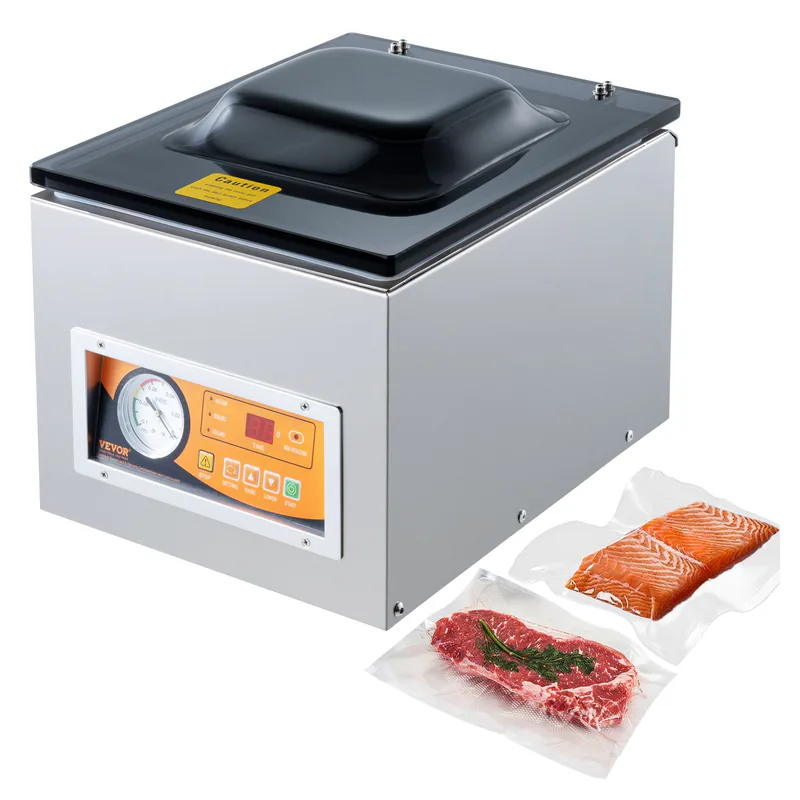 VEVOR DZ-260S Chamber Sealer VEVOR DZ-260S Chamber Sealer | Conflicting published values: 120W vacuum pump / 180W vacuum pump — Conflicting published record — VEVOR product page | Open analysis | |||
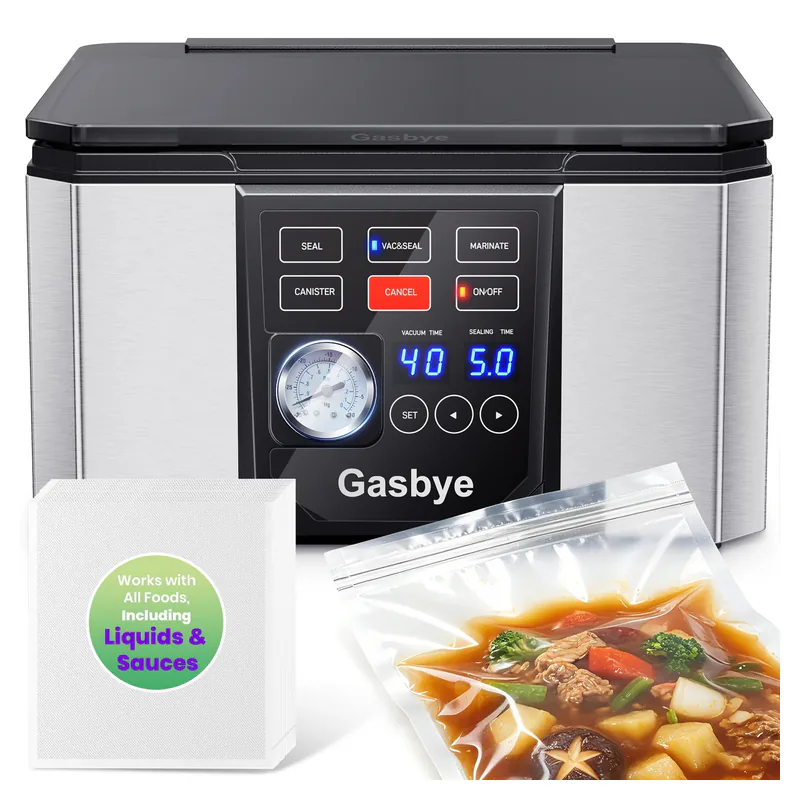 Gasbye CV4520 Gasbye CV4520 | Open analysis | ||||
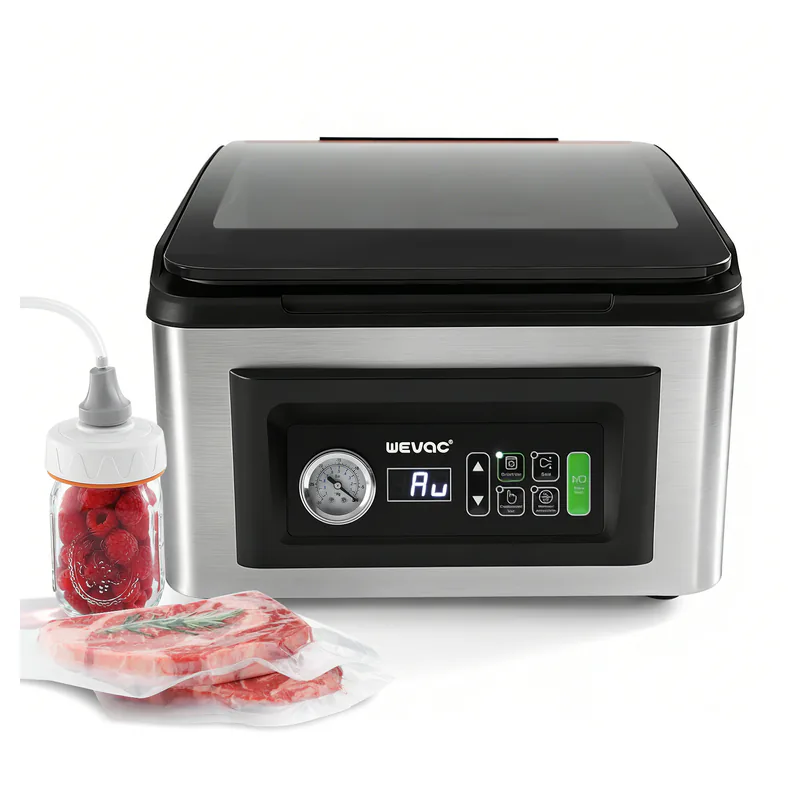 Wevac CV12 Pro Wevac CV12 Pro | 12 in — Verified published record — Wevac Technology Co., Limited product page · Wevac Technology Co., Limited manual | Conflicting published values: 12.2" W x 13.0" D x 3.9" H / 12.4" W x 12.8" L x 3.8" H — Conflicting published record — Wevac Technology Co., Limited product page | Not stated — Verified published record — Wevac Technology Co., Limited product page · Wevac Technology Co., Limited manual | Open analysis | |
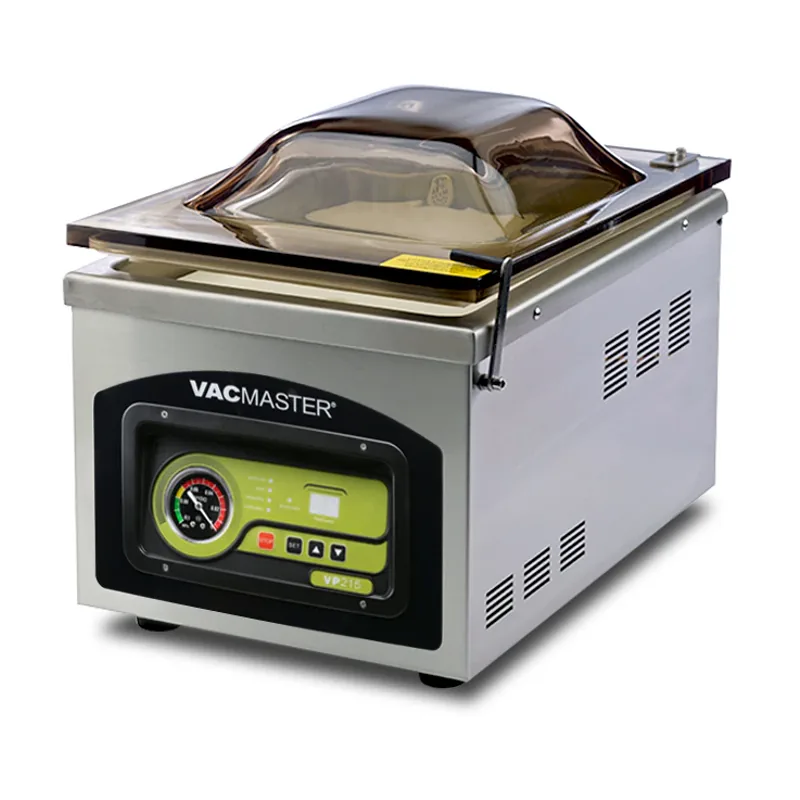 VacMaster VP215 VacMaster VP215 | Conflicting published values: 10 Inch removable seal bar with double seal wire / 10.25 in — Conflicting published record — VacMaster product page · VacMaster manual | Conflicting published values: 1/5 HP (.2 HP) rotary oil pump / 1/4 HP rotary oil pump — Conflicting published record — VacMaster manual · VacMaster support note | Open analysis | ||
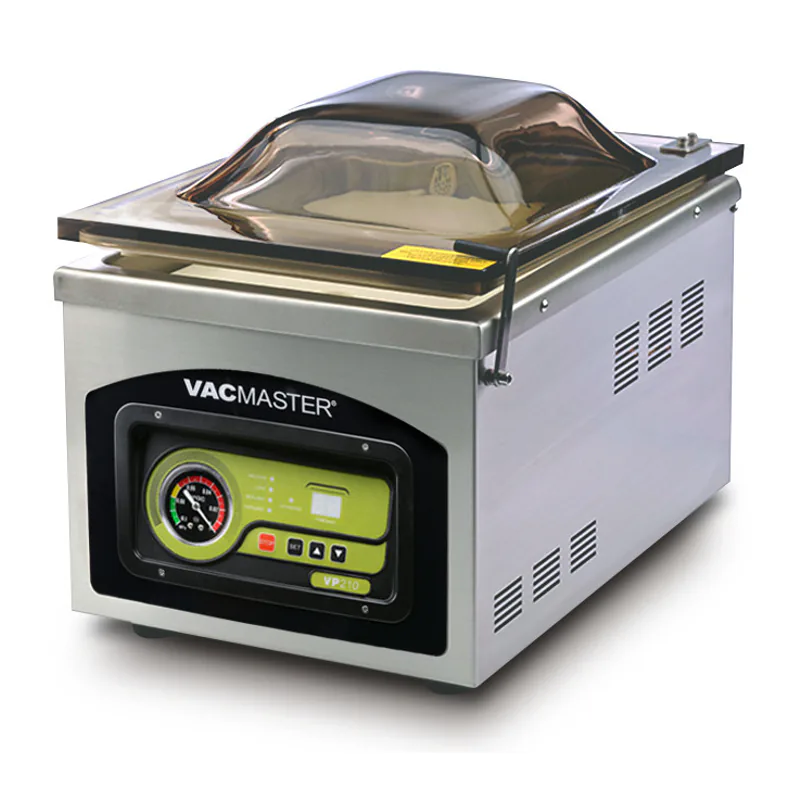 VacMaster VP210 VacMaster VP210 | Conflicting published values: 10 Inch removable seal bar with double seal wire / 10.25 in — Conflicting published record — VacMaster product page · VacMaster manual | 1/4 HP dry, maintenance-free pump — Verified published record — VacMaster product page · VacMaster manual | Open analysis | ||
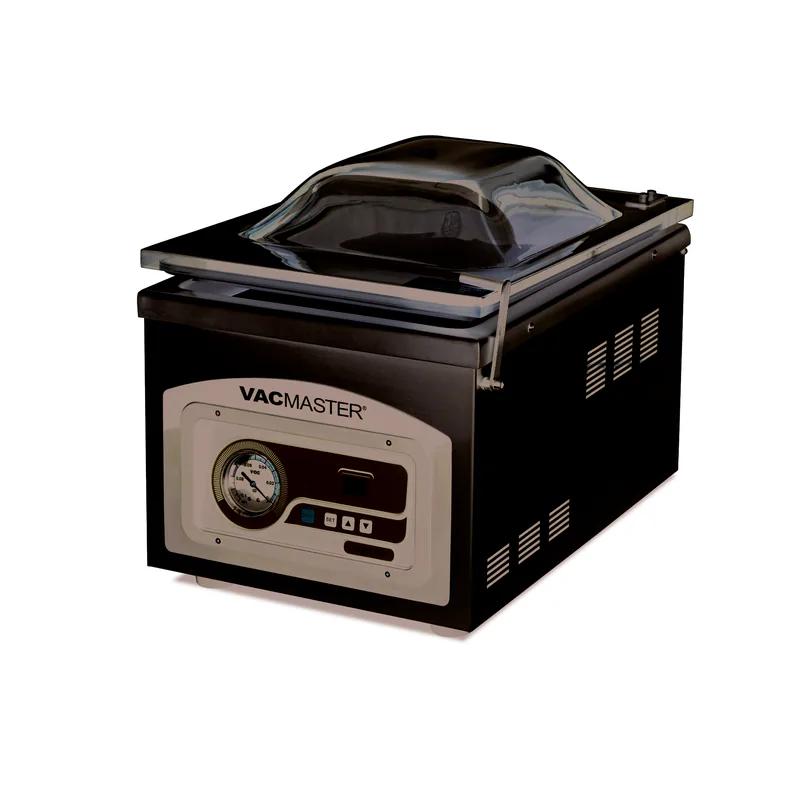 VacMaster VP230 VacMaster VP230 | 1/2 HP rotary oil pump — Verified published record — VacMaster product page · VacMaster support note | Conflicting published values: 89 Pounds / 82 lbs / 96.8 lbs — Conflicting published record — VacMaster product page · VacMaster support note · Amazon listing | Open analysis |
Cells reading “Not stated” mean the manufacturer does not publish that figure. We have not substituted an estimate.
Model analyses
Each model below separates what its maker publishes from what is unanswered or conflicting.
Why it fits
- Seal bar:
- Chamber:
- Pump:
- Weight:
Unanswered or conflicting specifications
- Power: Conflicting published values: 380 watts at 110 volts / Vacuum Power: 380 Watts; Voltage: 120v - 60hz — Conflicting published record — Amazon listing
Published specifications
- Seal bar:
- Chamber:
- Pump:
- Power: Conflicting published values: 380 watts at 110 volts / Vacuum Power: 380 Watts; Voltage: 120v - 60hz — Conflicting published record — Amazon listing
- Weight:
View chamber sizing diagram
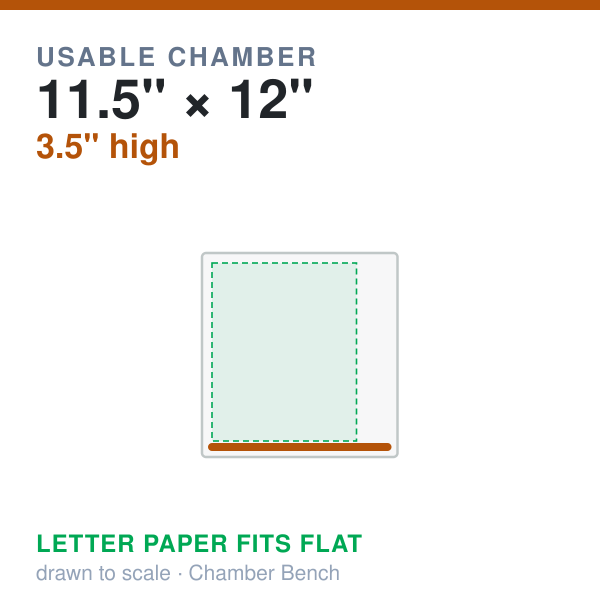
Data quality note: Avid Armor now publishes the usable chamber dimensions and identifies a dry piston pump.
Why it fits
- Seal bar:
- Chamber:
- Pump:
Unanswered or conflicting specifications
- Power: Conflicting published values: 300 watts at 110 volts / Vacuum Power: 300 Watts; Voltage: 120v - 60hz — Conflicting published record — Amazon listing
- Weight: Conflicting published values: 17.3 pounds / 17.55 lb — Conflicting published record — Amazon listing · Avid Armor product page
Published specifications
- Seal bar:
- Chamber:
- Pump:
- Power: Conflicting published values: 300 watts at 110 volts / Vacuum Power: 300 Watts; Voltage: 120v - 60hz — Conflicting published record — Amazon listing
- Weight: Conflicting published values: 17.3 pounds / 17.55 lb — Conflicting published record — Amazon listing · Avid Armor product page
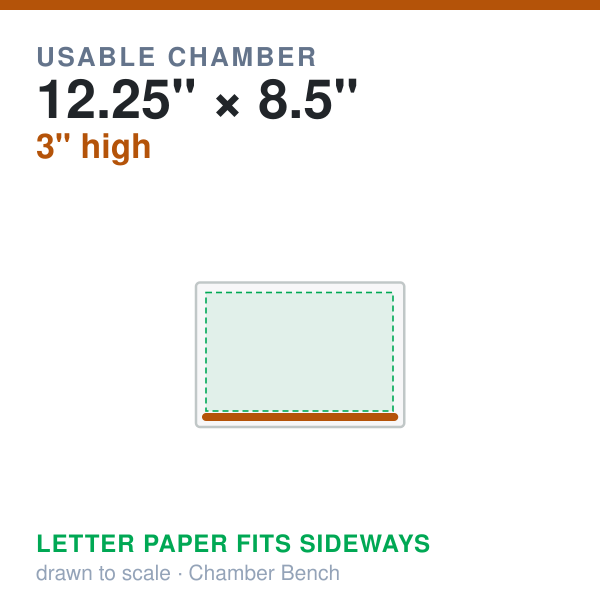
View chamber sizing diagram
Why it fits
- Seal bar:
- Chamber:
- Weight:
Unanswered or conflicting specifications
- Pump: Conflicting published values: 120W vacuum pump / 180W vacuum pump — Conflicting published record — VEVOR product page
- Power: Conflicting published values: Maximum Power 950W (+5%/-10%); Seal Power 260W; 120W vacuum pump; AC 120V, 60Hz / 180W vacuum pump — Conflicting published record — VEVOR product page
Published specifications
- Seal bar:
- Chamber:
- Pump: Conflicting published values: 120W vacuum pump / 180W vacuum pump — Conflicting published record — VEVOR product page
- Power: Conflicting published values: Maximum Power 950W (+5%/-10%); Seal Power 260W; 120W vacuum pump; AC 120V, 60Hz / 180W vacuum pump — Conflicting published record — VEVOR product page
- Weight:
View chamber sizing diagram
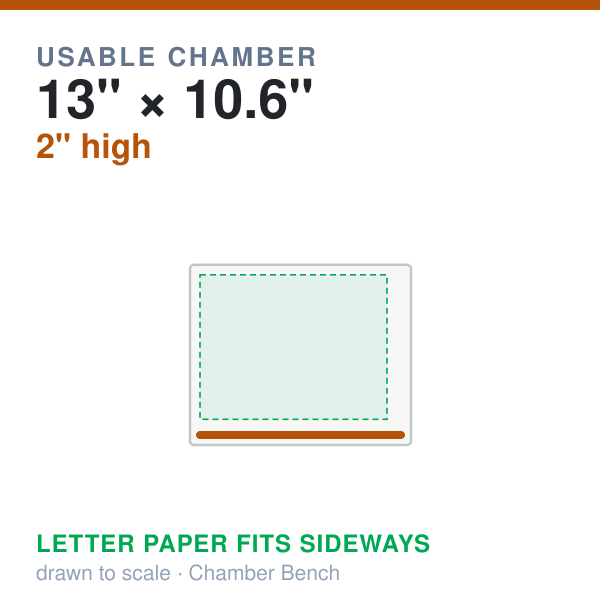
Data quality note: The retained VEVOR product page contains internally inconsistent values. Treat its published figures as unconfirmed.
Why it fits
- Seal bar:
- Power:
Unanswered or conflicting specifications
- Chamber: Partial specification: 5.28 qt (5 L); 9.7 in interior width; full usable envelope not published — Partial published record — Gasbye product page
- Pump:
- Weight:
Published specifications
- Seal bar:
- Chamber: Partial specification: 5.28 qt (5 L); 9.7 in interior width; full usable envelope not published — Partial published record — Gasbye product page
- Pump:
- Power:
- Weight:
Why it fits
- Seal bar: 12 in — Verified published record — Wevac Technology Co., Limited product page · Wevac Technology Co., Limited manual
- Pump: 85 L/min (5,187 in³/min) pump flow rate; architecture not published — Verified published record — Wevac Technology Co., Limited product page · Wevac Technology Co., Limited manual
- Power:
- Weight:
Unanswered or conflicting specifications
- Chamber: Conflicting published values: 12.2" W x 13.0" D x 3.9" H / 12.4" W x 12.8" L x 3.8" H — Conflicting published record — Wevac Technology Co., Limited product page
Published specifications
- Seal bar: 12 in — Verified published record — Wevac Technology Co., Limited product page · Wevac Technology Co., Limited manual
- Chamber: Conflicting published values: 12.2" W x 13.0" D x 3.9" H / 12.4" W x 12.8" L x 3.8" H — Conflicting published record — Wevac Technology Co., Limited product page
- Pump: 85 L/min (5,187 in³/min) pump flow rate; architecture not published — Verified published record — Wevac Technology Co., Limited product page · Wevac Technology Co., Limited manual
- Power:
- Weight:
Why it fits
- Chamber:
- Weight:
Unanswered or conflicting specifications
- Seal bar: Conflicting published values: 10 Inch removable seal bar with double seal wire / 10.25 in — Conflicting published record — VacMaster product page · VacMaster manual
- Pump: Conflicting published values: 1/5 HP (.2 HP) rotary oil pump / 1/4 HP rotary oil pump — Conflicting published record — VacMaster manual · VacMaster support note
- Power: Conflicting published values: 110 watts at 110 volts / 110V, 60Hz, 4 Amps / Single Phase 110 V, 20 Amp — Conflicting published record — Amazon listing · VacMaster product page · VacMaster manual
Published specifications
- Seal bar: Conflicting published values: 10 Inch removable seal bar with double seal wire / 10.25 in — Conflicting published record — VacMaster product page · VacMaster manual
- Chamber:
- Pump: Conflicting published values: 1/5 HP (.2 HP) rotary oil pump / 1/4 HP rotary oil pump — Conflicting published record — VacMaster manual · VacMaster support note
- Power: Conflicting published values: 110 watts at 110 volts / 110V, 60Hz, 4 Amps / Single Phase 110 V, 20 Amp — Conflicting published record — Amazon listing · VacMaster product page · VacMaster manual
- Weight:
View chamber sizing diagram
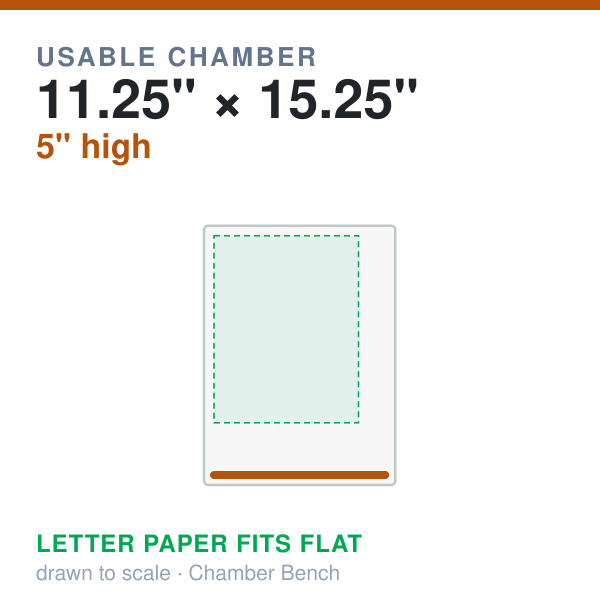
Why it fits
- Chamber:
- Pump: 1/4 HP dry, maintenance-free pump — Verified published record — VacMaster product page · VacMaster manual
- Weight:
Unanswered or conflicting specifications
- Seal bar: Conflicting published values: 10 Inch removable seal bar with double seal wire / 10.25 in — Conflicting published record — VacMaster product page · VacMaster manual
- Power: Conflicting published values: 110 watts at 110 volts / 110V, 60Hz, 4.2 Amps / Single phase 110 V, 20 AMP — Conflicting published record — Amazon listing · VacMaster product page · VacMaster manual
Published specifications
- Seal bar: Conflicting published values: 10 Inch removable seal bar with double seal wire / 10.25 in — Conflicting published record — VacMaster product page · VacMaster manual
- Chamber:
- Pump: 1/4 HP dry, maintenance-free pump — Verified published record — VacMaster product page · VacMaster manual
- Power: Conflicting published values: 110 watts at 110 volts / 110V, 60Hz, 4.2 Amps / Single phase 110 V, 20 AMP — Conflicting published record — Amazon listing · VacMaster product page · VacMaster manual
- Weight:
View chamber sizing diagram
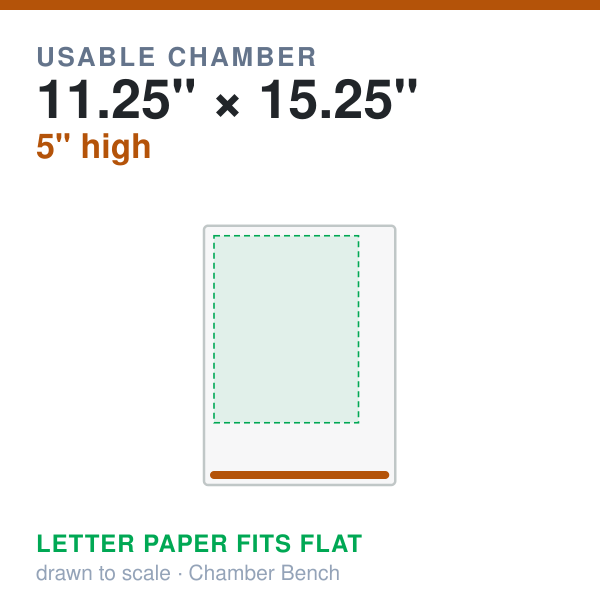
Why it fits
- Seal bar:
- Chamber:
- Pump: 1/2 HP rotary oil pump — Verified published record — VacMaster product page · VacMaster support note
- Power: 370 W; 110 V, 60 Hz, 4 A — Verified published record — Amazon listing · VacMaster product page · VacMaster support note
Unanswered or conflicting specifications
- Weight: Conflicting published values: 89 Pounds / 82 lbs / 96.8 lbs — Conflicting published record — VacMaster product page · VacMaster support note · Amazon listing
Published specifications
- Seal bar:
- Chamber:
- Pump: 1/2 HP rotary oil pump — Verified published record — VacMaster product page · VacMaster support note
- Power: 370 W; 110 V, 60 Hz, 4 A — Verified published record — Amazon listing · VacMaster product page · VacMaster support note
- Weight: Conflicting published values: 89 Pounds / 82 lbs / 96.8 lbs — Conflicting published record — VacMaster product page · VacMaster support note · Amazon listing
View chamber sizing diagram
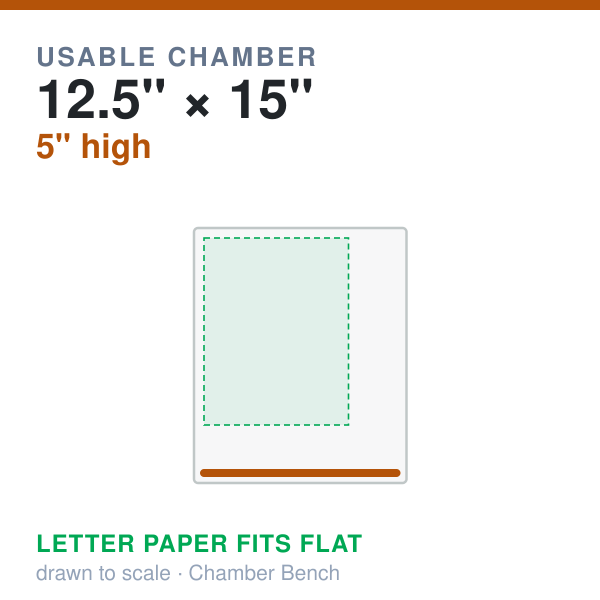
Data quality note: Current official and listing sources publish 82 lb, 89 lb, and 96.8 lb. We retain all three and select none.
Narrow it by what you actually seal
A general comparison cannot answer every use case. The relevant constraints change with the work — the machine that suits a hunter portioning a whole animal is not the machine that suits a galley kitchen with a wall cabinet twelve inches above the counter.
Down to two machines?
Once a shortlist is two models long, a broad comparison stops helping. These pages take one pairing at a time and work through only the specifications that separate them — including the pairings where one manufacturer never published the figure the decision turns on.
- VacMaster VP215 vs VacMaster VP210
- VacMaster VP215 vs VacMaster VP230
- Avid Armor USV20 vs VEVOR DZ-260S Chamber Sealer vs Gasbye CV4520 vs VacMaster VP215
- Avid Armor USV20 vs Avid Armor USV32
- Avid Armor USV32 vs Avid Armor USV20 vs VacMaster VP215 vs VacMaster VP210 vs VacMaster VP230
- Avid Armor USV20 vs Avid Armor USV32 vs VEVOR DZ-260S Chamber Sealer
- Wevac CV12 Pro vs Avid Armor USV32 vs Avid Armor USV20
The full index, including what we refuse to compare, is on the comparison hub.
Chamber sizing and pouch tips
Before ordering, bag your largest recurring portion and measure the finished package — length, width, and height at its tallest point. Compare that against usable chamber dimensions, not the machine’s exterior. Leave a margin: a package that fits corner-to-corner in theory is fragile in daily use.
The channels in embossed bags exist for suction sealers and you are paying for them for no reason. Our chamber pouch roundup shows which pouch widths each machine can actually seal, the pouch sizing guide covers mil thickness and how to convert chamber dimensions into a usable bag range, and the cost-per-seal calculator will tell you how quickly cheaper pouches repay a more expensive machine.
If you seal liquids, fill to no more than two-thirds and chill the contents first. Warm liquid boils earlier in a cycle because its vapour pressure is higher, so it reaches the boiling point while the chamber is still at a relatively shallow vacuum. Chilling lowers that vapour pressure, so the liquid stays put until the cycle is much further along. Boil-over is the most common cause of a cycle pulling soup across the seal bar. The liquid sealing guide covers the technique properly.
Fit summary
The published records separate by constraint instead of producing one overall choice.
These are source-backed specification analyses. Chamber Bench has not physically run these machines, so the page publishes no tested performance conclusion.
USV32 analysis · USV20 analysis · VP215 analysis · VP210 analysis · Return to the comparison
Frequently asked questions
What size chamber do I actually need?
Measure the largest portion you seal repeatedly, place it in the pouch you intend to use, and compare that package against the chamber's usable length, width and lid height — not the machine's exterior dimensions. Chamber height is easy to overlook: a 3-inch chamber will not close over a tall bone-in cut regardless of how wide the seal bar is.
Can I use regular vacuum bags in a chamber sealer?
You can, but you should not pay for them. Textured or embossed bags exist so an external sealer can draw air through channels in the bag wall. A chamber machine does not need those channels, so plain smooth pouches work correctly and are the intended consumable. Compare current prices per pouch yourself before assuming a saving.
Can you seal Mason jars with a chamber sealer?
Some can. The Wevac CV12 Pro is the only machine here whose manufacturer states a Mason jar kit is included. Note that jar sealing is for storage of dry or refrigerated contents: it is not a canning process and does not make anything shelf-stable.
Are chamber sealers loud?
Manufacturers rarely publish decibel figures, and none of the machines here publish one we could verify, so we do not quote noise numbers on this site.
Does vacuum sealing make food safe to store at room temperature?
No. Vacuum packaging slows quality loss and freezer burn; it does not sterilise food or make perishable items shelf-stable. USDA guidance is explicit that vacuum-packed perishable meat still requires refrigeration or freezing, and low-oxygen environments carry their own risks with certain organisms. Treat a vacuum-sealed package exactly as you would treat the same food unsealed.
Sources checked
Specifications retrieved from live Amazon listing data on 2026-08-26 and cross-checked against manufacturer documentation where it exists.
- VacMaster VP215 manuals and specificationsOfficial model support index, oil-pump service and troubleshooting guidance. Accessed 2026-08-26.
- Avid Armor USV20 and USV32 side-by-side comparisonManufacturer comparison of chamber volume against pouch fit and cycle behaviour. Accessed 2026-08-26.
- Anova chamber sealer specifications and FAQOfficial pouch, pump, chamber-volume and seal-width operating specifications. Accessed 2026-08-26.
- USDA FSIS — What is vacuum packaging?Government definition of vacuum packaging and its role in slowing quality loss. Accessed 2026-08-26.
- USDA FSIS — Vacuum-packaged meat at room temperatureExplicit guidance that vacuum-packed perishable meat is not shelf-stable. Accessed 2026-08-26.