This comparison records what can and cannot be checked before ordering; Chamber Bench has run neither machine.
VEVOR publishes the wider chamber floor, Avid Armor the wider seal bar
Where VEVOR gives it back is the seal bar, and this is the trade that actually shows up in daily use. Both Avid Armor machines carry 11.5 in of usable seal width; the VEVOR's title claims 10.2 in. A wider bar is not about sealing bigger volumes, it is about pouch width, and a pouch an inch too wide for the bar is simply not sealable no matter how much chamber sits underneath it.
Scroll horizontally to see every column.
| Axis | USV20 | DZ-260S | Margin | What the margin buys |
|---|---|---|---|---|
| Chamber width | 12.25 in | 13 in | VEVOR by 0.75 in | Room across the pouch, but the bar caps what you can close |
| Chamber depth | 8.5 in | 10.6 in | VEVOR by 2.1 in | The largest real gap between the two: 2 in more pouch lies flat |
| Seal bar | 11.5 in | 10.2 in per title | Avid Armor by 1.3 in | The one axis a bigger chamber cannot compensate for |
| Stated maximum pouch | 11 x 10 in | Not published | Avid Armor by default | Only one maker commits to a pouch size in writing |
Specifications compared
Scroll horizontally to see every column.
| Model | Seal bar | Chamber | Pump | Weight | Analysis |
|---|---|---|---|---|---|
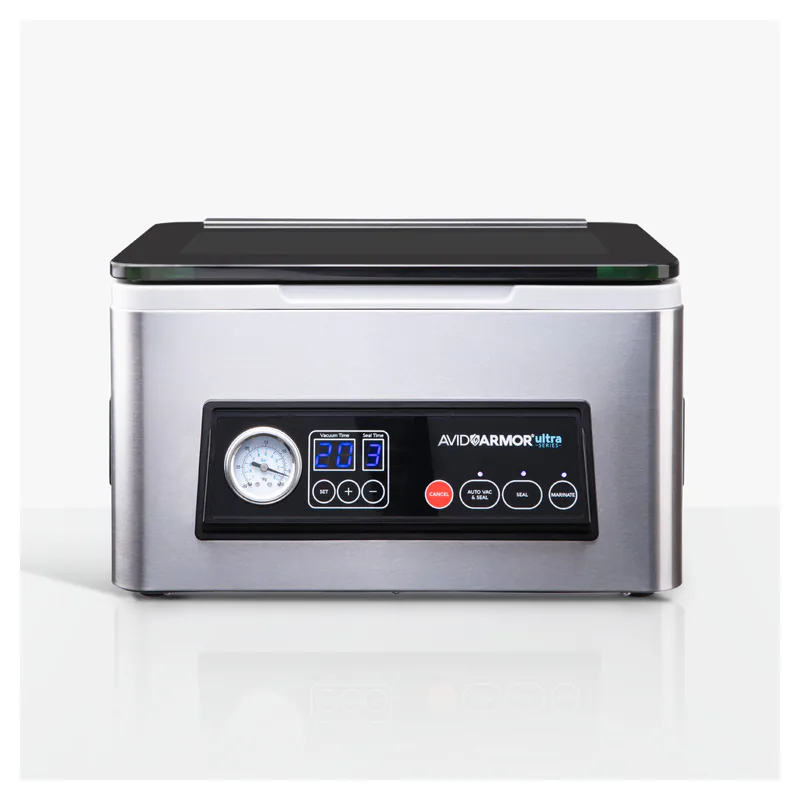 Avid Armor USV20 Avid Armor USV20 | Conflicting published values: 17.3 pounds / 17.55 lb — Conflicting published record — Amazon listing · Avid Armor product page | Open analysis | |||
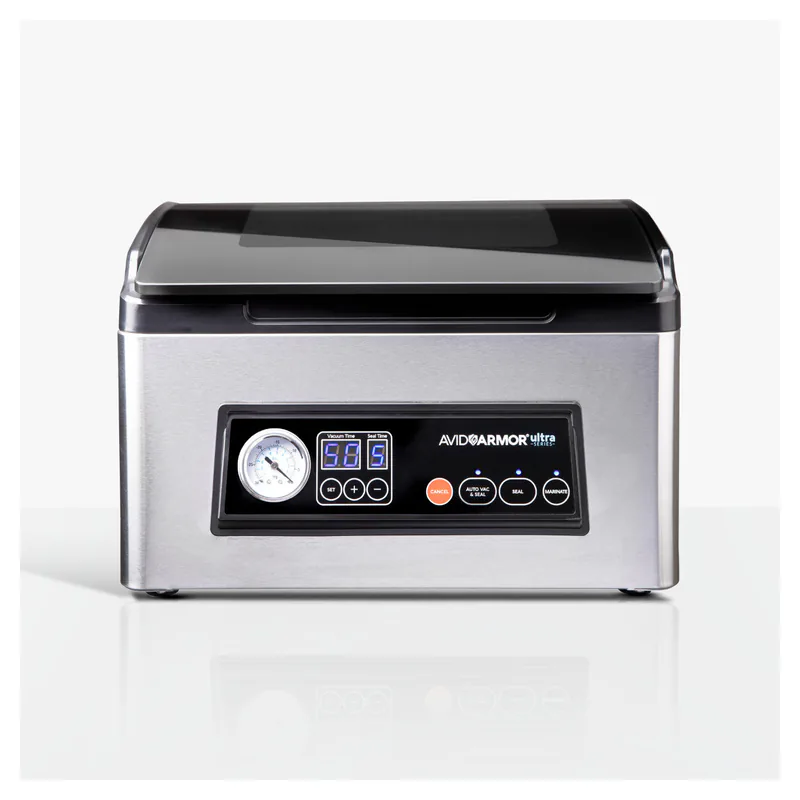 Avid Armor USV32 Avid Armor USV32 | Open analysis | ||||
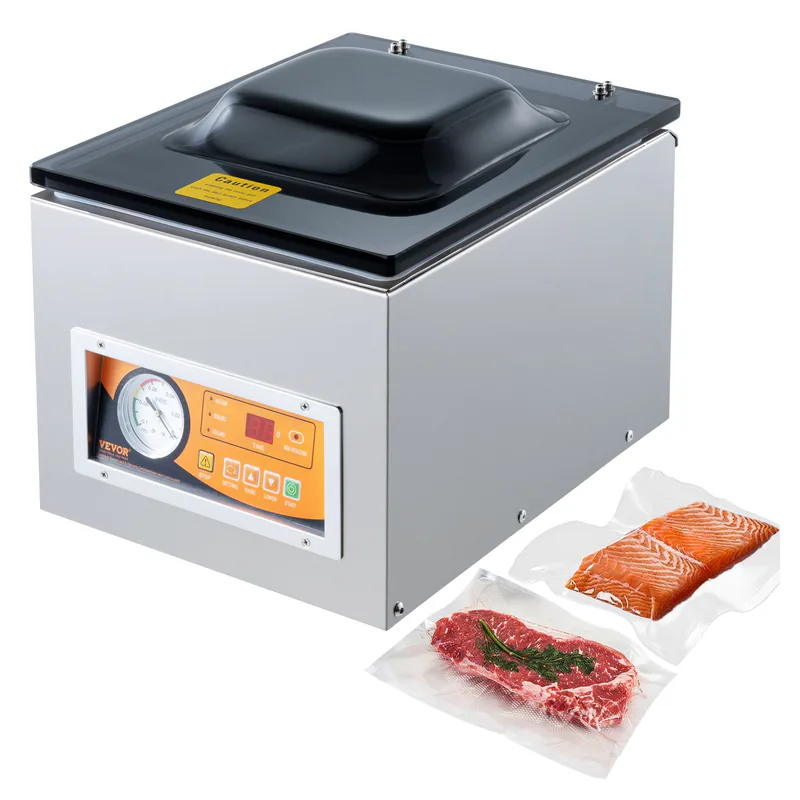 VEVOR DZ-260S Chamber Sealer VEVOR DZ-260S Chamber Sealer | Conflicting published values: 120W vacuum pump / 180W vacuum pump — Conflicting published record — VEVOR product page | Open analysis |
Cells reading “Not stated” mean the manufacturer does not publish that figure. We have not substituted an estimate.
Model analyses
Why it fits
- Seal bar:
- Chamber:
- Pump:
Unanswered or conflicting specifications
- Power: Conflicting published values: 300 watts at 110 volts / Vacuum Power: 300 Watts; Voltage: 120v - 60hz — Conflicting published record — Amazon listing
- Weight: Conflicting published values: 17.3 pounds / 17.55 lb — Conflicting published record — Amazon listing · Avid Armor product page
Published specifications
- Seal bar:
- Chamber:
- Pump:
- Power: Conflicting published values: 300 watts at 110 volts / Vacuum Power: 300 Watts; Voltage: 120v - 60hz — Conflicting published record — Amazon listing
- Weight: Conflicting published values: 17.3 pounds / 17.55 lb — Conflicting published record — Amazon listing · Avid Armor product page
View chamber sizing diagram
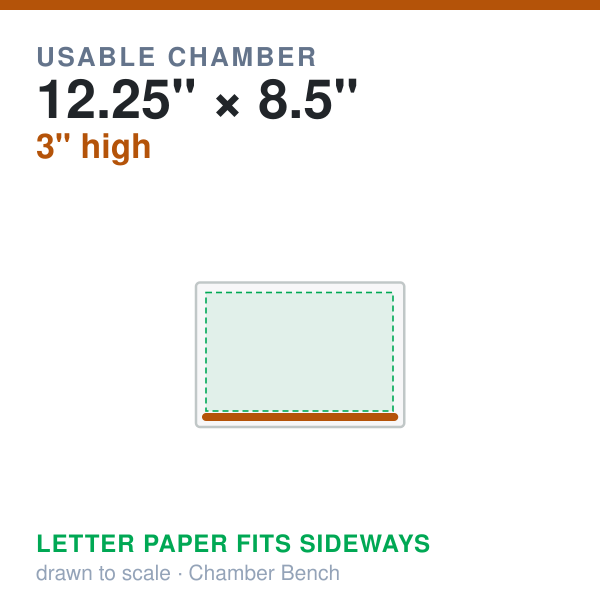
Why it fits
- Seal bar:
- Chamber:
- Pump:
- Weight:
Unanswered or conflicting specifications
- Power: Conflicting published values: 380 watts at 110 volts / Vacuum Power: 380 Watts; Voltage: 120v - 60hz — Conflicting published record — Amazon listing
Published specifications
- Seal bar:
- Chamber:
- Pump:
- Power: Conflicting published values: 380 watts at 110 volts / Vacuum Power: 380 Watts; Voltage: 120v - 60hz — Conflicting published record — Amazon listing
- Weight:
View chamber sizing diagram
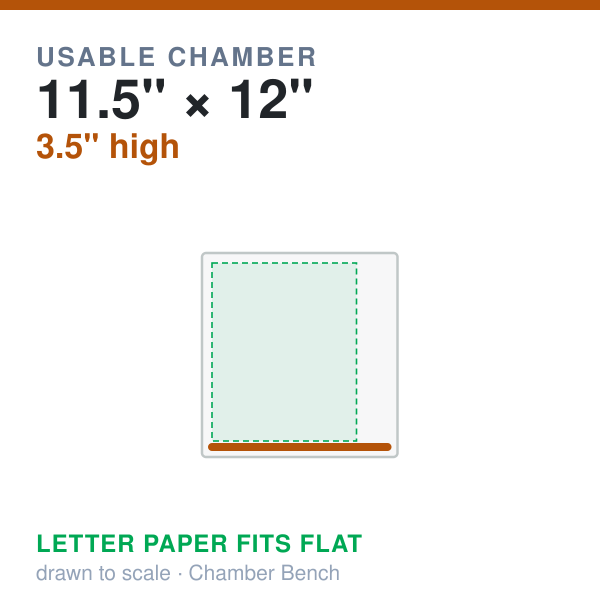
Data quality note: Avid Armor now publishes the usable chamber dimensions and identifies a dry piston pump.
Why it fits
- Seal bar:
- Chamber:
- Weight:
Unanswered or conflicting specifications
- Pump: Conflicting published values: 120W vacuum pump / 180W vacuum pump — Conflicting published record — VEVOR product page
- Power: Conflicting published values: Maximum Power 950W (+5%/-10%); Seal Power 260W; 120W vacuum pump; AC 120V, 60Hz / 180W vacuum pump — Conflicting published record — VEVOR product page
Published specifications
- Seal bar:
- Chamber:
- Pump: Conflicting published values: 120W vacuum pump / 180W vacuum pump — Conflicting published record — VEVOR product page
- Power: Conflicting published values: Maximum Power 950W (+5%/-10%); Seal Power 260W; 120W vacuum pump; AC 120V, 60Hz / 180W vacuum pump — Conflicting published record — VEVOR product page
- Weight:
View chamber sizing diagram
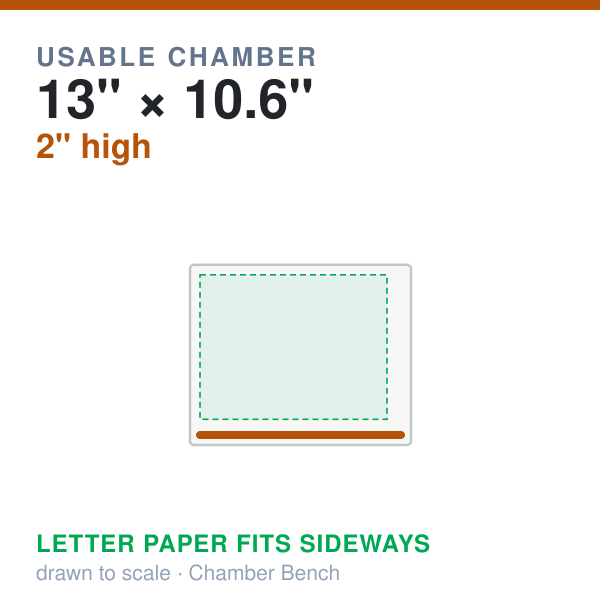
Data quality note: The retained VEVOR product page contains internally inconsistent values. Treat its published figures as unconfirmed.
Fit summary
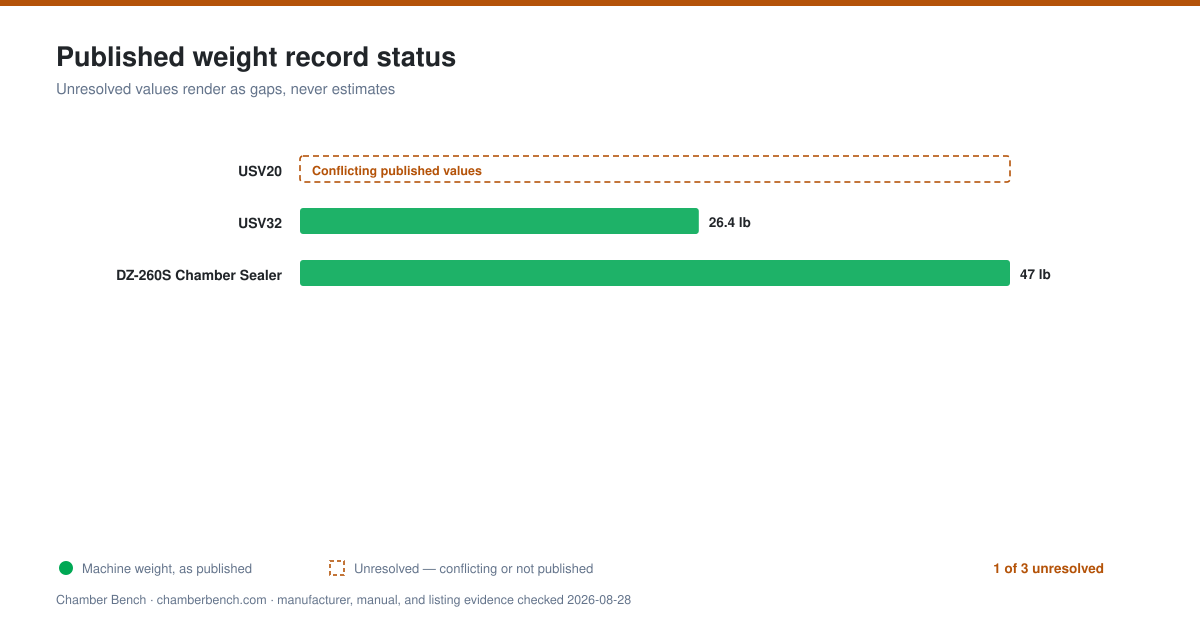
Avid Armor names the pump on both machines, a dry double-piston on the USV20 and a dry piston on the USV32, so neither one takes oil. VEVOR rates the DZ-260S pump twice on its own product page, at 120 W and at 180 W, and states nowhere whether that pump is oil-lubricated or dry. The wattage disagreement is the smaller half of the problem. The missing architecture decides whether a consumable and a recurring maintenance interval arrive with the machine, an ongoing cost that VEVOR's page never addresses. Both VEVOR figures are reported here and neither is selected.
Mass splits the same way and is the easier field to act on. VEVOR publishes 47 lb including accessories, the USV32 publishes 26.40 lb, and Avid Armor gives the USV20 two weights, 17.3 lb and 17.55 lb. The DZ-260S therefore outweighs the other two combined on their own published figures. If the machine has to come off the counter after every session, settle that before the chamber comparison.
Open the Avid Armor USV20 analysis · Return to the specifications
Frequently asked questions
Does VEVOR say whether the DZ-260S pump is an oil pump or a dry pump?
No. VEVOR's product page rates the pump at 120 W in one place and 180 W in another, and never names the architecture. Avid Armor states a dry double-piston pump on the USV20 and a dry piston pump on the USV32, so oil changes are not part of owning either. For the DZ-260S, VEVOR leaves the pump architecture open, so whether oil and an oil interval are owed at all rests on a record VEVOR has not written, and Chamber Bench will not infer it from a wattage.
Which of these three closes the widest pouch?
Both Avid Armor machines, on the published seal-bar figures: 11.5 in each against 10.2 in (260 mm) on the DZ-260S. A pouch mouth has to lie flat across the bar for its full width, so 1.3 in of extra bar is 1.3 in of extra pouch, and the DZ-260S's roomier chamber floor cannot stand in for it. Avid Armor also states a maximum smooth pouch of 11 x 10 in for the USV20; no maximum pouch size at all is published for the VEVOR.
How thick a package fits in the VEVOR DZ-260S?
VEVOR publishes 2 in of chamber height, and that is the ceiling on package thickness before the lid stops closing. Avid Armor publishes 3 in on the USV20 and 3.5 in on the USV32. Height is where the DZ-260S pays for its 13 in chamber width, the widest of the three, so flat-packed loads suit it and anything tall rules it out on published numbers alone.
Is the DZ-260S's 47 lb figure comparable with the Avid Armor weights?
Not directly. VEVOR states 47 lb including accessories, which makes that figure a ceiling on the machine rather than the machine's own mass. Avid Armor gives 26.40 lb for the USV32 and two figures for the USV20, 17.3 lb and 17.55 lb, and states in neither case what the figure counts. Treat 47 lb as a VEVOR ceiling. The USV20 figure moves by a quarter of a pound between its two published values.
Are the published power figures settled on any of these three?
On none of them, but what disagrees differs. The USV20 and USV32 are consistent on wattage, 300 W and 380 W respectively, and move only on the stated supply voltage, 110 V in one place and 120 V, 60 Hz in another. The DZ-260S disputes the vacuum pump's own rating, 120 W against 180 W, alongside a maximum power of 950 W (+5%/-10%) and 260 W of seal power. A 110 V against 120 V discrepancy is a labeling question on a domestic outlet; a 60 W spread on the pump is a different kind of gap.
What this page covers, and what it does not
This comparison covers three of the eight chamber machines we verified against live Amazon listing data on 2026-08-26: the Avid Armor USV20 and USV32, and the VEVOR DZ-260S. The Anova chamber sealer is deliberately not included, because we could not verify its listing and will not compare a machine on figures we did not retrieve.
How published evidence is evaluated
Chamber Bench compares manufacturer and listing evidence for the eight machines in this comparison. The current analysis covers usable chamber geometry, seal-bar length, pump type, serviceability, and other published ownership constraints.
Where a manufacturer publishes nothing, we say so rather than filling the gap:
- We record which specifications a manufacturer declines to publish.
- We flag contradictions inside a listing rather than quietly picking one figure.
- We keep partial records distinct from complete published dimensions.
- We do not reproduce retailer ratings or prices as editorial fact.
What we have not done: we have not physically run these machines. No cycle times, seal-strength figures, or noise measurements on this site come from our own bench, and none are presented as if they do. Our test protocol documents the measurements required before any model can carry a tested performance conclusion.