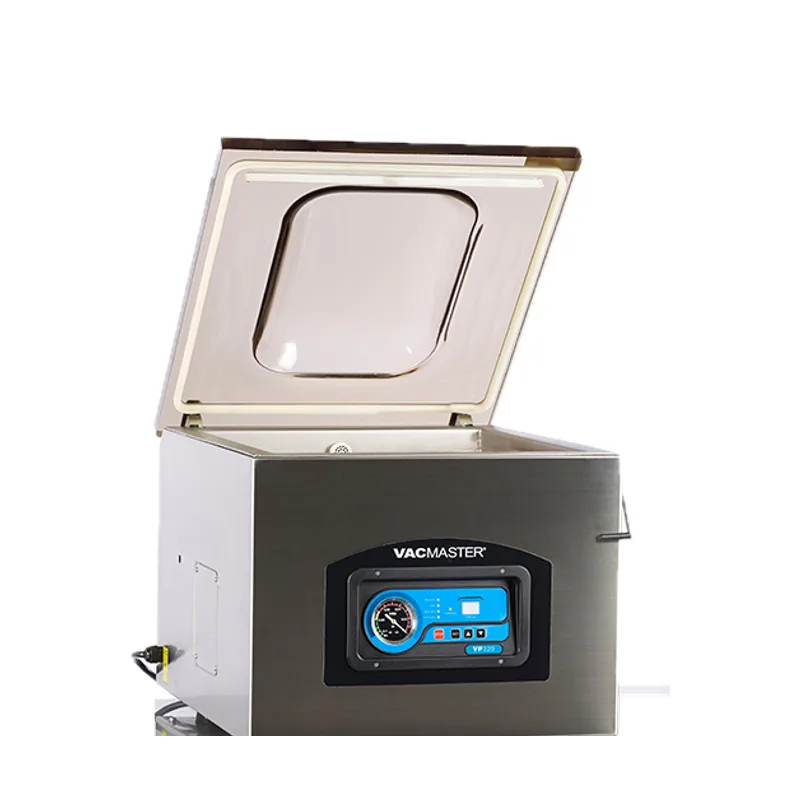
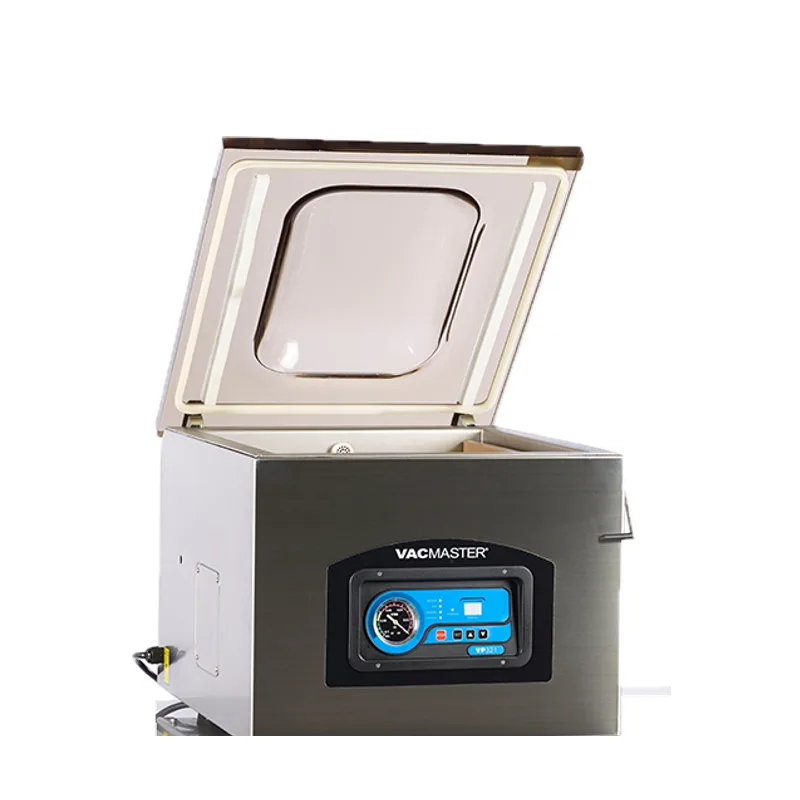
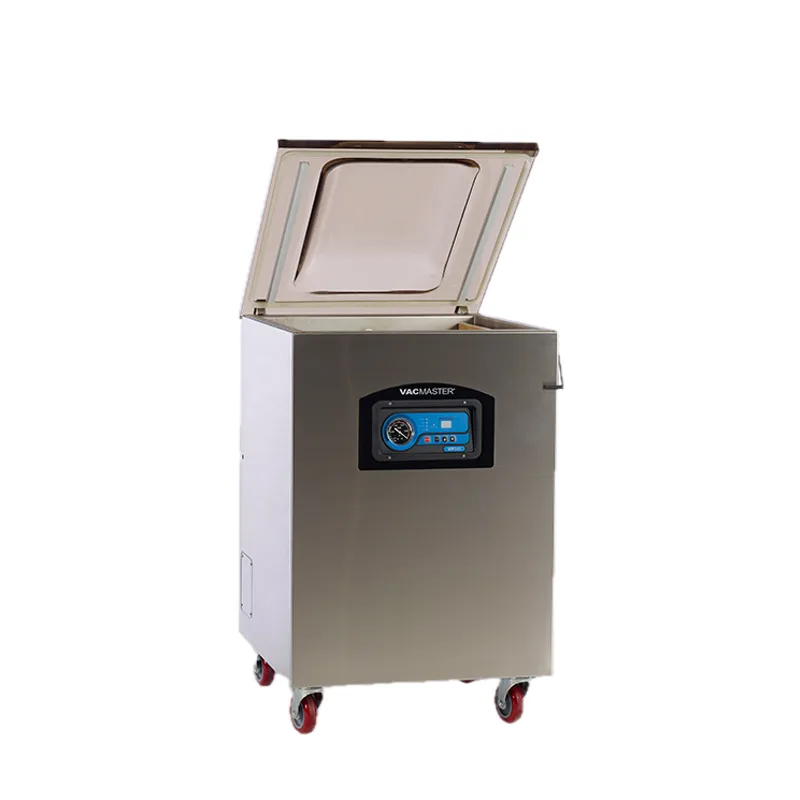
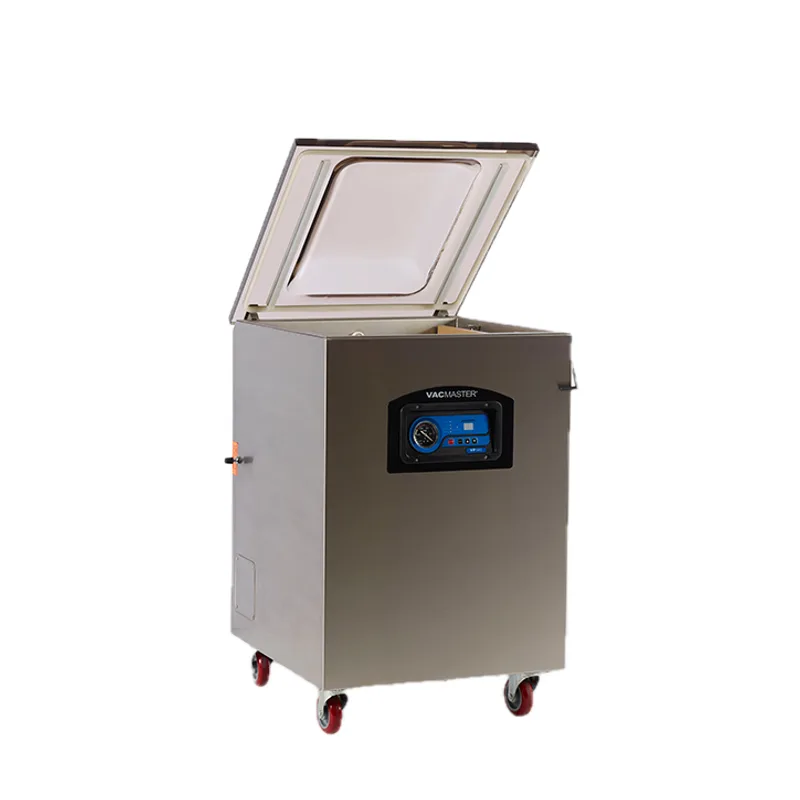
A controlled wet-pouch workflow
What should I do when the liquid starts climbing the pouch?
Stop the cycle and seal at that moment. Watching the surface through the lid is the control here, not the timer, because the point in the cycle at which a liquid reaches its boiling pressure depends on how cold that liquid was when it went in — and the timer has no way to know.
- Cool the food according to safe handling guidance before packaging; do not use vacuum as a cooling step.
- Keep the sealing area clean and dry, with more headroom than a dry item needs.
- Support the pouch so the liquid level sits below the seal bar and cannot fold the mouth.
- Watch through the lid. If the liquid rises or boils aggressively, stop and seal according to the machine controls.
- Inspect the cooled seal across its full width before refrigerating or freezing promptly.
Source basis[1] Anova Culinary · [2] USDA Food Safety and Inspection Service: What is vacuum packaging? · [3] USDA Food Safety and Inspection Service: Can Clostridium botulinum be in vacuum-packaged foods? · [4] USDA Food Safety and Inspection Service: Can I keep meat in vacuum packages at room temperature?
Why a cool liquid can bubble under vacuum
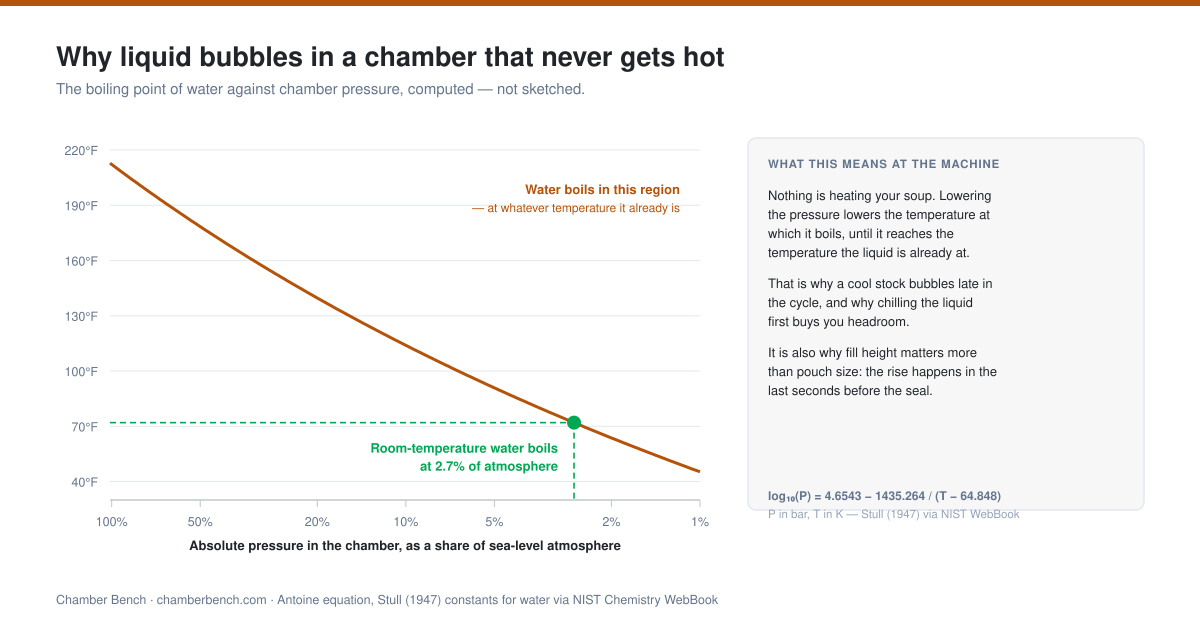
Boiling depends on pressure as well as temperature. When chamber pressure falls, the boiling point also falls. The practical signal is visible: bubbles expand and the liquid level rises. The correct vacuum or stop setting depends on the liquid temperature, composition, fill level, pouch geometry, and machine controls.
A single timer recommendation would be false precision. Record your exact machine, food temperature, fill, pouch, setting, and result, then repeat cautiously.
Why does cold liquid boil in a vacuum chamber with no heat applied?
Boiling happens when a liquid's vapor pressure meets the pressure around it, so lowering the chamber pressure brings the boiling point down to whatever temperature the food already is. Nothing in the machine heats anything. The chamber simply falls to the pressure at which that particular liquid is already boiling, which is why cold contents delay the event and warm contents bring it forward.
Source basis[1] Anova Culinary
How Chamber Bench will compare liquid control
Scroll horizontally to see every column.
| Variable held constant | Measurement | Why it matters |
|---|---|---|
| Liquid mass and starting temperature | Mass lost or moved past mark | Separates control from vague ‘handles liquids’ claims |
| Pouch size and fill height | Maximum rise during cycle | Shows needed headroom |
| Cycle setting | Time to stop/seal | Shows operator workload |
| Seal inspection after cooling | Leak/pass result | Connects clean handling with package outcome |
Source basis[1] Anova Culinary · [2] USDA Food Safety and Inspection Service: What is vacuum packaging?
Record a liquid run so the next one is comparable
A wet-pouch note is useful only when it preserves the variables that changed the result. Record the machine and control mode, food or liquid description, starting temperature, filled mass, pouch identity, headroom, support position, stop point, visible rise, seal condition after cooling, and the cold-storage handoff. Do not convert one clean cycle into a universal timer recommendation.
Compare runs only when the recipe, starting temperature, fill mass, pouch, headroom, support, and control mode are the same. A manual stop and an automatic endpoint are different workflows even when the displayed cycle time matches. Note whether liquid merely bubbled, crossed a marked rise line, reached the seal area, or forced the package to be discarded; those outcomes require different corrections and should not be merged into one pass/fail label.
Package appearance answers only a packaging question. It does not show that the food cooled safely, remained within cold-storage limits, or will be safe after a later cooking process. Keep the refrigeration or freezing handoff timestamp beside the run record and consult current food-specific guidance when the preparation falls outside the sources cited here.
Is one successful liquid setting good enough to reuse?
A setting is reusable only for the same liquid, the same starting temperature, the same fill mass, the same pouch and the same control mode. Change the starting temperature alone and the boil arrives at a different point in the cycle, which is why Chamber Bench records those five variables beside every result instead of publishing a timer recommendation.
- Keep the starting temperature and fill level beside the setting; neither can be reconstructed from a finished pouch.
- Mark whether the cycle stopped automatically or the operator used a manual control.
- Separate package observations from safety controls such as refrigeration or freezing.
- Repeat with the same setup before calling a setting reliable for that exact workflow.
Source basis[1] Anova Culinary · [2] USDA Food Safety and Inspection Service: What is vacuum packaging? · [3] USDA Food Safety and Inspection Service: Can Clostridium botulinum be in vacuum-packaged foods? · [4] USDA Food Safety and Inspection Service: Can I keep meat in vacuum packages at room temperature?
Questions readers still ask
Do I need to chill liquid before sealing it?
Chilled contents give the cycle far more room before boiling starts, and the change costs nothing but time. A cold liquid has a low vapor pressure, so the chamber has to pull much further down before the surface begins to move — often further than the cycle goes at all.
Can I seal hot liquid?
Hot liquid reaches its boiling pressure almost immediately, so the surface starts moving while the chamber is still shallow and most of the cycle is still to run. Cooling first is also a food-safety step in its own right: USDA guidance treats safe cooling as a separate control, and a vacuum cycle is not a cooling method.
Will the seal hold if a drop of liquid touches the seal line?
Moisture in the seal zone is the most common cause of a failed wet package, because the bar has to melt two dry layers of film into each other. Wipe the pouch mouth before the lid comes down, and inspect the cooled seal across its whole width rather than judging it while it is still warm and pliable.
Do liquids need a special pouch?
Liquid does not require a different pouch construction, but it does require enough unfilled pouch above the fill line for the mouth to lie flat on the bar. Whether a pouch is rated for a later cooking or freezing step is a separate permission, and it comes from the pouch supplier rather than from the machine maker.
What should I write down after a liquid run?
Record the machine and control mode, the liquid and its starting temperature, the fill mass, the pouch identity, the headroom left, the point at which you stopped the cycle, and the time the package went into cold storage. A finished pouch cannot tell you the starting temperature or the fill level, and those two are what decided the result.
Sources
Each record carries its own access date. Manufacturer statements are attributed; they are not treated as Chamber Bench test results.
- Precision Chamber Vacuum SealerAnova Culinary — Manufacturer explanation of chamber pressure, sealing, liquid use, and machine controls. · Accessed
- What is vacuum packaging?USDA Food Safety and Inspection Service — Government definition of vacuum packaging and its role in slowing quality loss. · Accessed
- Can Clostridium botulinum be in vacuum-packaged foods?USDA Food Safety and Inspection Service — Low-oxygen safety limits and cold-storage requirements for perishable food. · Accessed
- Can I keep meat in vacuum packages at room temperature?USDA Food Safety and Inspection Service — Explicit guidance that vacuum-packed perishable meat is not shelf-stable. · Accessed