Fish asks two things of a chamber machine at once. A fillet is long, so the pouch size is the first figure to check, and it is wet, so the way the machine removes air matters more than it does for a dry cut. This page works through both from the makers' own pages, with every pouch and chamber figure re-read on 2026-11-13, and ends with the thawing rule that applies to any vacuum-packed fish, whichever machine sealed it.
The case for sealing fish at all is the freezer. NC State Extension's 2025 guide to freezing seafood at home calls vacuum sealing with oxygen-barrier bags "the most effective way to prevent freezer burn and oxidation" and adds that it "removes air and keeps the seafood protected during storage."
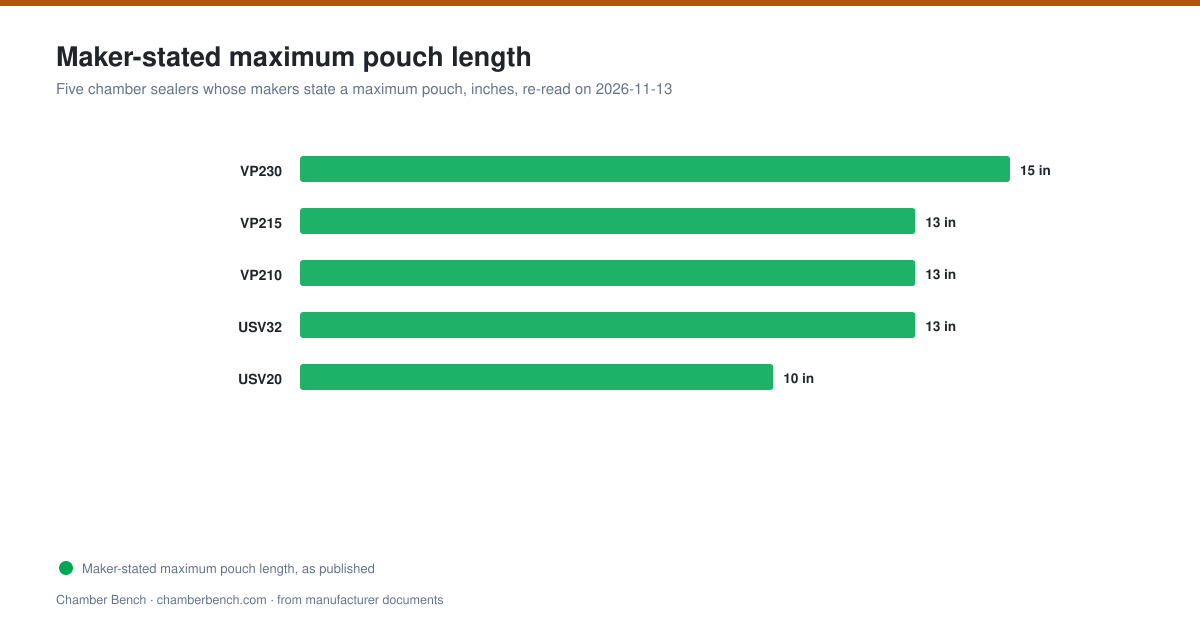
For a whole fillet, the maker's maximum pouch is the limit
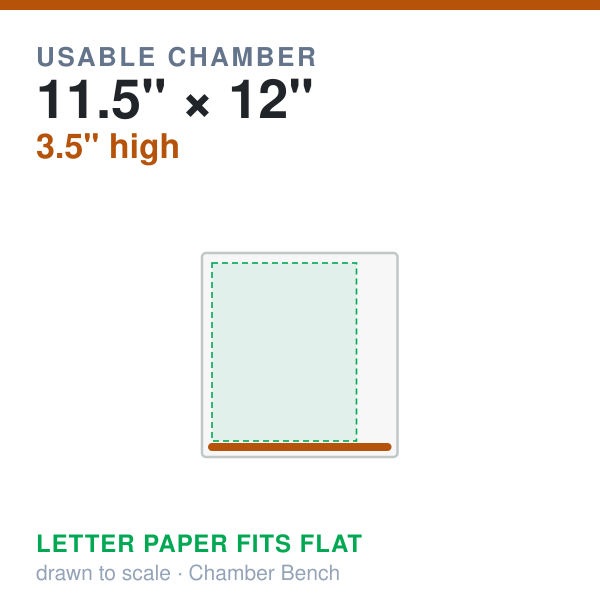
A fillet is sealed lying flat, with the mouth of the pouch across the seal bar and the length of the fish running back into the chamber. That makes pouch length the dimension to check first, and the makers who publish it state it directly, as a maximum bag or pouch size. Where a maker states one, it outranks anything you could work out from the chamber. The Avid Armor USV32 shows why: Avid Armor states pouches to 11 x 13 in on a chamber it lists as 12 in front to back.
Five of the eight machines we analyse in depth have a maker-stated maximum, and they fall into three lengths: 15 in on the VacMaster VP230; 13 in on the VP215, the VP210 and the USV32; and 10 in on the USV20. The other three have no maker-stated maximum pouch in our evidence records, so this page gives no pouch limit for them.
Measure the fish rather than the bag. Lay the longest fillet you expect to pack flat, measure it, and add the clean pouch the seal needs above it; our sizing guide sets out that allowance. A fillet longer than your machine's stated pouch gets portioned before sealing rather than forced into a pouch size its maker does not list.
Scroll horizontally to see every column.
| Machine | Maker's maximum pouch | Published chamber (W x D x H) | Skip it if | Where the figure was read |
|---|---|---|---|---|
| VacMaster VP230 | 12 x 15 in | 12.5 x 15 x 5 in | You want no pump oil to change: VacMaster lists a rotary oil pump | VacMaster product page, archived capture of 2026-04-18 |
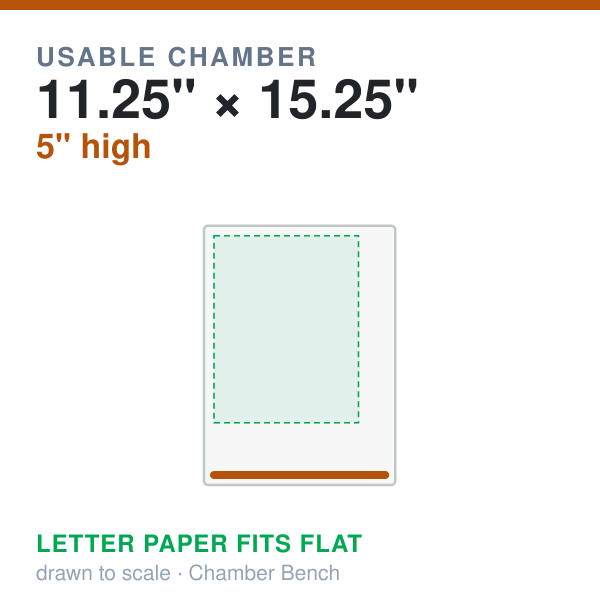
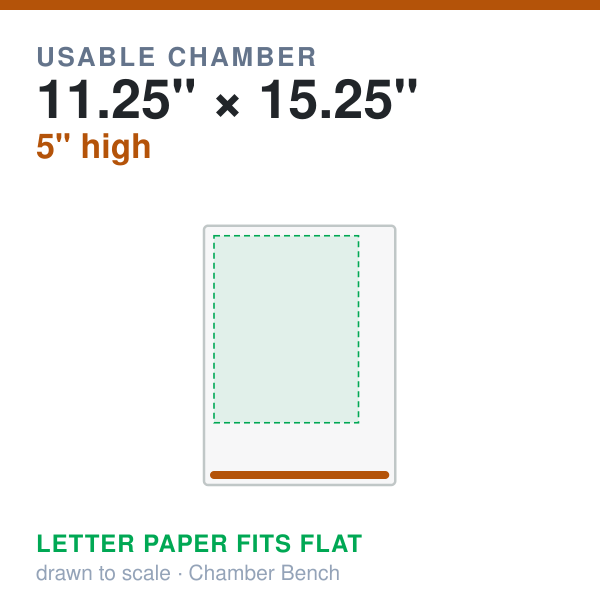
| VacMaster VP215 | 10 x 13 in | 11.25 x 15.25 x 5 in | Your fillet needs a pouch wider than 10 in or longer than 13 in; it also runs a rotary oil pump | VacMaster product page, archived capture of 2026-04-18 |
| VacMaster VP210 | 10 x 13 in | 11.25 x 15.25 x 5 in | Your fillet needs a pouch wider than 10 in or longer than 13 in | VacMaster product page, archived capture of 2026-03-10 |
| Avid Armor USV32 | 11 x 13 in | 11.5 x 12 x 3.5 in | Your fillet needs a pouch longer than 13 in, or you seal fish in a marinade deeper than a 3.5 in chamber leaves room for | Avid Armor product page |
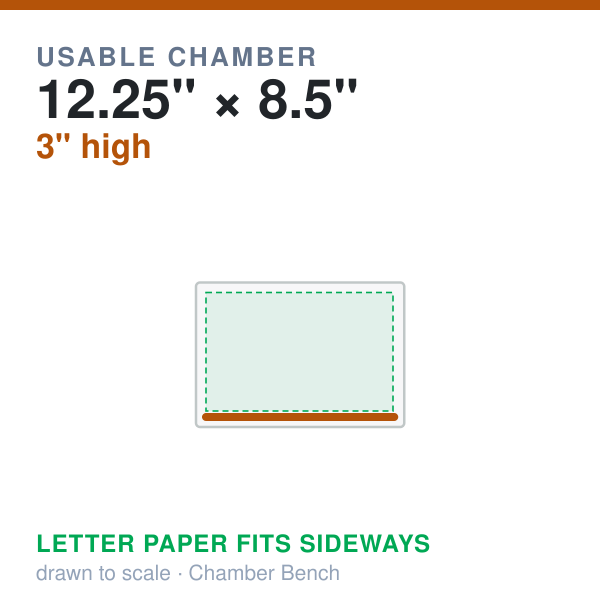
| Avid Armor USV20 | 11 x 10 in | 12.25 x 8.5 x 3 in | Your fillet needs a pouch longer than 10 in | Avid Armor product page |
A maximum pouch is the maker's stated limit, quoted from its own page. Where a maker states one, it decides the fit ahead of any size worked out from the chamber.
Check a fillet pouch against every chamber sealer we list
Enter the pouch your longest fillet needs and the checker below tests it against each chamber sealer in our catalogue, the five machines above and the rest we list, in three gates: the pouch mouth against the seal bar, the flat pouch against the chamber depth, and, once you add a thickness, the filled package against the chamber height. Where a maker states a maximum pouch, that figure decides; where a maker's own documents disagree, the checker answers only when every published figure gives the same result.
For fish, enter the thickness of the fillet as it will lie in the pouch, plus any marinade or brine you are sealing with it, because liquid adds to the height the lid has to clear. Pick one machine to see each gate with the figure that decided it, the maker's stated maximum pouch with the document it comes from, and the listed pouch packs that pass; or leave it on every machine to see which ones take your pouch.
Will this pouch fit my chamber sealer?
Of the 28 chamber sealers we list, this pouch fits 14, and can't be settled for 1. Choose a machine above for its three checks and sources.
Fits 14
- Avid Armor USV32Within the maker's stated 11 x 13 in maximum pouch.
- VacMaster VP215Within the maker's stated 10 x 13 in maximum pouch.
- VacMaster VP210Within the maker's stated 10 x 13 in maximum pouch.
- VacMaster VP230Within the maker's stated 12 x 15 in maximum pouch.
- Avid Armor USVXWithin the maker's stated 10 x 13 in maximum pouch.
- Hamilton Beach Commercial HVC254Within the maker's stated 10 x 13 in maximum pouch.
- Hamilton Beach Commercial HVC305Within the maker's stated 12 x 14 in maximum pouch.
- Hamilton Beach Commercial HVC406Within the maker's stated 16 x 20 in maximum pouch.
- LEM MaxVac Pro+Within the maker's stated 10 in maximum width; inside the 16 in chamber depth.
- VacMaster VP320Within the maker's stated 16 x 18 in maximum pouch.
- VacMaster VP540Within 16 x 16 in, the smaller figures in the maker's two statements.
- VacMaster VP545Within 16 x 16 in, the smaller figures in the maker's two statements.
- VEVOR DZ-260C2.6 in to spare on the 12.6 in seal bar; inside the 14 in chamber depth.
- Waring Commercial WCV300Within the maker's stated 11 x 13 in maximum pouch.
Can't be settled from the maker's figures 1
- Wevac CV12 ProThe maker publishes the chamber depth as both 13 in and 12.8 in, and the answer changes between them.
Won't fit 13
- Avid Armor USV2013 in is longer than the 10 in maximum pouch length the maker states.
- VEVOR DZ-260S13 in is longer than the 10.6 in chamber depth, so the pouch would have to fold.
- Gasbye CV452010 in is wider than the 9.7 in chamber, narrower than its 11.5 in seal bar.
- Atmovac Diablo 1213 in is longer than the 11.8 in chamber depth, so the pouch would have to fold.
- Avid Armor JARMAX13 in is longer than 10 in, the smaller pouch length in the maker's two statements.
- Avid Armor USV113 in is longer than the 10 in maximum pouch length the maker states.
- LEM MaxVac Pro13 in is longer than the 11.24 in chamber depth, so the pouch would have to fold.
- Mesliese CVS101S13 in is longer than the 10.4 in chamber depth, so the pouch would have to fold.
- VacMaster VP9510 in is wider than the 9 in maximum pouch width the maker states.
- Vesta Precision OP1013 in is longer than the 12.9 in chamber depth, so the pouch would have to fold.
- Vesta Precision V51313 in is longer than the 8.8 in chamber depth, so the pouch would have to fold.
- Vesta Precision V55313 in is longer than the 12.8 in chamber depth, so the pouch would have to fold.
- VEVOR YJ-300TV113 in is longer than the 12.87 in chamber depth, so the pouch would have to fold.
How it decides: where a maker states a maximum pouch size, that decides. Otherwise the pouch mouth needs half an inch to spare on the seal bar (or on a narrower published chamber), and the flat pouch has to lie inside the published chamber depth. Thickness needs half an inch to spare under the published chamber height, because a lid that curves or a package that is not flat takes part of it; a filler plate left in the chamber takes more. Where a maker's documents disagree, the answer is given only if every published figure gives the same one.
Wet fish is the load a chamber evacuates around, not through
An edge sealer pulls air out through the open mouth of the bag, so whatever liquid sits near that mouth travels the same way. A chamber machine lowers the pressure of the whole box at once, bag and all, which is why the liquid that comes off a fresh fillet has nowhere to be drawn. Our guide to how chamber sealers work covers the mechanism; the part that matters for fish is that wet product is routine work for a chamber rather than an exception to manage.
What a chamber does not remove is the limit on liquid depth. A fillet packed with a marinade, a brine or its own juices is liquid work, and the chamber height sets how much liquid a flat pouch can carry. VacMaster publishes a 5 in chamber for the VP230, the VP215 and the VP210; Avid Armor publishes 3.5 in for the USV32 and 3 in for the USV20. Our liquids page turns each height into a usable fill depth.
Open the pouch before vacuum-packed fish thaws in the refrigerator
Vacuum-packed seafood carries a thawing rule of its own, and NC State Extension states it in three sentences: "Never thaw vacuum-packed seafood in the fridge without opening the package first. Lack of oxygen creates ideal conditions for Clostridium botulinum toxin formation. Always puncture or remove from packaging before refrigerator thawing."
The rule governs the refrigerator method, which is also the method FDA's consumer seafood page puts first: "Thaw frozen seafood gradually by placing it in the refrigerator overnight." For a faster thaw, FDA gives two routes: "either seal it in a plastic bag and immerse it in cold water, or — if the food will be cooked immediately thereafter — microwave it on the “defrost” setting and stop the defrost cycle while the fish is still icy but pliable." NC State adds that seafood "can be cooked without thawing," with extra cooking time.
The low-oxygen science behind the rule, including the cold-tolerant botulinum strains associated with fish, sits on our food-safety page with its sources. A chamber machine changes none of it: a well-sealed pouch is exactly the low-oxygen package the rule is written for.
Specifications compared
Scroll horizontally to see every column.
| Model | Seal bar | Chamber | Pump | Weight | Analysis |
|---|---|---|---|---|---|
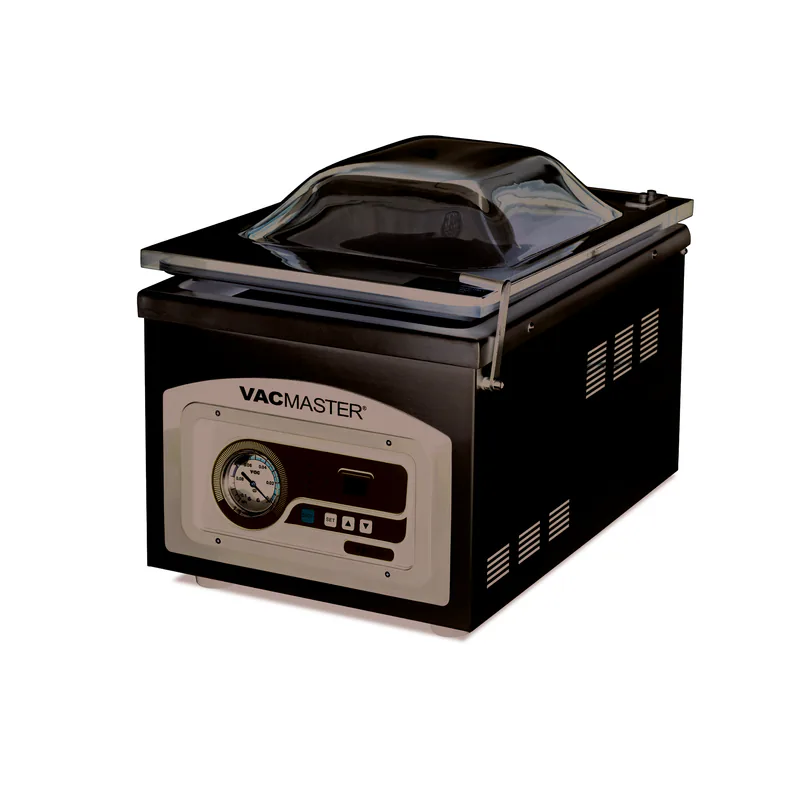 VacMaster VP230 | Conflicting published values: 89 Pounds / 82 lbs — Conflicting published record — VacMaster product page · VacMaster spec sheet | ||||
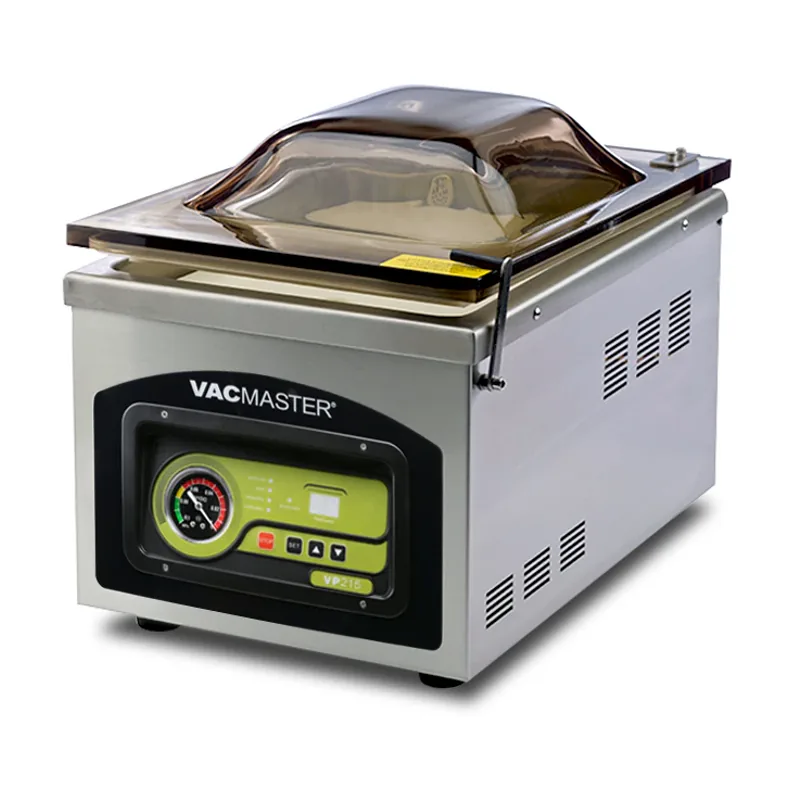 VacMaster VP215 | Conflicting published values: 10 Inch removable seal bar with double seal wire / 10.25 in — Conflicting published record — VacMaster product page · VacMaster manual | Conflicting published values: 1/5 HP (.2 HP) rotary oil pump / 1/4 HP rotary oil pump — Conflicting published record — VacMaster manual · VacMaster support note | |||
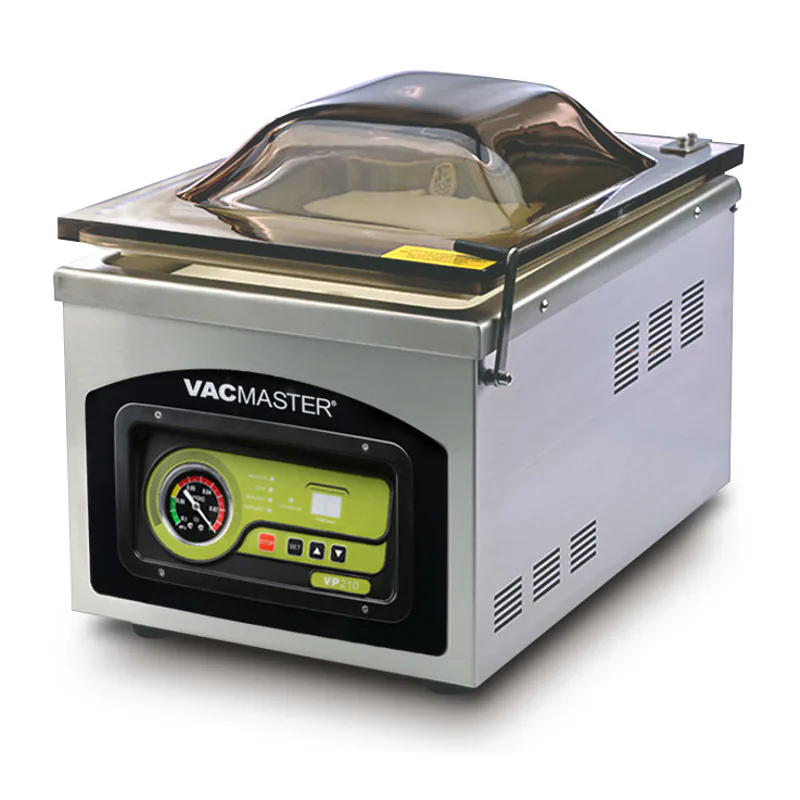 VacMaster VP210 | Conflicting published values: 10 Inch removable seal bar with double seal wire / 10.25 in — Conflicting published record — VacMaster product page · VacMaster manual | 1/4 HP dry, maintenance-free pump — Verified published record — VacMaster product page · VacMaster manual | |||
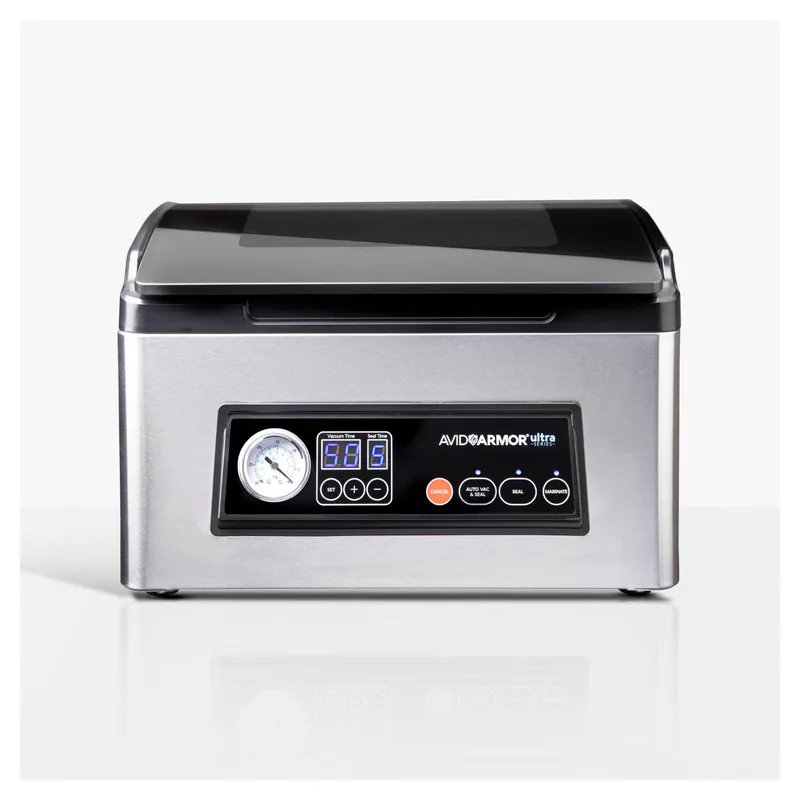 Avid Armor USV32 | |||||
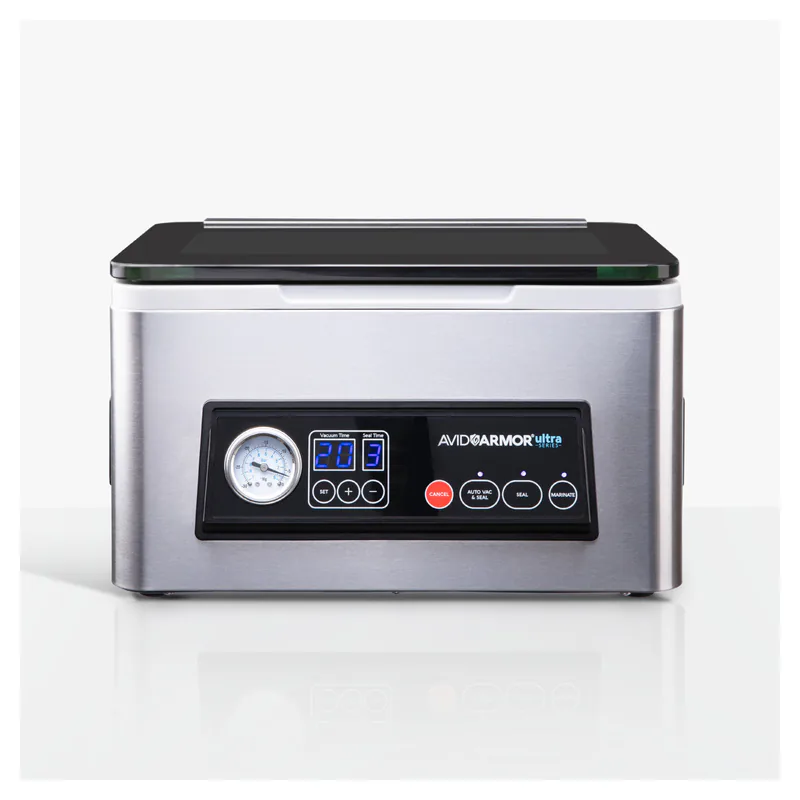 Avid Armor USV20 |
Cells reading “Not stated” mean the manufacturer does not publish that figure. We have not substituted an estimate.
Model analyses
Why it fits
- Seal bar:
- Chamber:
- Pump:
- Power:
Unanswered or conflicting specifications
- Weight: Conflicting published values: 89 Pounds / 82 lbs — Conflicting published record — VacMaster product page · VacMaster spec sheet
Published specifications
- Seal bar:
- Chamber:
- Pump:
- Power:
- Weight: Conflicting published values: 89 Pounds / 82 lbs — Conflicting published record — VacMaster product page · VacMaster spec sheet
View chamber sizing diagram
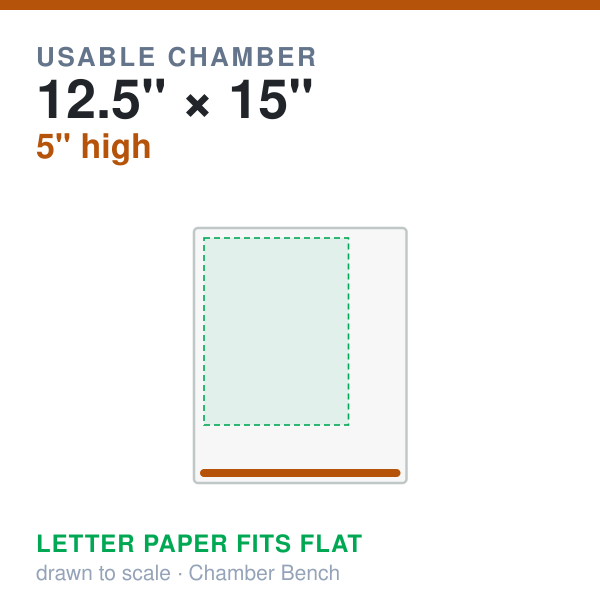
Data quality note: VacMaster's product page gives both 89 lb and 82 lb, and its spec sheet 89 lb. We retain both and select neither.
Why it fits
- Chamber:
- Weight:
Unanswered or conflicting specifications
- Seal bar: Conflicting published values: 10 Inch removable seal bar with double seal wire / 10.25 in — Conflicting published record — VacMaster product page · VacMaster manual
- Pump: Conflicting published values: 1/5 HP (.2 HP) rotary oil pump / 1/4 HP rotary oil pump — Conflicting published record — VacMaster manual · VacMaster support note
- Power: Conflicting published values: 110V, 60Hz, 4 Amps / Single Phase 110 V, 20 Amp — Conflicting published record — VacMaster product page · VacMaster manual
Published specifications
- Seal bar: Conflicting published values: 10 Inch removable seal bar with double seal wire / 10.25 in — Conflicting published record — VacMaster product page · VacMaster manual
- Chamber:
- Pump: Conflicting published values: 1/5 HP (.2 HP) rotary oil pump / 1/4 HP rotary oil pump — Conflicting published record — VacMaster manual · VacMaster support note
- Power: Conflicting published values: 110V, 60Hz, 4 Amps / Single Phase 110 V, 20 Amp — Conflicting published record — VacMaster product page · VacMaster manual
- Weight:
View chamber sizing diagram
Why it fits
- Chamber:
- Pump: 1/4 HP dry, maintenance-free pump — Verified published record — VacMaster product page · VacMaster manual
- Weight:
Unanswered or conflicting specifications
- Seal bar: Conflicting published values: 10 Inch removable seal bar with double seal wire / 10.25 in — Conflicting published record — VacMaster product page · VacMaster manual
- Power: Conflicting published values: 110V, 60Hz, 4.2 Amps / Single phase 110 V, 20 AMP — Conflicting published record — VacMaster product page · VacMaster manual
Published specifications
- Seal bar: Conflicting published values: 10 Inch removable seal bar with double seal wire / 10.25 in — Conflicting published record — VacMaster product page · VacMaster manual
- Chamber:
- Pump: 1/4 HP dry, maintenance-free pump — Verified published record — VacMaster product page · VacMaster manual
- Power: Conflicting published values: 110V, 60Hz, 4.2 Amps / Single phase 110 V, 20 AMP — Conflicting published record — VacMaster product page · VacMaster manual
- Weight:
View chamber sizing diagram
Why it fits
- Seal bar:
- Chamber:
- Pump:
- Power: 380 W at 120 V, 60 Hz — Verified published record — Avid Armor support note · Avid Armor archived page
- Weight:
Unanswered or conflicting specifications
- No core field is currently partial, conflicting, or unpublished.
Published specifications
- Seal bar:
- Chamber:
- Pump:
- Power: 380 W at 120 V, 60 Hz — Verified published record — Avid Armor support note · Avid Armor archived page
- Weight:
View chamber sizing diagram
Data quality note: These figures identify the stainless-chamber USV32. Avid Armor also sells a newer molded-chamber USV32 with different dimensions and weight. Check the chamber material before ordering.
Why it fits
- Seal bar:
- Chamber:
- Pump:
- Power: 300 W at 120 V, 60 Hz — Verified published record — Avid Armor support note · Avid Armor archived page
- Weight:
Unanswered or conflicting specifications
- No core field is currently partial, conflicting, or unpublished.
Published specifications
- Seal bar:
- Chamber:
- Pump:
- Power: 300 W at 120 V, 60 Hz — Verified published record — Avid Armor support note · Avid Armor archived page
- Weight:
View chamber sizing diagram
How long vacuum-sealed fish keeps in the freezer
NC State Extension publishes frozen storage times by type of seafood, and the split that matters is fat: "Fatty fish (e.g., bluefish, salmon): 2-3 months. Lean fish (e.g., flounder, sea trout): 4-8 months." The same guide asks for a freezer that "maintains a temperature at or below 0 °F (−18 °C)" and notes that "Packages 1 inch thick should freeze within 16 hours."
Federal charts publish their own freezer figures for fish, set side by side with their sources on our food-safety page. Whichever window you work to, it only helps if each pouch says what is in it and when it went into the freezer, which is the labelling step below.
How to prepare fish before vacuum sealing it
Chill it at once and freeze it soon: the quality of a vacuum-sealed fillet is set before it reaches the machine. NC State Extension's seafood guide puts it plainly, "The quality of frozen fish starts at the moment of catch," and asks that fish be "bled immediately in a container of water, and rapidly chilled on ice or in an ice/saltwater slurry to prevent spoilage." The same guide warns that "Poor bleeding or delayed gutting can result in blood clots in the flesh," and that "If freezing is delayed, store cleaned fish on ice."
University of Alaska Fairbanks Cooperative Extension's Home Freezing of Fish (FNH-00222, revised February 2021) adds the timing at home: "Once you are home, the fish should be processed and frozen as soon as possible," and "To maintain high quality, your fish should be frozen solid within 24 hrs of being placed in the freezer." It also puts the pouch in its place: "Vacuum packing is not in itself a food preservation method but is an excellent way to wrap fish for freezer storage." The cold preserves the fish; the sealed pouch keeps air off it while it is frozen.
- NC State Extension: Preserving Your Catch or PurchasePreparing freshly caught fish, packaging options and the vacuum-packed thawing rule; read 2026-11-17.
- UAF Cooperative Extension: Home Freezing of Fish (FNH-00222)Handling the catch, freezing speed and vacuum packaging for the freezer; revised February 2021, read 2026-11-17.
Packing fish for the freezer
- Rinse first. NC State: "Rinse the fish to remove slime and dirt."
- Portion to the pouch. Cut a fillet that runs longer than your machine's stated maximum pouch before sealing; the table above lists each maker's figure.
- Use smooth chamber pouches. The embossed channel bags made for edge sealers exist to give an edge sealer an air path, which a chamber machine does not use. Our pouch page compares chamber pouches by size and stated thickness.
- Label every pouch. NC State: "Clearly label each package with species/cut (e.g., cod fillets, salmon steaks), total weight or portion size, and date frozen."
- Give the freezer room. NC State: "Don’t overcrowd the freezer, as this slows freezing."
Fit summary
VacMaster states a 12 x 15 in maximum pouch for the VP230, the longest stated by any maker on this page, over a published 12.5 x 15 x 5 in chamber.
The VP215 and VP210 state the same 10 x 13 in pouch over the same 11.25 x 15.25 x 5 in chamber; their published pump records differ, a rotary oil pump on the VP215 and a dry pump on the VP210, and our VP215 vs VP210 page sets out the rest.
Avid Armor states 11 x 13 in for the USV32 and 11 x 10 in for the USV20, so a fillet that needs a pouch longer than 10 in rules the USV20 out on its maker's own figure.
Open the VacMaster VP230 analysis · Return to the specifications
Frequently asked questions
Is a chamber vacuum sealer good for fish?
For wet fish, yes: a chamber lowers the pressure around the whole pouch rather than pulling air out through its mouth, so the liquid a fillet releases is not drawn toward the machine. NC State Extension calls vacuum sealing with oxygen-barrier bags "the most effective way to prevent freezer burn and oxidation" for seafood. The figure to check before choosing is the maker's maximum pouch.
What size bag do I need for fish fillets?
Measure the longest fillet and compare it with your machine's stated maximum pouch, leaving clean pouch above the seal. VacMaster states 12 x 15 in for the VP230 and 10 x 13 in for the VP215 and VP210; Avid Armor states 11 x 13 in for the USV32 and 11 x 10 in for the USV20. Portion anything longer before sealing.
Should you freeze fish before vacuum sealing it?
Not for a chamber machine's sake: a chamber lowers the pressure around the whole pouch, so the liquid on a fresh fillet is not drawn toward the machine the way it is through an edge sealer's open bag mouth. What the extension guides ask for is cold and speed: chill the fish on ice, seal it, and freeze it promptly. University of Alaska Fairbanks Cooperative Extension asks for fish "frozen solid within 24 hrs of being placed in the freezer."
Should you open vacuum-sealed fish before thawing it?
Yes, before it thaws in the refrigerator. NC State Extension: "Never thaw vacuum-packed seafood in the fridge without opening the package first. Lack of oxygen creates ideal conditions for Clostridium botulinum toxin formation. Always puncture or remove from packaging before refrigerator thawing."
How long does vacuum-sealed fish last in the freezer?
NC State Extension publishes frozen storage times by type: fatty fish such as bluefish and salmon 2-3 months, and lean fish such as flounder and sea trout 4-8 months, in a freezer held at or below 0 °F. Federal charts publish their own figures, set out on our food-safety page.
Can you vacuum seal fish with a marinade or its juices?
In a chamber machine, yes, within its liquid depth. The chamber height caps how much liquid a flat pouch can carry: VacMaster publishes 5 in for the VP230, the VP215 and the VP210, and Avid Armor publishes 3.5 in for the USV32 and 3 in for the USV20. Our liquids page converts each height into a fill depth.
Can you cook vacuum-sealed fish without thawing it?
NC State Extension says seafood "can be cooked without thawing," with extra cooking time as needed. If you thaw it in the refrigerator instead, the same guide's rule applies: open the package before it goes in.
What this page covers, and what it does not
This page centers the five machines whose makers state a maximum pouch, out of the eight chamber vacuum sealers we analyse in depth, each still listed on Amazon when we re-checked on 2026-10-22. Every pouch and chamber figure was re-read from its maker's page on 2026-11-13. Settings for fish and pump behaviour with wet product are outside the published records we use.
How published evidence is evaluated
Chamber Bench compares each maker’s own pages, manuals and support documents for the eight machines in this comparison. The current analysis covers usable chamber geometry, seal-bar length, pump type, serviceability, and other published ownership constraints.
Where a manufacturer publishes nothing, we say so rather than filling the gap:
- We record which specifications a manufacturer declines to publish.
- We flag contradictions inside a listing rather than quietly picking one figure.
- We keep partial records distinct from complete published dimensions.
- We do not reproduce retailer ratings or prices as editorial fact.
What we have not done: we have not physically run these machines. No cycle times, seal-strength figures, or noise measurements on this site come from our own bench, and none are presented as if they do. Our test protocol documents the measurements required before any model can carry a tested performance conclusion.